
Last summer (2026), we decided to travel to the Moluccas—a relatively unknown group of islands in Indonesia with a unique historical connection to the Netherlands. What we found there exceeded all our expectations. Not only did the Moluccas prove to be a stunning destination, but the local people were also exceptionally friendly. The only minor drawback was that hardly anyone speaks English, so we relied heavily on Google Translate.
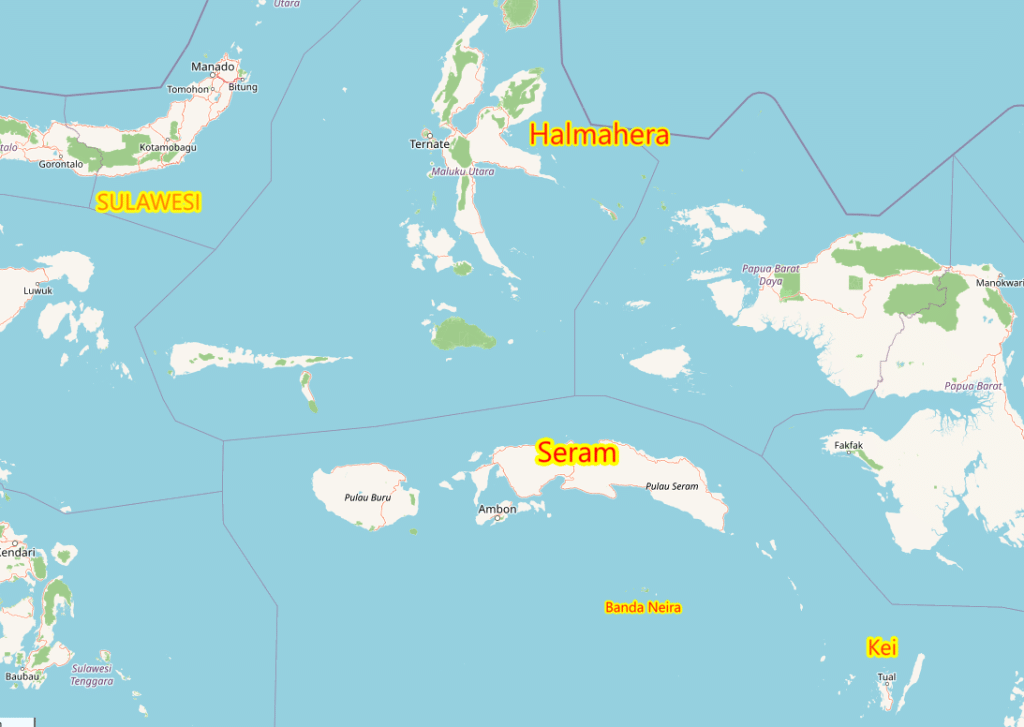
We began our journey in the Southern Moluccas, which include central islands such as Ambon and Seram. Further south lie the tiny Banda Islands (Banda Neira), and even further south are several other islands, one of which—Kei Kecil—we visited.
The small island of Ambon serves as the main island. The city of Ambon has about half a million inhabitants and acts as the gateway to the Southern Moluccas, featuring an airport with connections to Jakarta, Makassar, and many other islands across the archipelago.
Ambon is not the most beautiful island; it has very few nice beaches, though its interior boasts lovely rainforests.
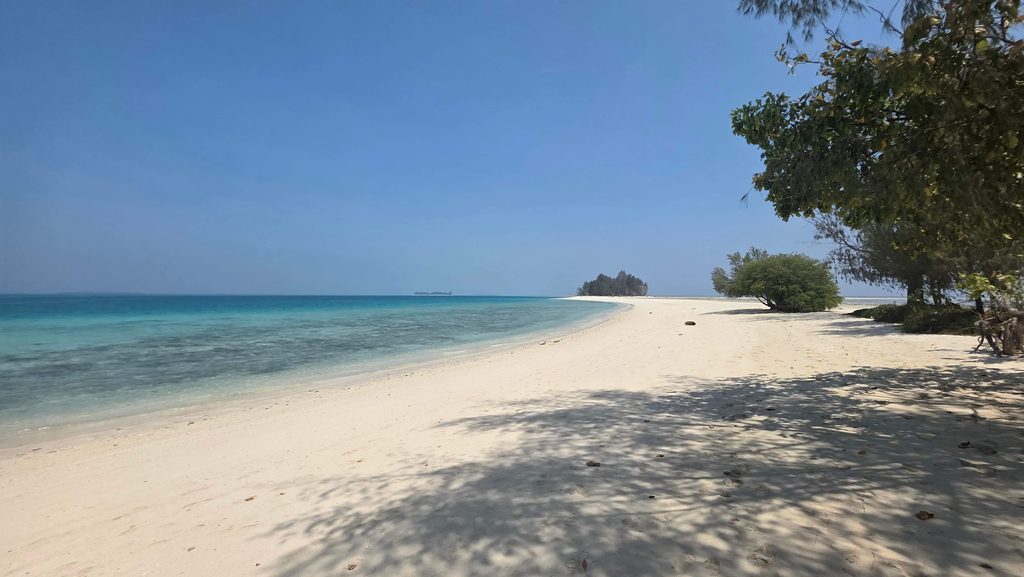
During our trip, we visited several islands, each with its own distinct character and charm. The highlights were, without a doubt, Kei Kecil and the small islets off the coast of Morotai. There, we discovered beaches that rank among the most beautiful we have ever seen—pristine white sand, crystal-clear turquoise water, and palm trees that perfectly captured that “tropical paradise” feeling.
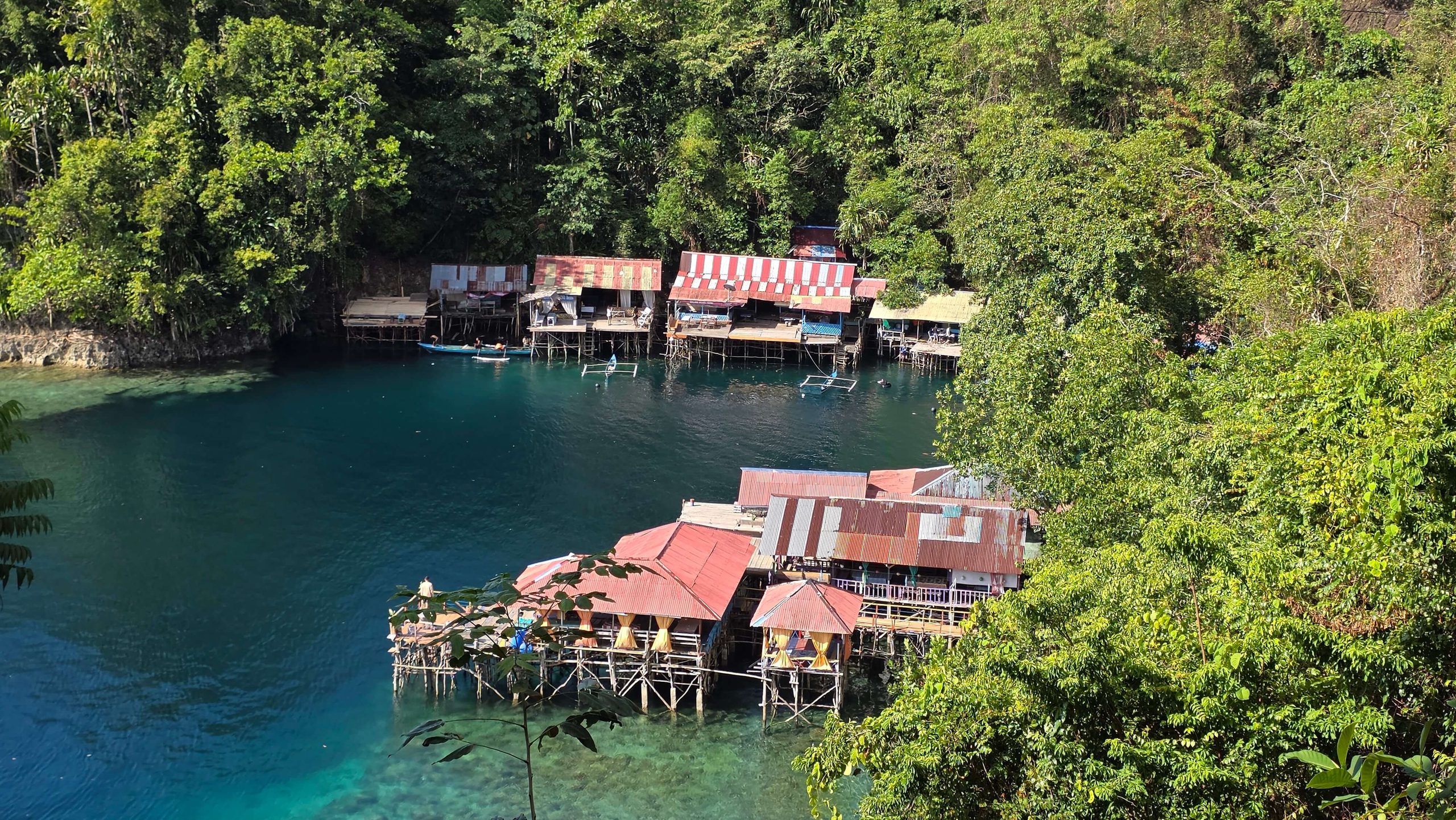
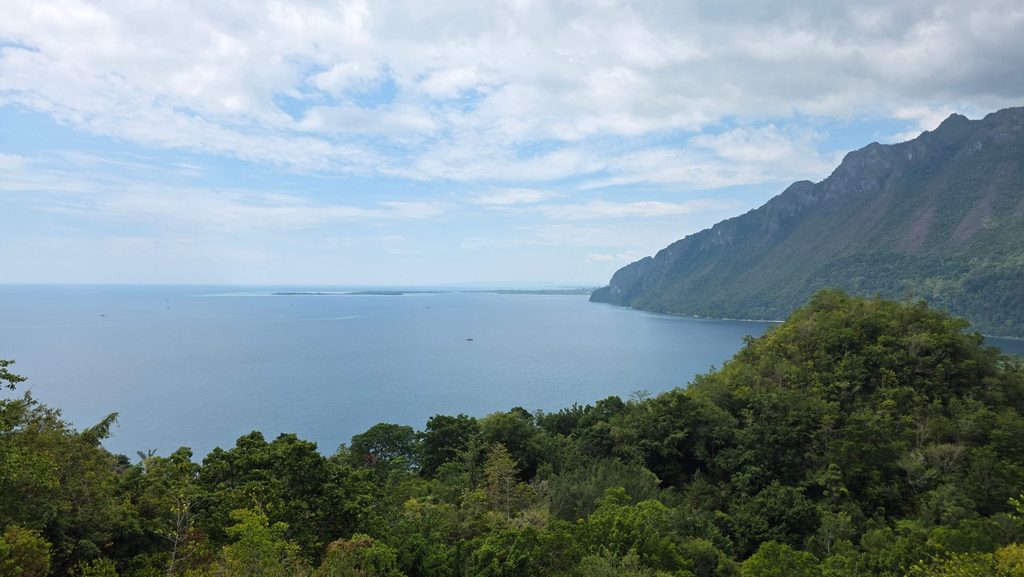
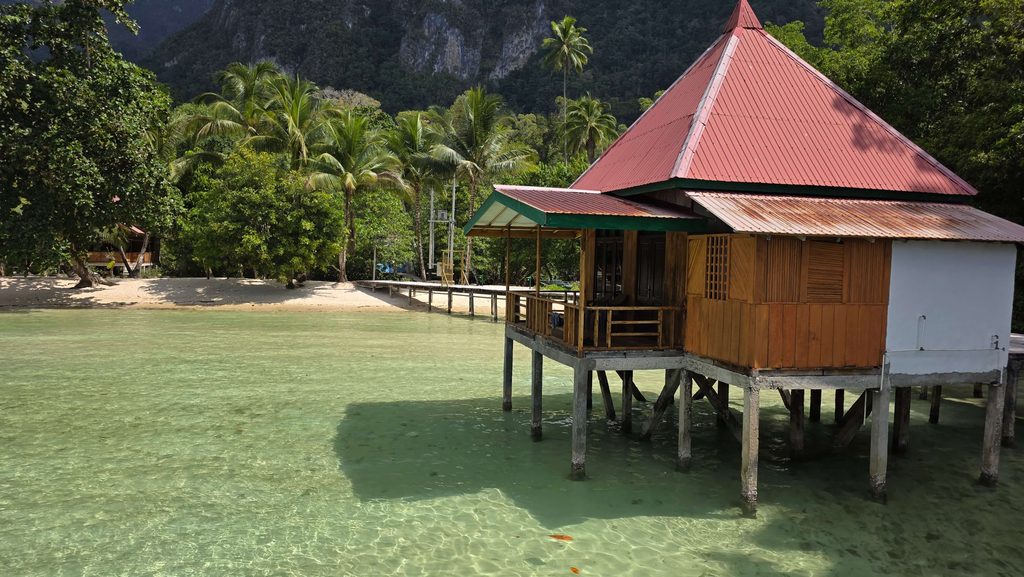
The beautiful Sawai Bay on the island of Seram, where we stayed in a stilt house built over the water, also left a deep impression on us.
What made these places so special was not just their natural beauty, but also the tranquility. Unlike many well-known tropical destinations, the beaches here were virtually empty. This allowed us to fully enjoy the unspoiled nature.
A brief history of the Moluccas and their connection to the Netherlands
The Moluccas are an archipelago in eastern Indonesia, located between Sulawesi (to the west), New Guinea (to the east), and Timor (to the south).
Northern Moluccas (Maluku Utara)
• Located north of the Molucca Sea.
• Main islands: Halmahera, Ternate, Tidore, Morotai, and Bacan.
• Largest city: Ternate (200,000 inhabitants).
Southern Moluccas (Maluku)
• Located further south, around the Banda and Seram Seas. • Main islands: Seram, Ambon, Buru, the Banda Islands, and the Kei Islands.
• Largest city: Ambon; 400,000 inhabitants.
Geographical features
• Consist of approximately 1,000 islands.
• Many islands are volcanic.
• Tropical climate with rainforests and rich biodiversity.
• Historically known as the Spice Islands due to the trade in cloves and nutmeg.
The Moluccas have been known for centuries as the Spice Islands. Cloves and nutmeg, in particular, grew there and were highly valuable in global trade.
The Dutch arrived in the Moluccas in the 17th century. The Dutch East India Company (VOC) sought to control the spice trade and gained significant influence over the islands. Consequently, the Moluccas remained under Dutch colonial rule for a long period.
After World War II, Indonesia gained independence (1949), and the Moluccas became part of the new nation. A portion of the Moluccan population—particularly former soldiers of the Royal Netherlands East Indies Army (KNIL)—felt a strong bond with the Netherlands. In 1951, approximately 12,500 Moluccans were brought to the Netherlands.
This led to the establishment of a large Moluccan community in the Netherlands. To this day, strong cultural, historical, and familial ties exist between the Moluccas and the Netherlands. Many Dutch-Moluccans keep their traditions, music, and history alive.
Religion plays an important role in daily life in the Moluccas. The population is roughly divided between Christians and Muslims, with some islands—or parts of islands—being predominantly Christian, while others are primarily Muslim. Between 1998 and 2002, this led to intense unrest that resulted in at least 5,000 deaths. Calm has returned, but tensions persist.
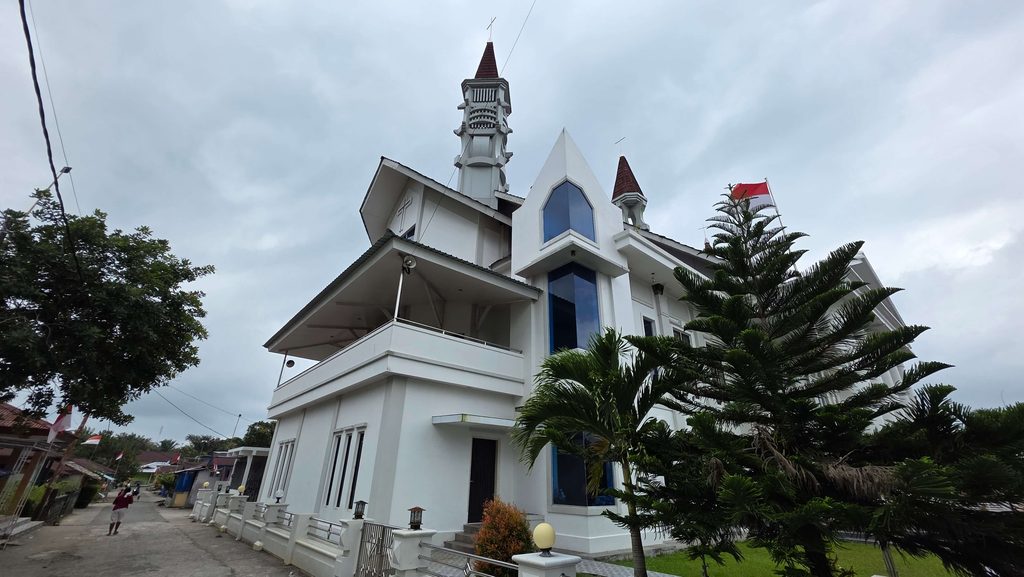
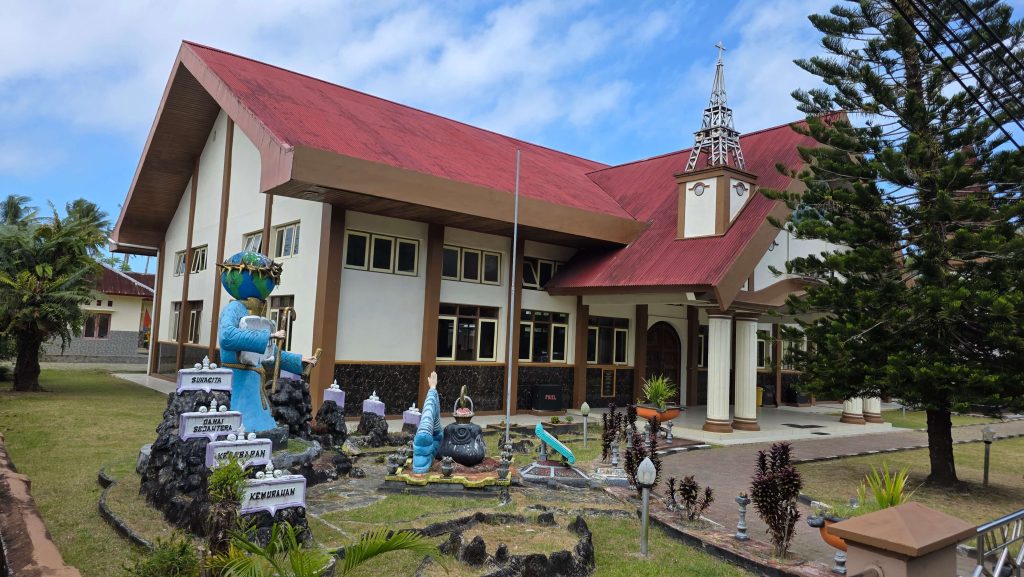
Churches and mosques often form the heart of a village, and religious holidays are celebrated extensively. The iron spires of the church towers are striking.
An important aspect of the Moluccas are the diving and snorkeling opportunities. In this blog we will not go into this further because we do not dive and snorkel. For the sake of completeness, we list the diving and snorkeling possibilities. info AI .
1. Banda Islands
The absolute highlight of the Moluccas. Stunning coral reefs, clear water, large schools of fish, and—during the right season—even hammerhead sharks.
2. Pulau Hatta (Banda)
One of the best spots for snorkeling. The reef often begins right near the beach, and visibility is usually excellent.
3. Ambon Bay
World-renowned among divers for its unique macro life, including seahorses, frogfish, and nudibranchs.
4. Liang Beach (Ambon)
Features a beautiful house reef, clear water, and is easily accessible for snorkelers.
5. Tulehu (Ambon)
Known for the clear waters on the eastern side of Ambon. A great base for snorkeling and diving excursions to nearby reefs.
6. Saparua
Quiet reefs, few tourists, and an abundance of colorful reef fish.
7. Nusa Laut
Small-scale and authentic, boasting very healthy coral gardens. Often described as a hidden gem of the Central Moluccas.
8. Kei Islands
White-sand beaches and crystal-clear water. Ideal for relaxed snorkeling over shallow coral reefs.
9. Morotai
A top destination in the Northern Moluccas, famous for its World War II shipwrecks and rich marine life.
10. Seram
Less frequently visited, yet home to beautiful reefs, sea turtles, and excellent diving opportunities along the coast.
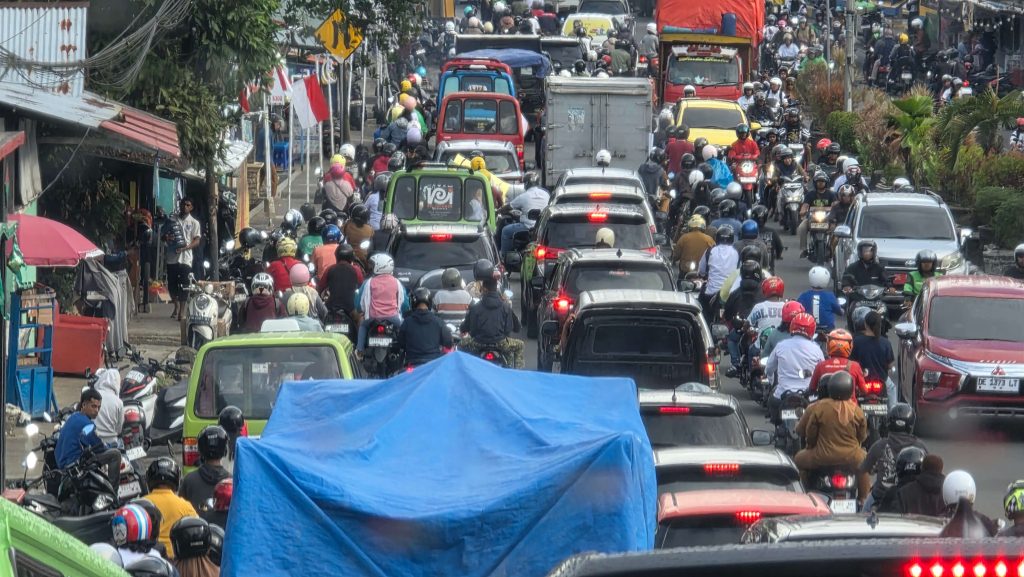
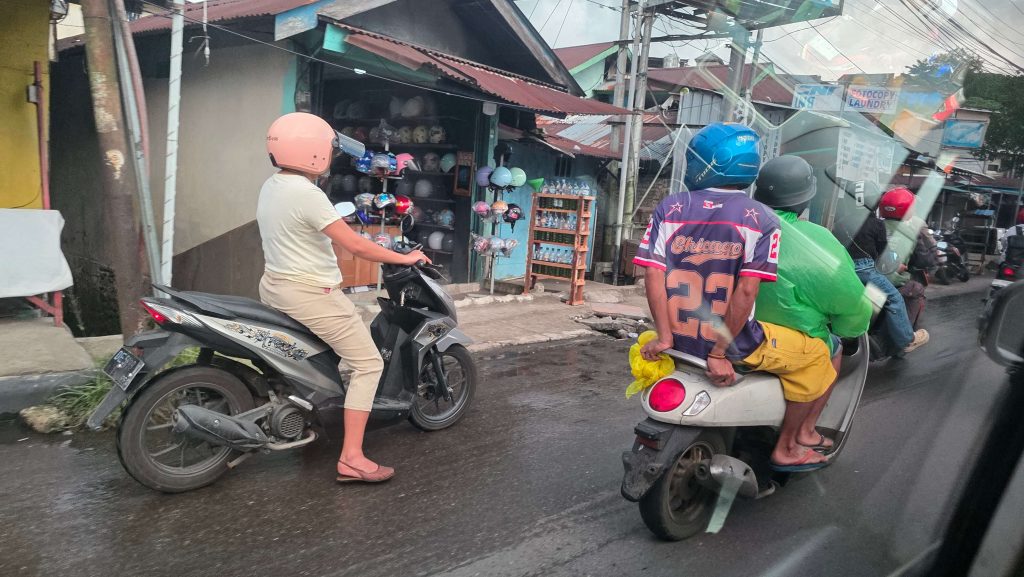
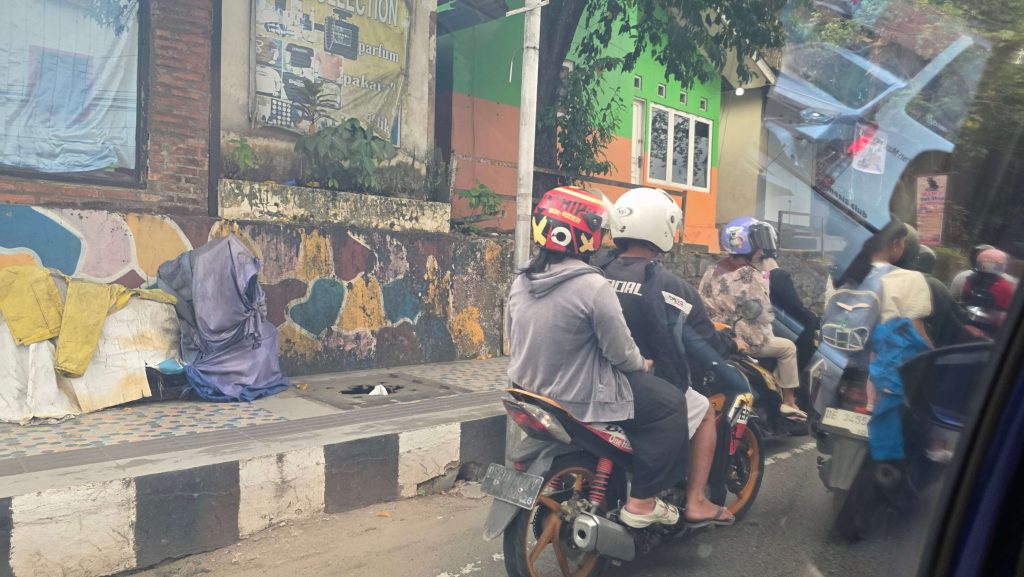
Our journey through the Moluccas begins on Ambon. Pattimura Airport—named after an eighteenth-century Moluccan freedom fighter—serves as the gateway to the South Moluccas. Upon arrival, we take a Grab (the Southeast Asian equivalent of Uber) into the city, a drive of just over half an hour. As we approach Ambon City via the large bridge spanning the bay, the traffic intensifies, dominated largely by a multitude of motorbikes.
Our hotel, the Golden Palace, is a relatively tall building featuring a rooftop swimming pool. The room is perfectly fine. In the evening, armed with Google Maps and two guidebooks—an Dutch Indonesia guide and a digital guide by a Moluccan author—we set out in search of a restaurant. It proves to be a disappointment: the first recommended spot turns out to be a bar, while the second restaurant appears desolate and lacks any atmosphere.
Navigating the city on foot is difficult. Sidewalks are frequently missing or obstructed, forcing us to step out into the road. Eventually, we hail another Grab and end up at the restaurant in the City Hotel, where we enjoy a good meal.
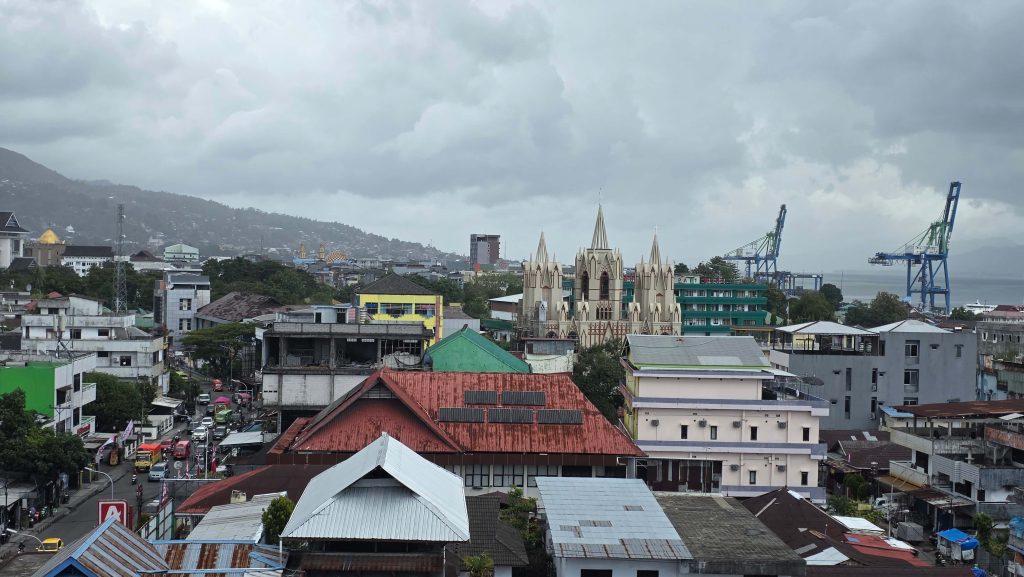
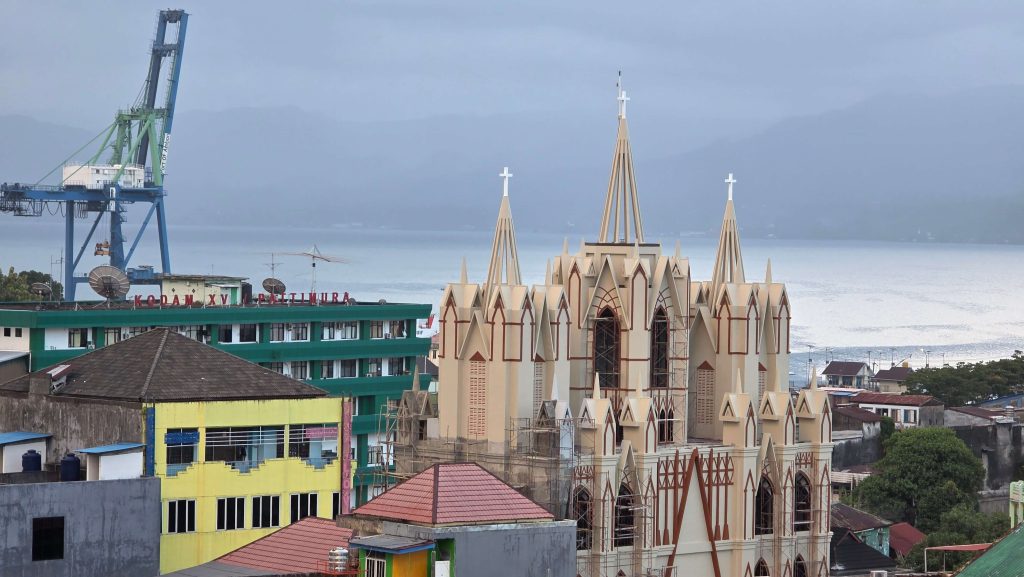
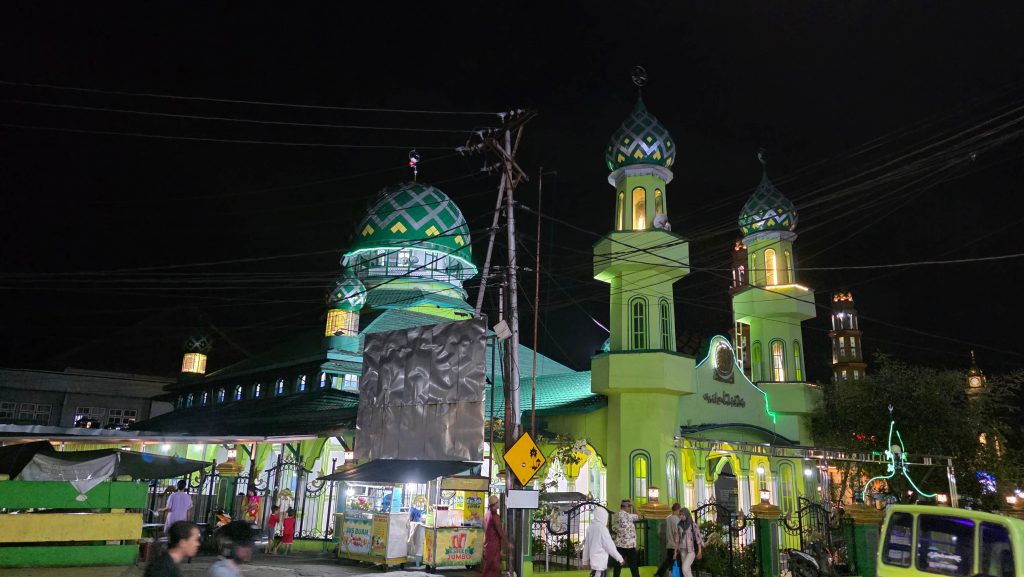
The following day, we explore the city extensively. Ambon leaves a somewhat chaotic impression. Particularly striking are the many churches with corrugated iron roofs, some of which are still under construction. Christian and Muslim neighborhoods alternate throughout the city.
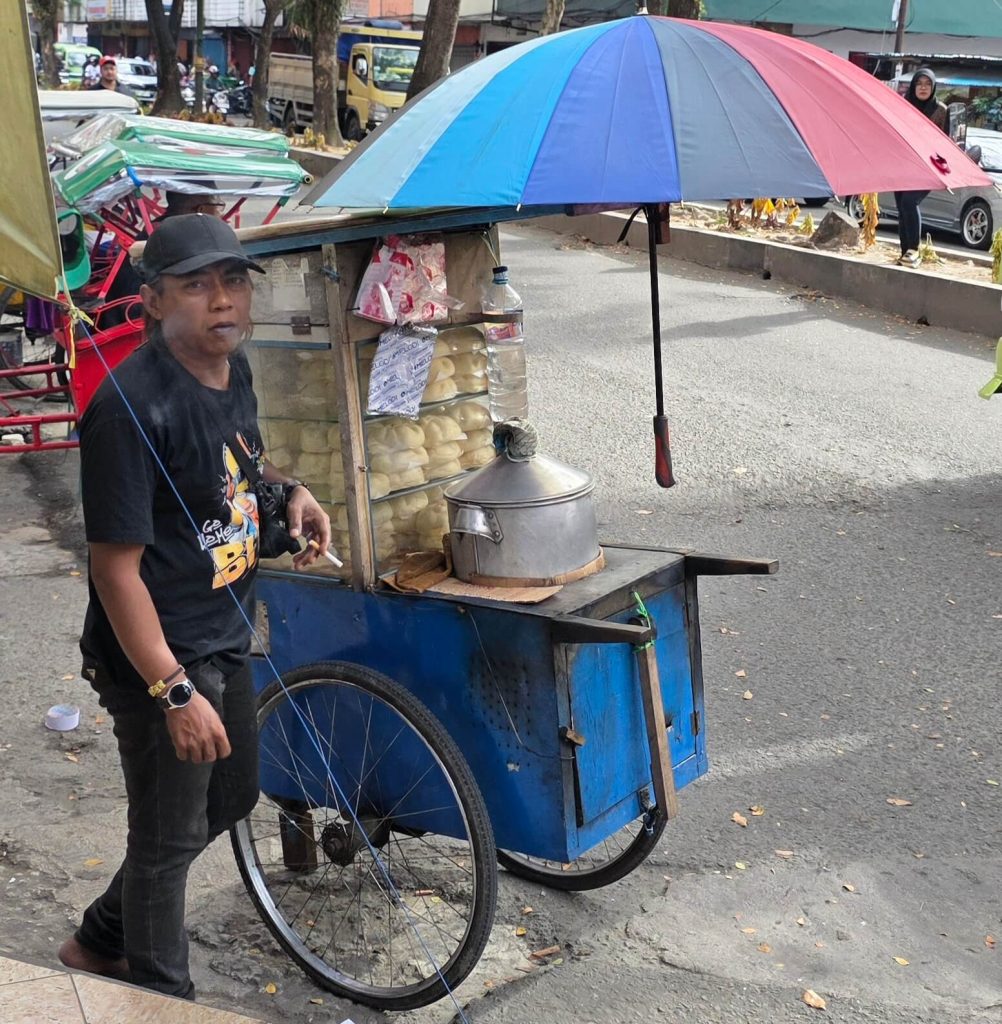
The handful of tourists we encounter are primarily Dutch-Moluccans. We run some errands and drop off our laundry; for three euros, all our clothes are returned to us clean—yet another example of how affordable life is here. We wrap up the day by the pool on our hotel’s ninth-floor rooftop terrace.
Around Pasar Mardika
The lively area surrounding the large market is pleasant to explore on foot. From all directions, you’ll hear enthusiastic calls of: “Hey, mister!”
The large cathedral, which dominates the city skyline, is still under construction.
A visit to the Provincial Museum is well worth the effort. The entrance is located at the top of a slope; the best way to reach it is by using the Grab ride-hailing service.
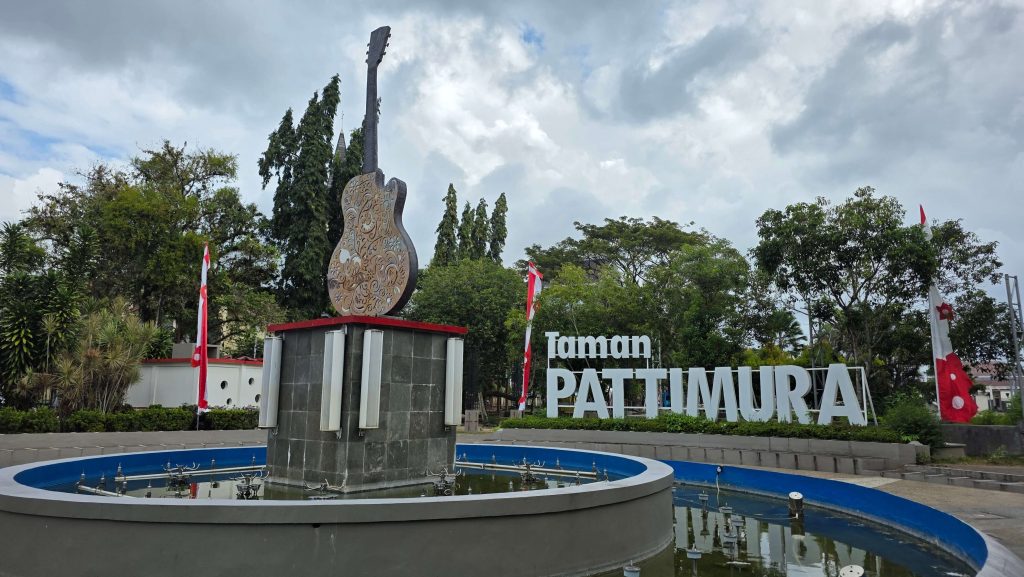
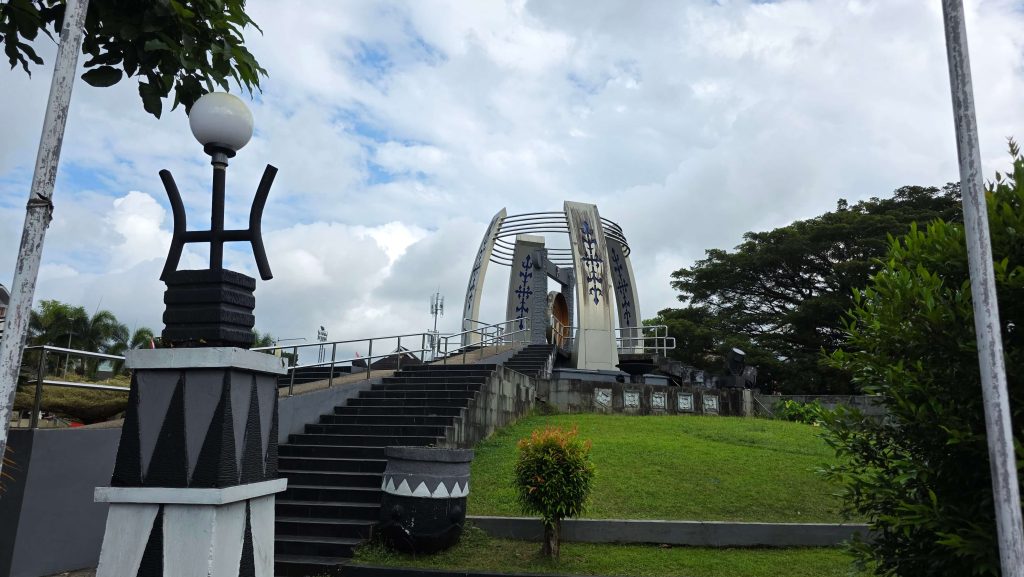
The Pattimura Monument in Ambon City serves as a tribute to Thomas Matulessy (Pattimura), the Moluccan freedom fighter who led an uprising against Dutch colonial rule in 1817.
The World Peace Gong was installed as a symbol of reconciliation following the religious conflicts that affected the Moluccas around the turn of the millennium. The gong represents peace, tolerance, and unity among the various population groups.
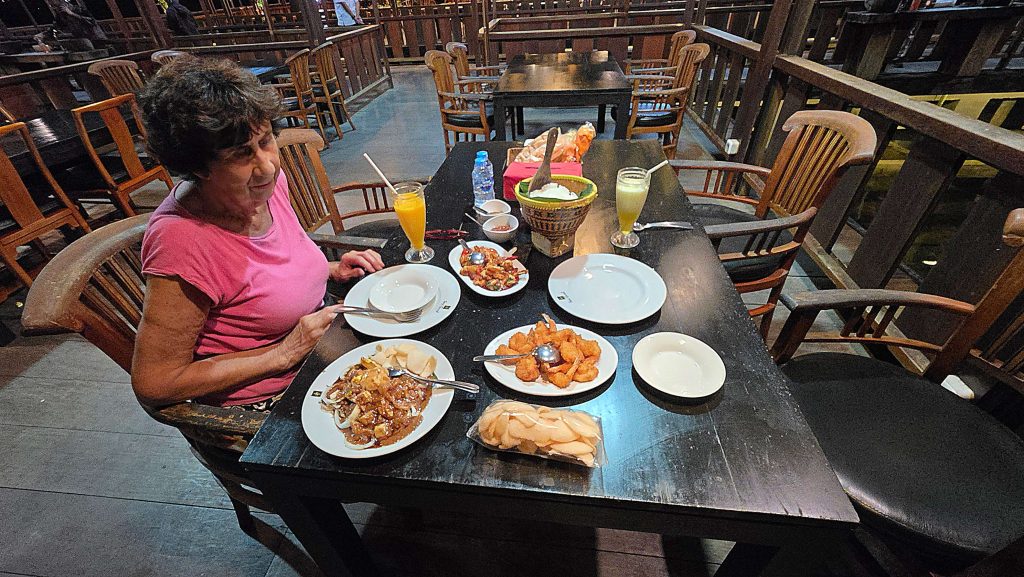
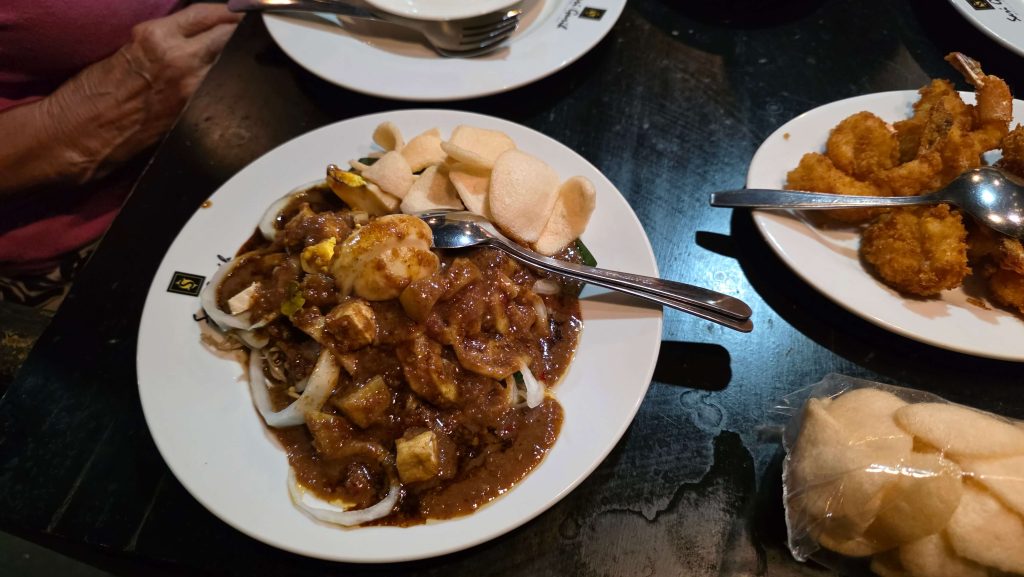
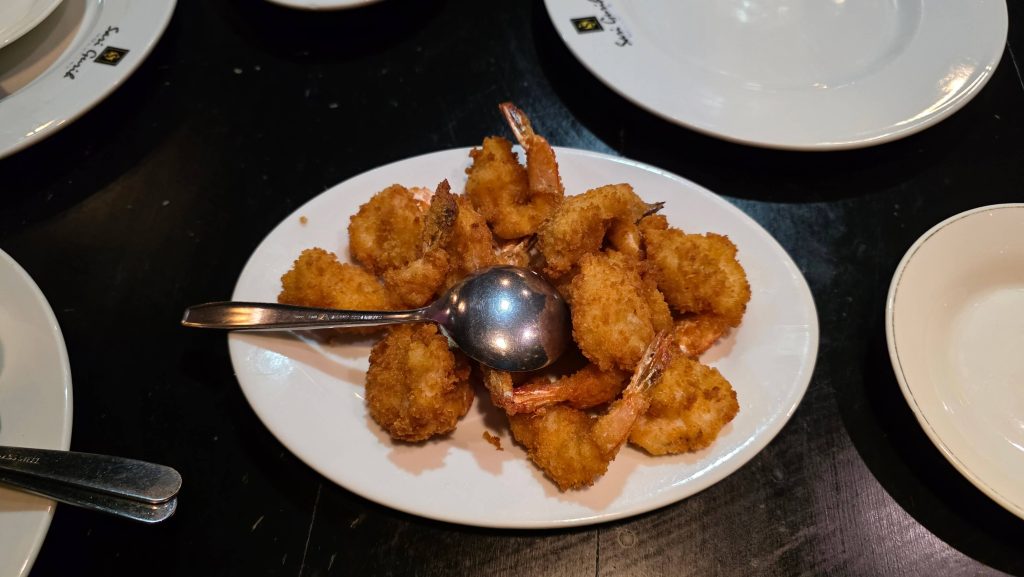
On the city side of the Jembatan Merah Putih (Red and White Bridge), you will find several seafood restaurants overlooking Ambon Bay.
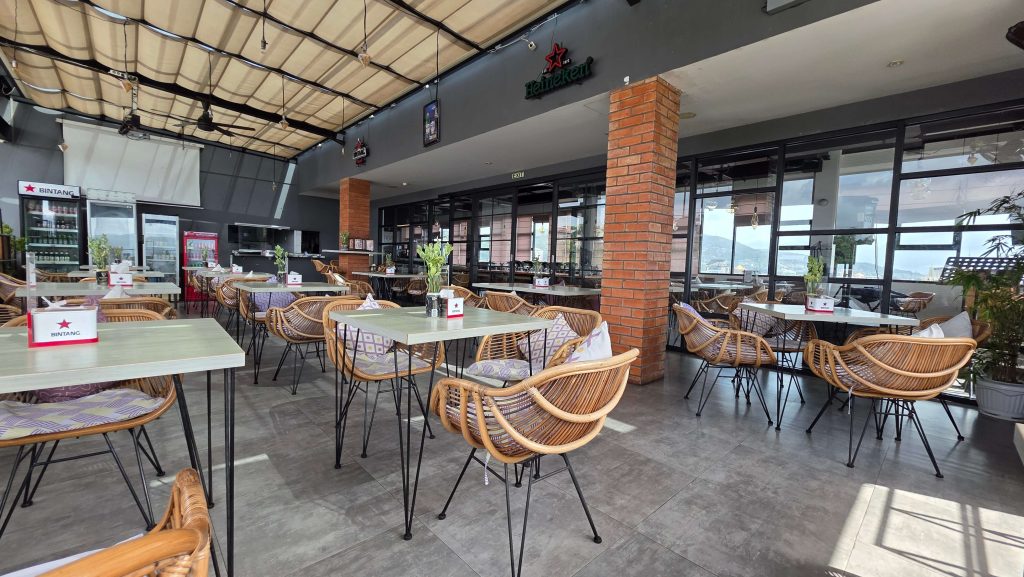
KOTA AMBON (CITY)⭐⭐½
SEE:
Museum Negeri Provinsi Maluku ⭐⭐⭐
Pasar Mardiki ⭐⭐½
SLEEP;
On Booking.com you already have rooms from € 5 ! We go for the Golden Middle and look for a good room for a reasonable price. In Indonesia / Moluccas we used a maximum of € 40 including breakfast. Usually we came (far) below that. Occasionally we came (slightly) above that.
Hotel Golden Palace ; € 23 including breakfast ⭐⭐⭐⭐ . Spacious room; swimming pool; Good (of course Indonesian) breakfast buffet with “Western” option; Fried egg/scrambled/omelette are made on request. There is white bread that you can toast.
DINING:
City Hotel ⭐⭐⭐⭐ 2 main courses, 2 desserts, 2 fruit juices – €20. Dining on the rooftop terrace with a view of the city.
RM Sarih Gurih ⭐⭐⭐⭐ – Fish restaurant on Ambon Bay, live music, excellent food – €20–€25 for two.
Dapor Kole Kole ⭐⭐⭐ ½ – 2 main courses + 2 fruit juices – €17. Simple.
Restaurant Dedes; number 1 on the Wanderlog website; Atmospheric and empty
TRANSPORT
To and from the airport;
Pattimura Airport is located about 20 km outside of Ambon city. Depending on the time of day, you should count at least 45 minutes with a taxi.
There is a Grab stand at the airport upon arrival, which is very convenient. There is no public transport to or from the airport. A Grab ride to the center of Ambon city costs between €7 and over €10 (200,000 IDR).
Ambon City
Grab: Works well within Ambon city, but not outside of it. In those areas, you will need to rely on an *angkot*—a minibus that follows a fixed route. A Grab ride within the city costs between €2 and €3.
Angkot: *Angkots* operate everywhere. Their destination is displayed on the front. If you are outside Ambon city and want to return, note that almost all of
When you rent a car, you get a driver as standard! Handy for us because we both don’t have😀 a driver’s license.
Riello Rent a Car; Here we rented a car with driver for 6 hours for a tour of the island. We paid about € 30. We gave him another tip of 10%. He was happy with that. The Driver spoke no English except for a few words. The idea is that you also pay for lunch/dinner for the driver during such a ride. We ate in a local Rumah Makan and paid € 5 for the three of us😊
SHOPPING
Ambon Plaza: an older mall in the city center, featuring a Matahari department store and a supermarket;
Maluku City (MCM): an aging mall with a large supermarket on the outskirts of the city
Ambon City Center (ACC) ; the largest mall with the necessary vacancy, good drugstore, Matahari department store and supermarket, located in Paso, a suburb about 10 km from Ambon city.
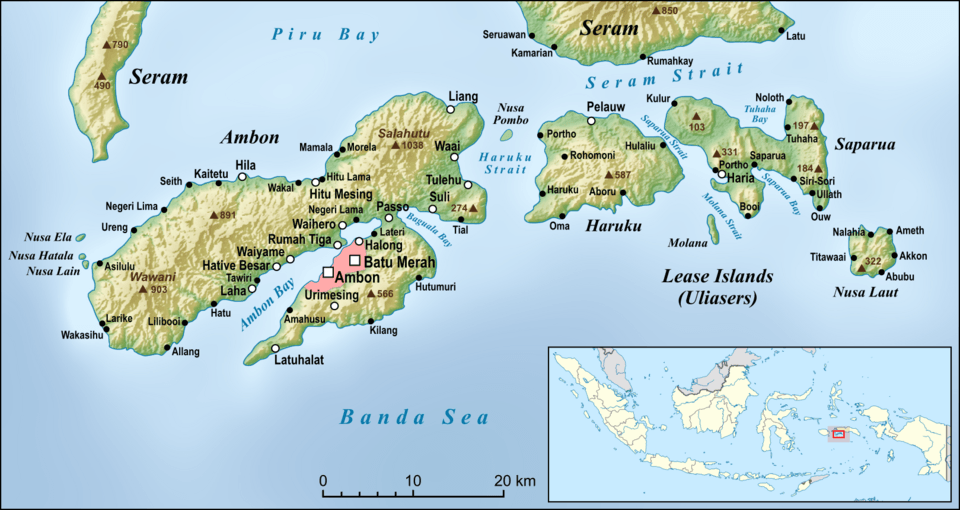
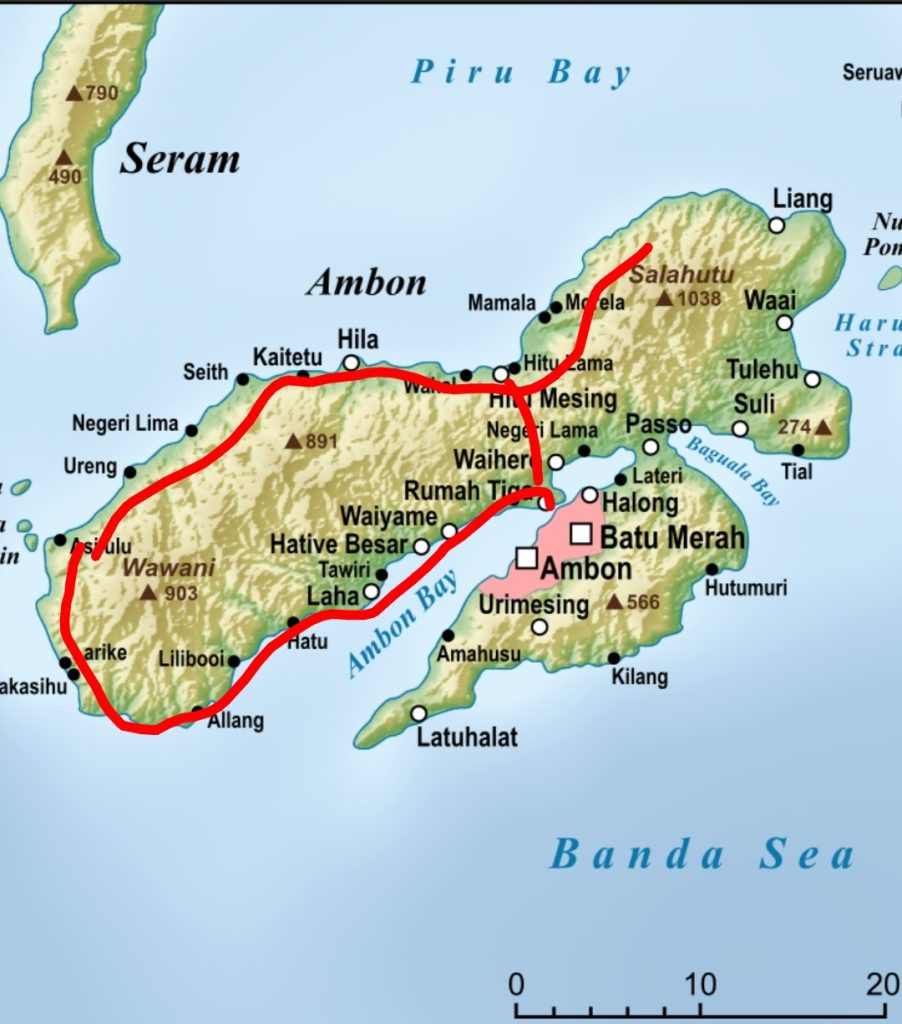
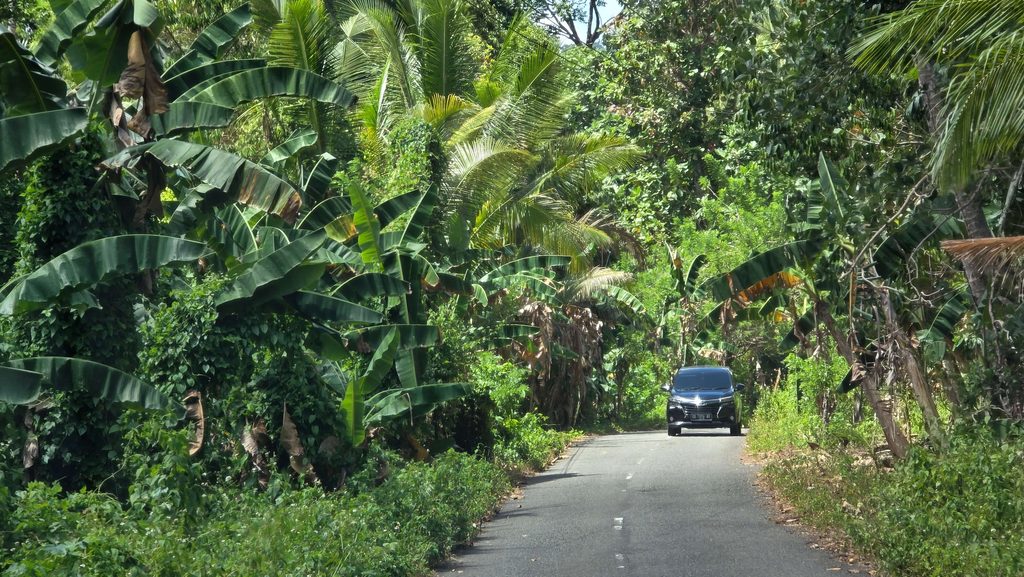
Bali is 8 times the size of Ambon. It is a mountainous island covered with rainforest.
Island Tour
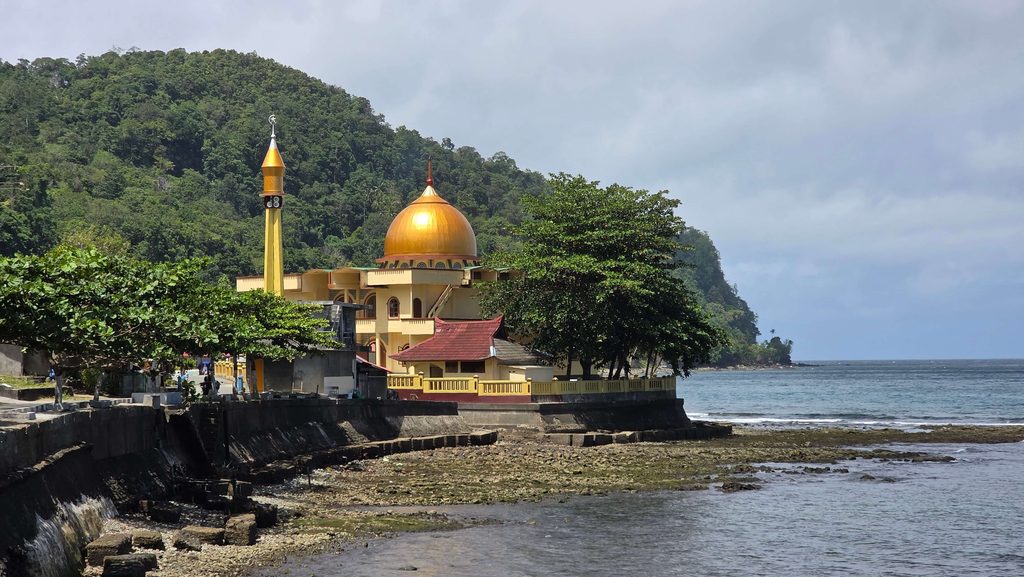
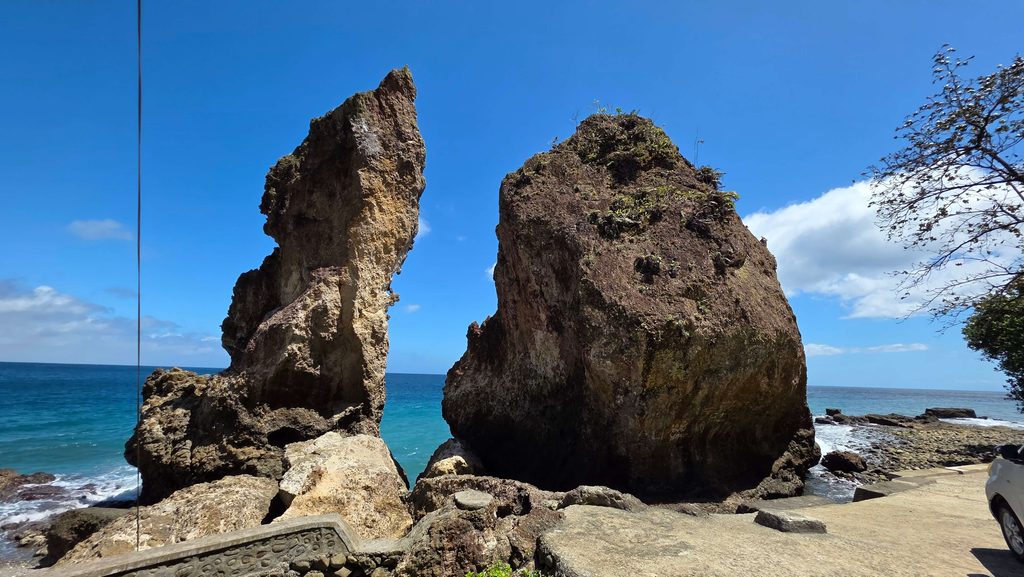
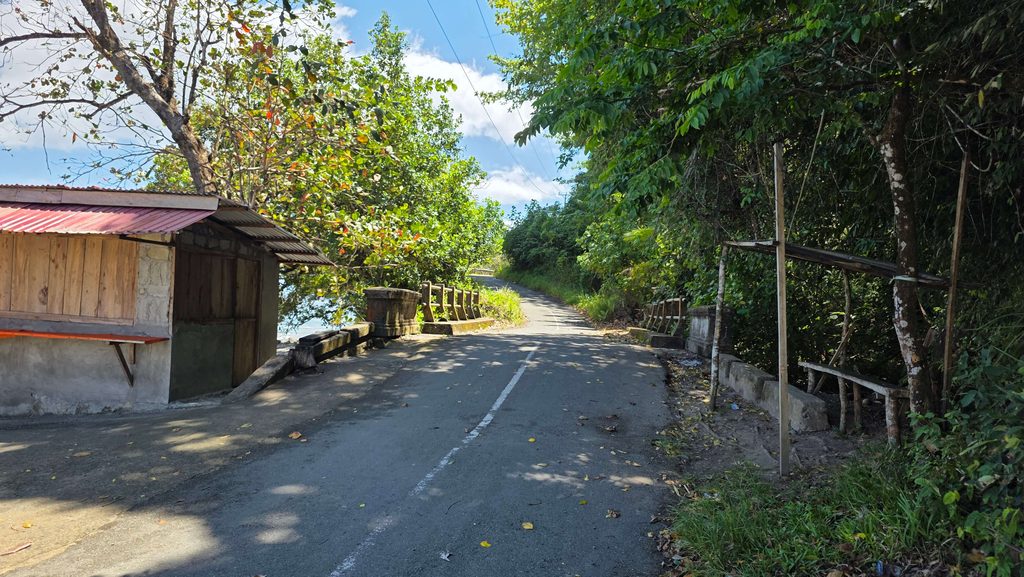
We organized a tour around the island and hired a car with a driver. We set off at eleven o’clock and were back at the hotel by 5:30 PM. We saw a great deal of beautiful tropical scenery. While the city of Ambon itself might be a bit grimy, the rest of the island is truly impressive. It is wonderfully peaceful, with very little traffic and small, simple villages. We enjoyed the natural surroundings and also had a delicious lunch at a small *rumah makan* (eatery). The cost for this excursion: €30 for the car and driver (plus a tip), and €5 for lunch for three people.
Route:
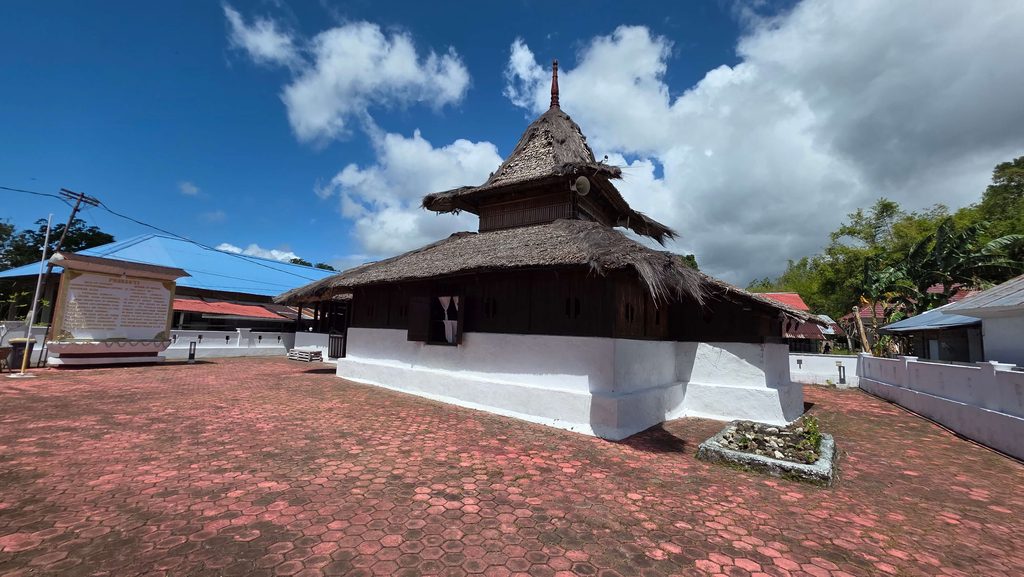
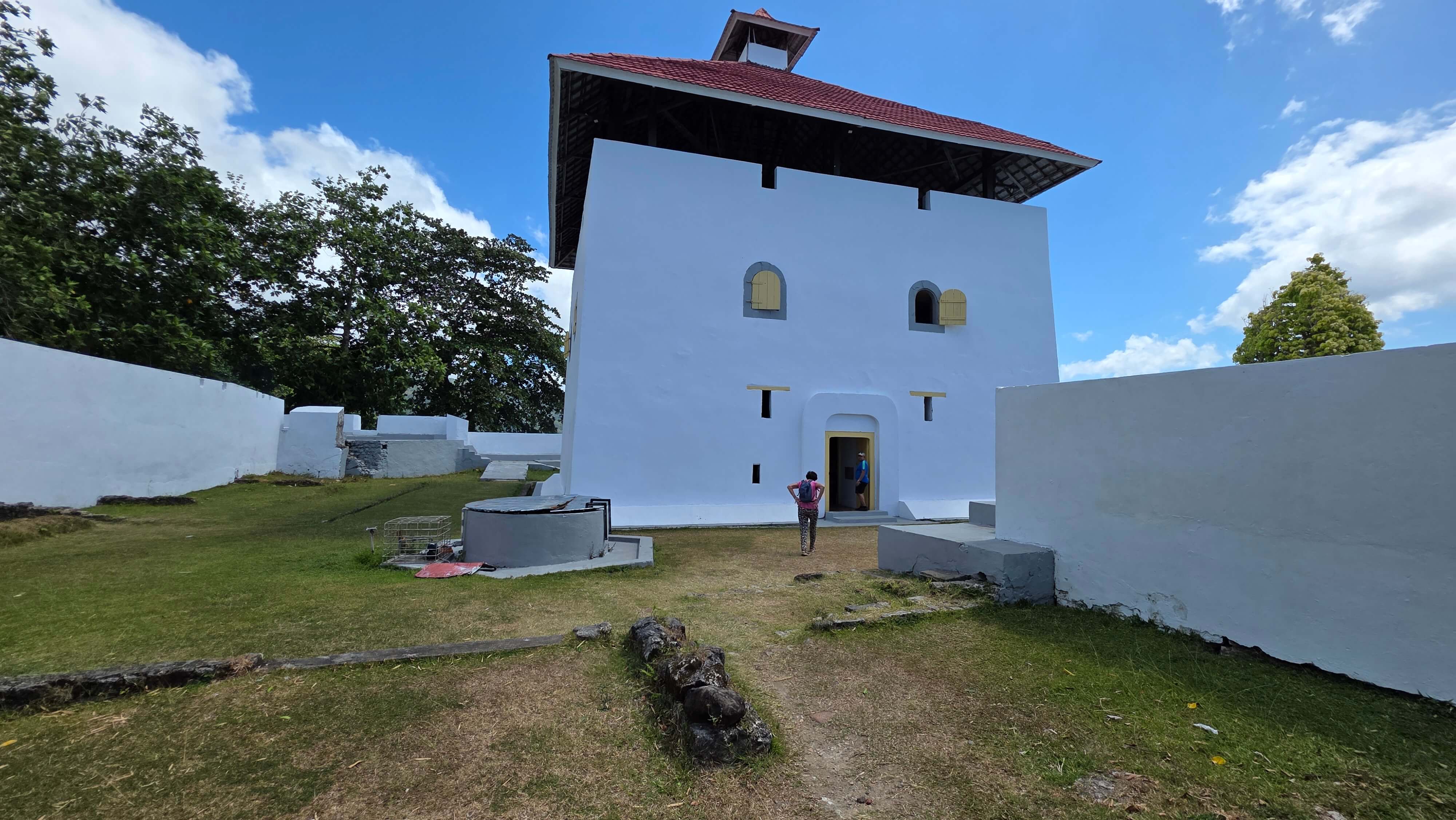
Ambon city – Wakasihu– Batu Layar– Kalauli (the second oldest village mosque in Indonesia) – Lubang Buaya Morella– Ambon city
Beaches of Ambon
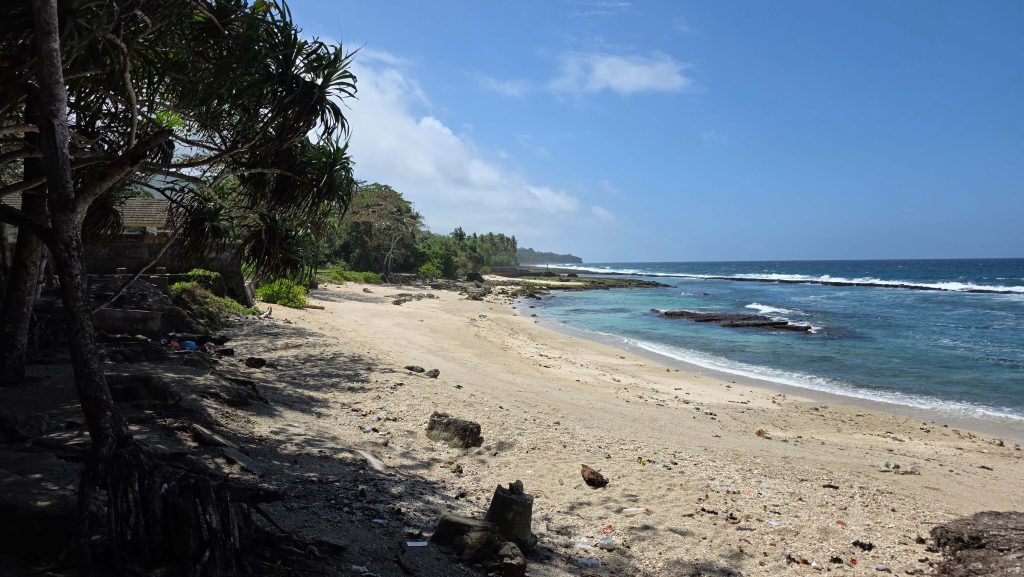
You won’t really find “tropical paradise” (bounty-style) beaches on Ambon; for those, you would need to visit other islands.
We visited several beaches (*pantai*), but the local definition of a “beach” differs somewhat from what we are used to in the Netherlands. Most of the beaches weren’t particularly noteworthy—often consisting mainly of boulders—though the surrounding area is beautiful. You usually have to pay an entrance fee of about 0.25 euros per person. The beaches just outside Ambon city gave the impression that their best days were long gone; everything was broken or worn out. Still, we found that some of them had a certain charm. We were the only visitors at each of these spots, and there was nowhere to buy food or drinks. It’s a different story on the weekends, when they become much busier with the local population.
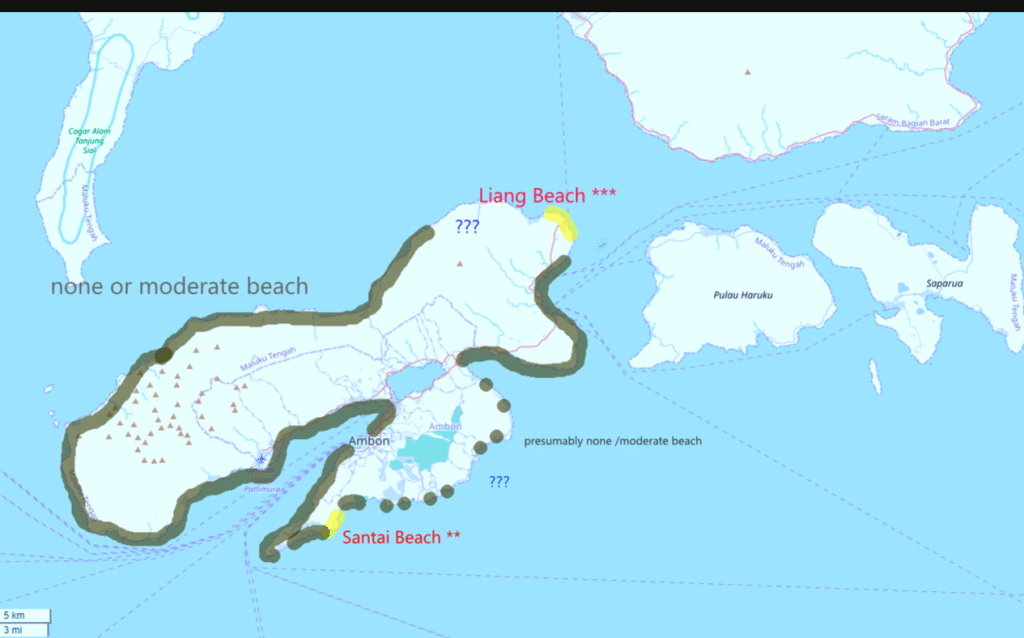
These are our findings:
As the map shows, the majority of the island has no beach, or at least nothing that could really be called a beach;
At 12 km SW of Ambon city you will find a number of beaches; Santai Beach ⭐⭐ 1/2 and some adjacent beaches ⭐1/2
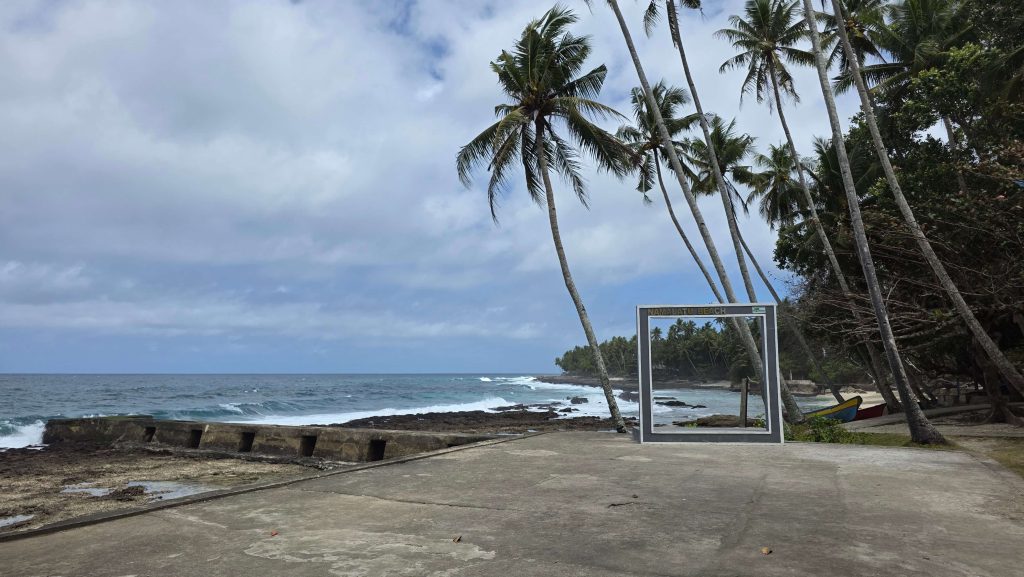
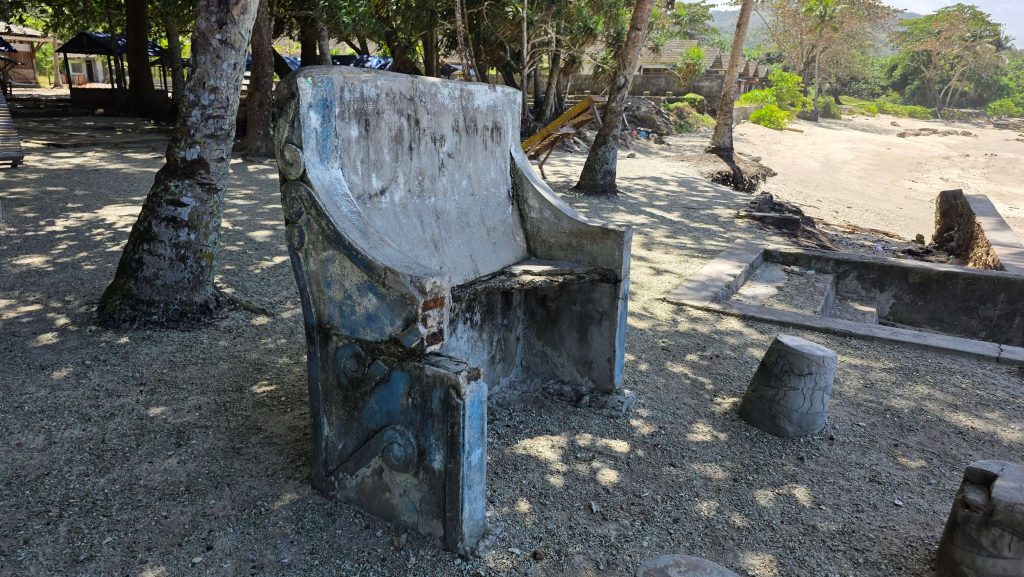
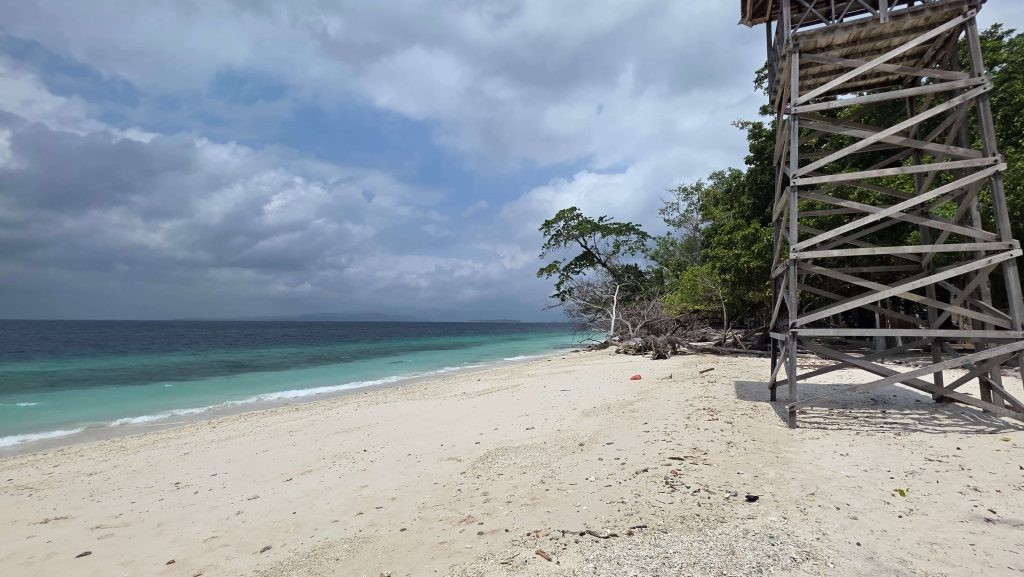
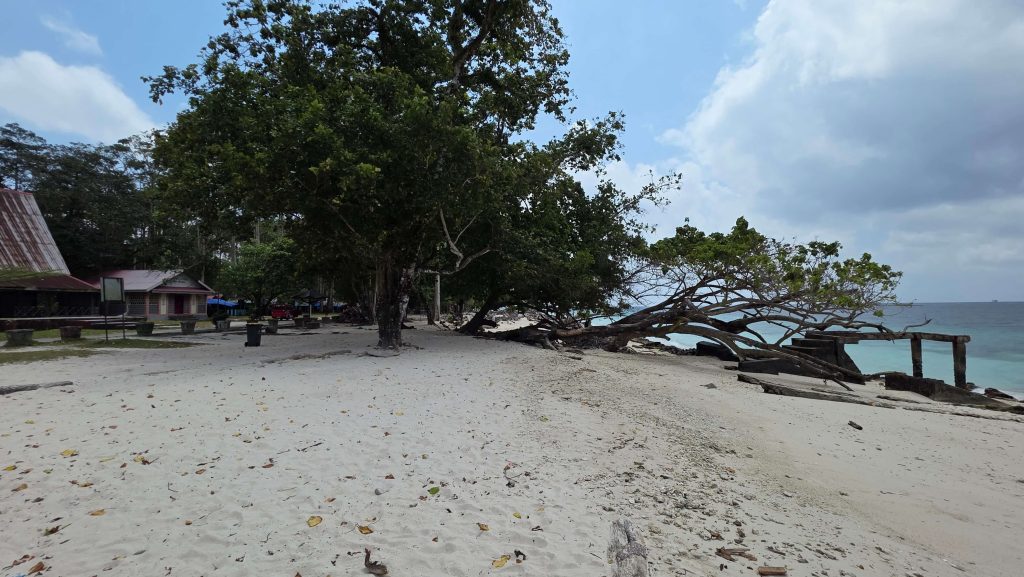
The most beautiful beach in Ambon is probably Liang Beach ⭐⭐⭐ and is located 40 km (1 hour ride ) from Ambon City.
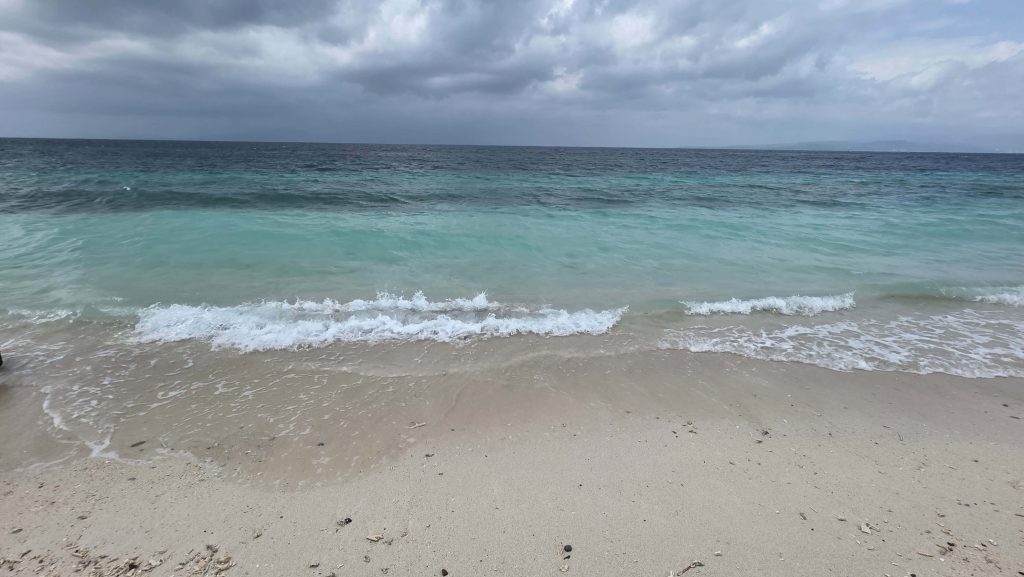
Hotel Natsepa Beach ⭐⭐⭐⭐⭐
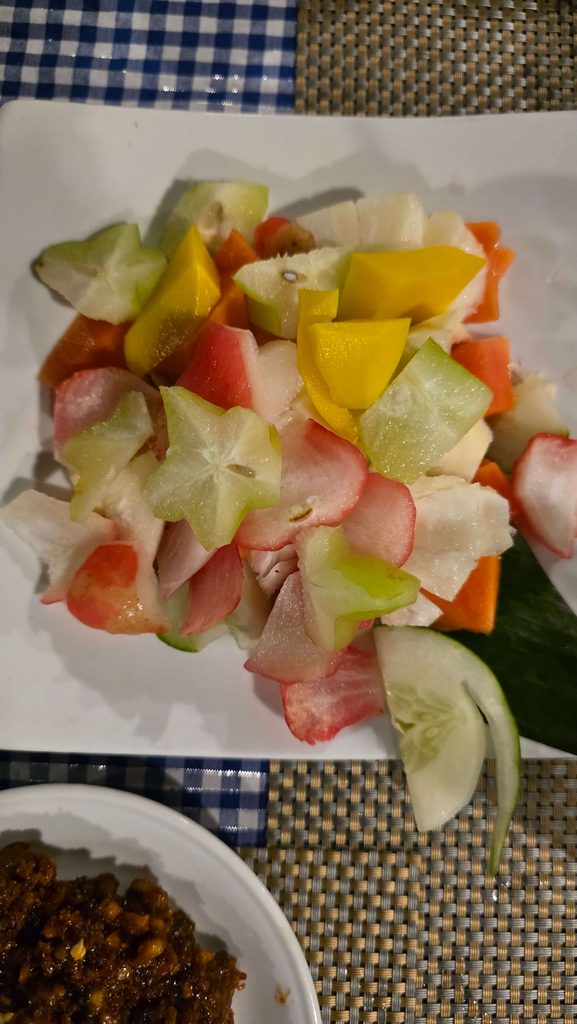
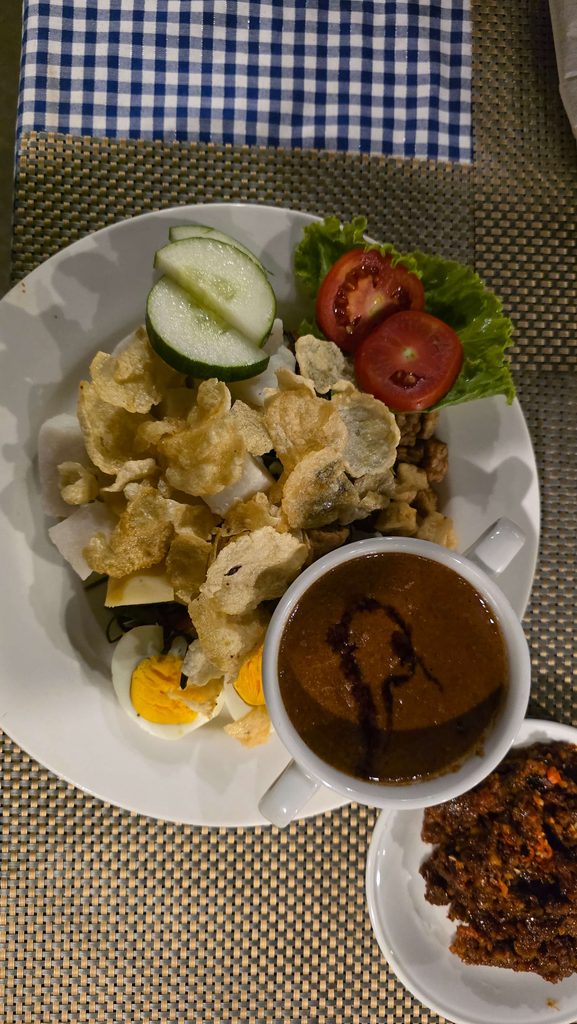
The Natsepa Hotel is truly fantastic. Right outside the resort, you’ll find the well-known roadside stalls selling *roedjak* (tropical fruit served with a spicy sauce). While there isn’t really a proper beach to speak of, the large swimming pool more than makes up for it.
Set on a spacious private estate with its own access road, the property features a large swimming pool. It serves as a gathering place for the Dutch-Amboinese community—though they are certainly not the only ones who come here; it is, in many ways, *the* hotel of Ambon. The rooms are spacious—some with sea views—and there is an excellent restaurant. During our first stay at Natsepa Beach, the hotel was occupied exclusively by about 20 Dutch-Amboinese guests, making for a very lively atmosphere. On our second visit, the mix of guests was quite different. There was a German family—who, I believe, actually live here and even speak some Moluccan—along with four Chinese guests, a group of Dutch-Amboinese, and a family of about ten devout Indonesian Muslims. The five women in this group wore *chadors* and *niqabs*—black garments covering them from head to toe, with only their eyes visible. This made for a diverse scene at the swimming pool, which is used by all the guests. As for swimwear, you see everything: small bikinis, old-fashioned full-coverage swimsuits, and women dressed entirely in long-sleeved shirts or blouses paired with long trousers. Most surprising of all, however, is that the Muslim women—even in their full-length black robes and face coverings—enter the pool fully dressed. And they clearly have a wonderful time!
Rates range from €39 to €55 per night, including a magnificent breakfast buffet that features a variety of “Western” options. There are even actual slices of cheese tucked away in a refrigerated display case😊. You’ll also find yogurts, eggs prepared in various ways, and, of course, an Indonesian hot buffet.
The ladies at the reception speak excellent English and are very helpful.
The rooms are spacious, though the bathroom facilities are a bit dated. The beds are perfectly fine.
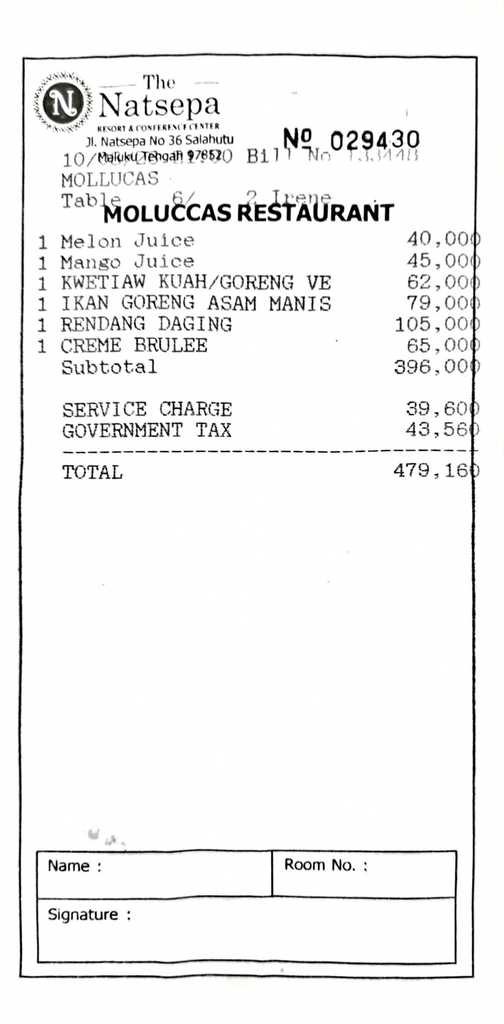
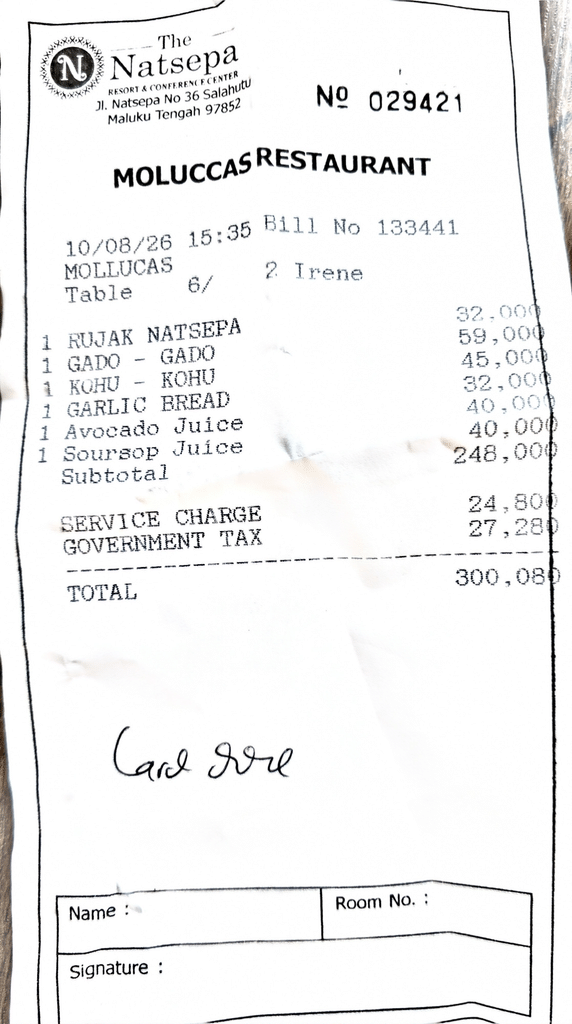
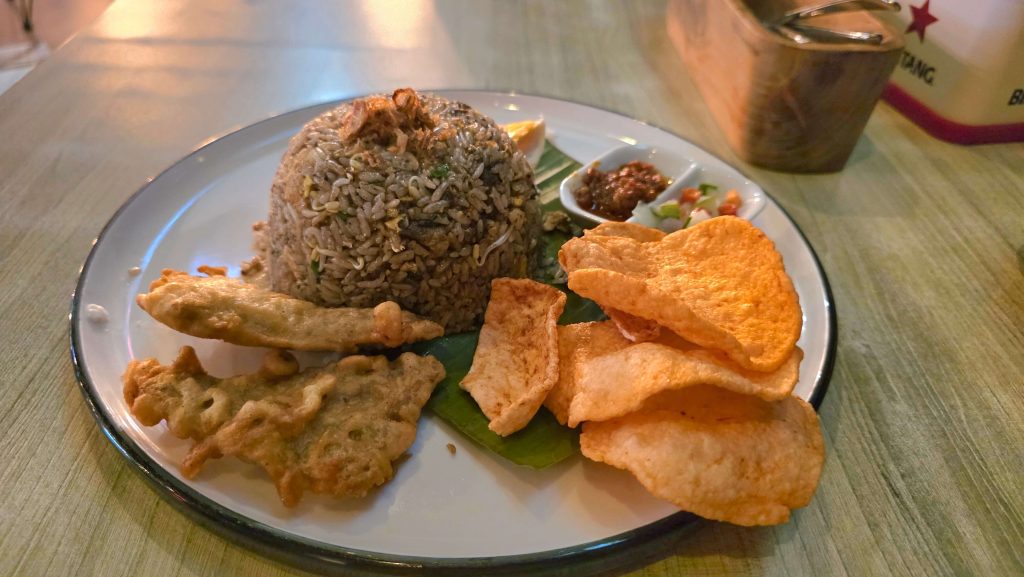
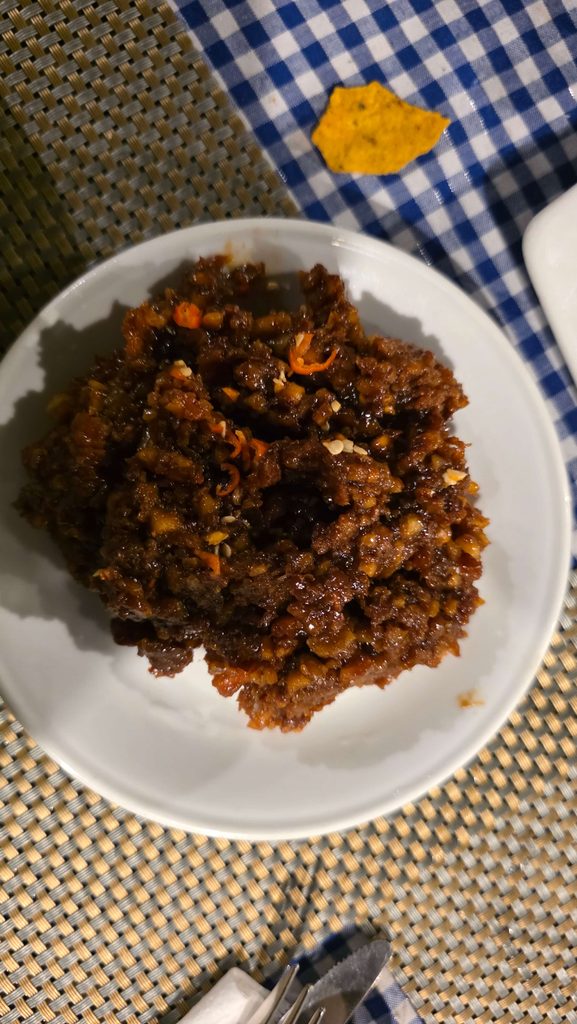
The restaurant offers an extensive menu with various local specialties, such as tuna satay and rudjak. For dessert there is an excellent crème brûlée😀. The price level is on the high side by Moluccan standards, but for us it is very affordable; For a main course, dessert and fresh tropical juice, you pay about €25, including tax and tip.
Distance to Kota Ambon = about 20 km and takes about 45 minutes. A Grab costs around €6-8 and cheaper than the hotel taxi. By the way, you can also take an Angkot on the road towards Ambon city. Then you only pay € 1 per person!
The airport is 28 km away and the journey takes 45 minutes to an hour, depending on traffic. Grab is available, but you might as well take the hotel taxi, because it often costs the same (€14) or sometimes even less than Grab, for which we once paid €18 from the airport to the hotel.
For the ferry from Tulehu to Seram it is best to take the hotel taxi with (a lot of) luggage (€8)
We have also arranged transport from the reception to the Sacred Eels in Teluhu and Waai. We booked a car with driver for 6 hours and that cost us €33
If you want to go to Liang Beach, you can combine it with the excursion to the Sacred Eels. Alternatively; you may be able to get a Grab to that beach. Then take an Angkot back to the hotel.
The Sacred eels of Waai or Tulehu?
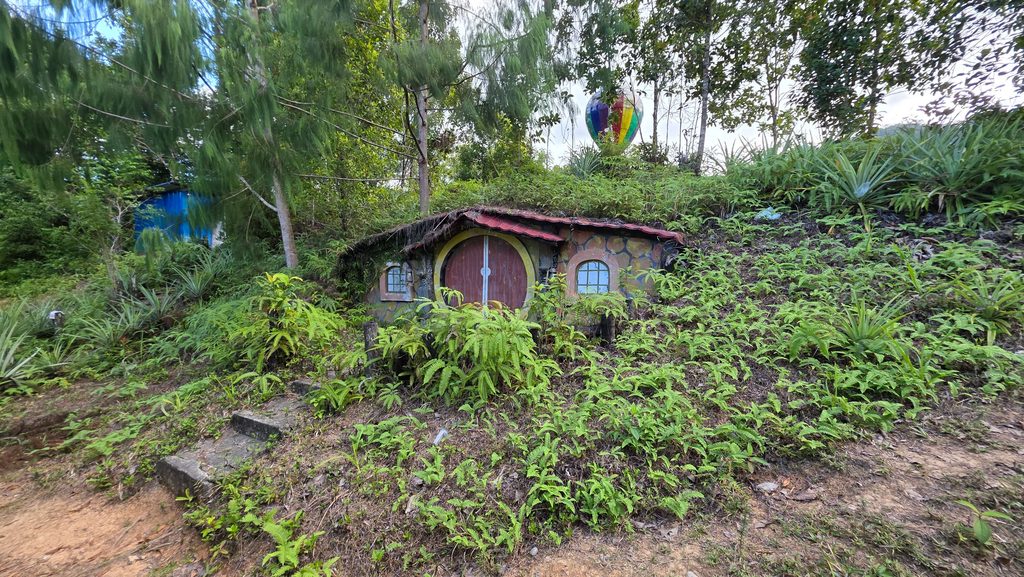
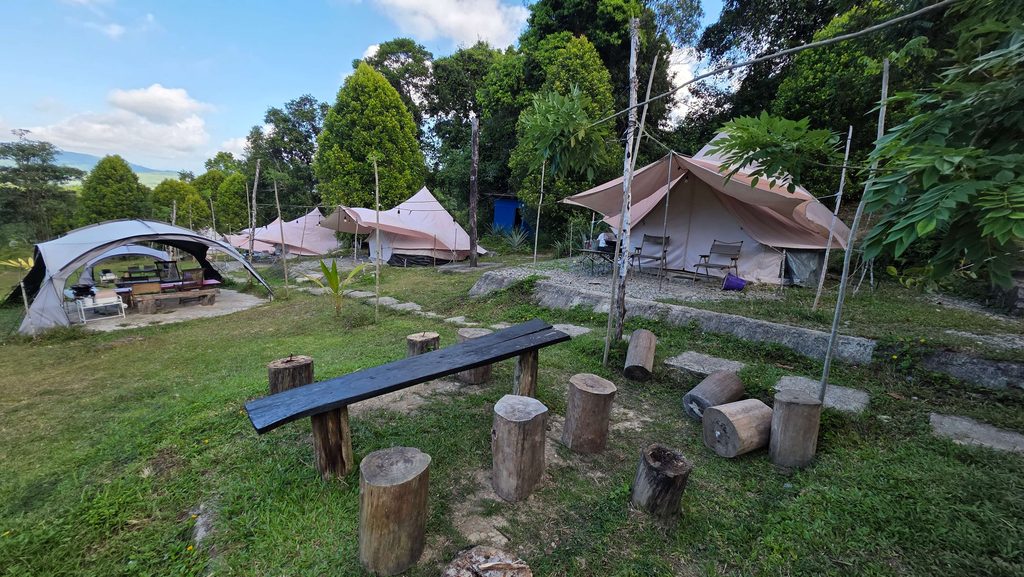
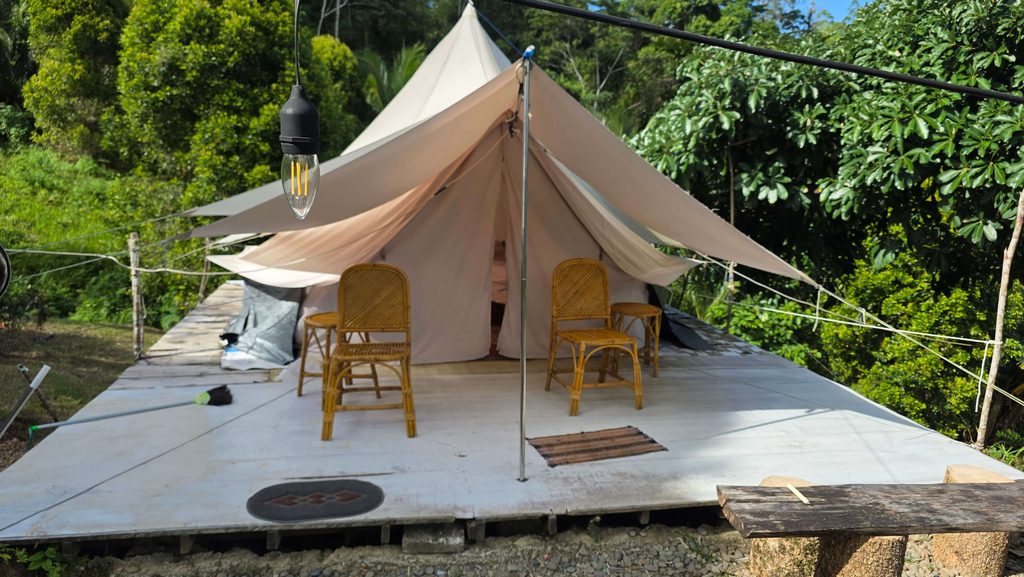
The Sacred Eels of Waai are considered one of the top attractions on Ambon. During our first stay at the Natsepa Hotel, we tried to reach the site using the Grab app. I entered the supposed location (Air Terjun Waai) into the app, but the driver ended up taking us down a bumpy country road to a campsite—with not an eel in sight! That said, the campsite itself is beautifully situated; you can rent pre-set-up tents or even individual cabins, such as a treehouse! The place is called Rumah Pohon Waai. You can find more information on the website JendelaMaluku.com
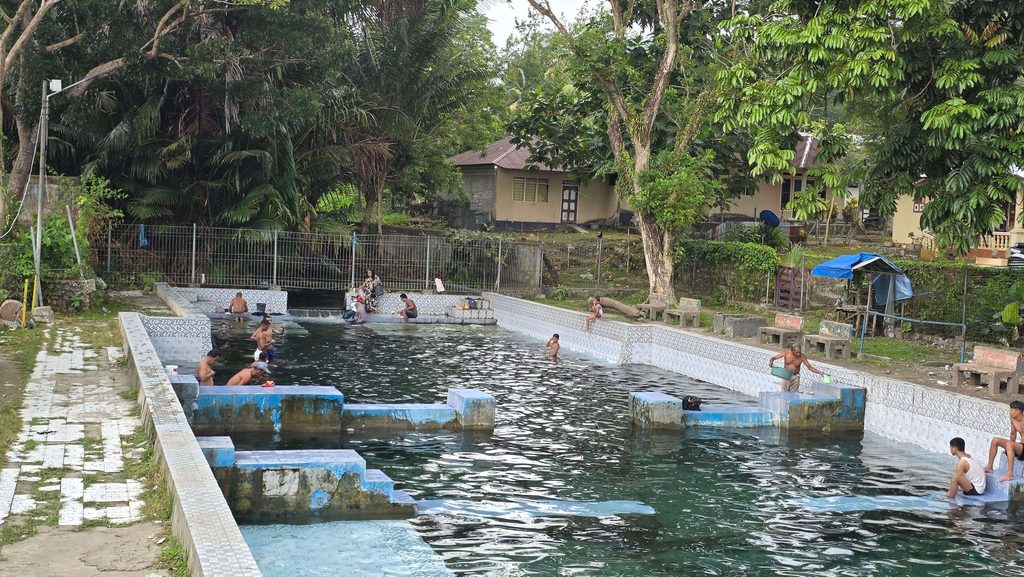
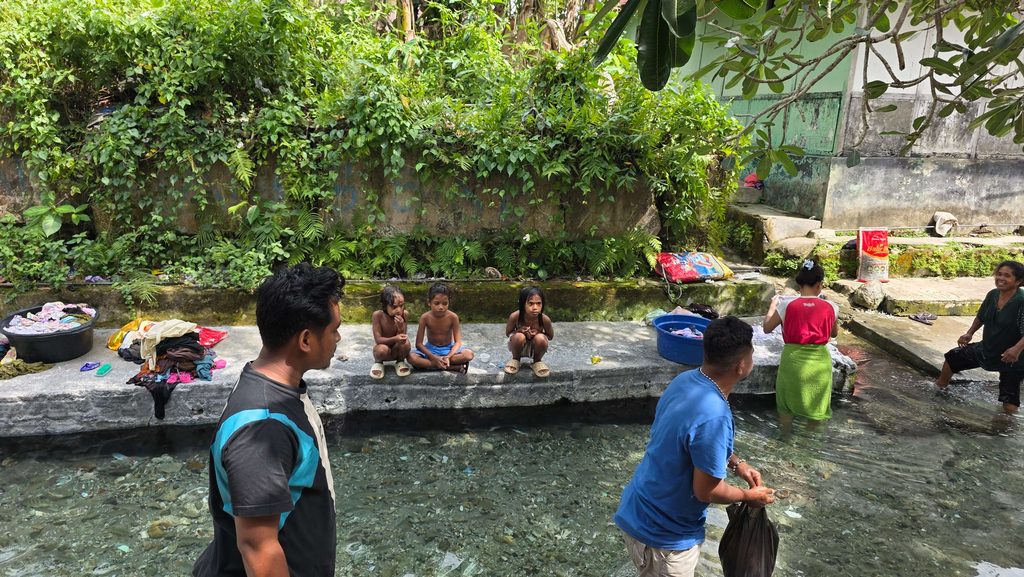
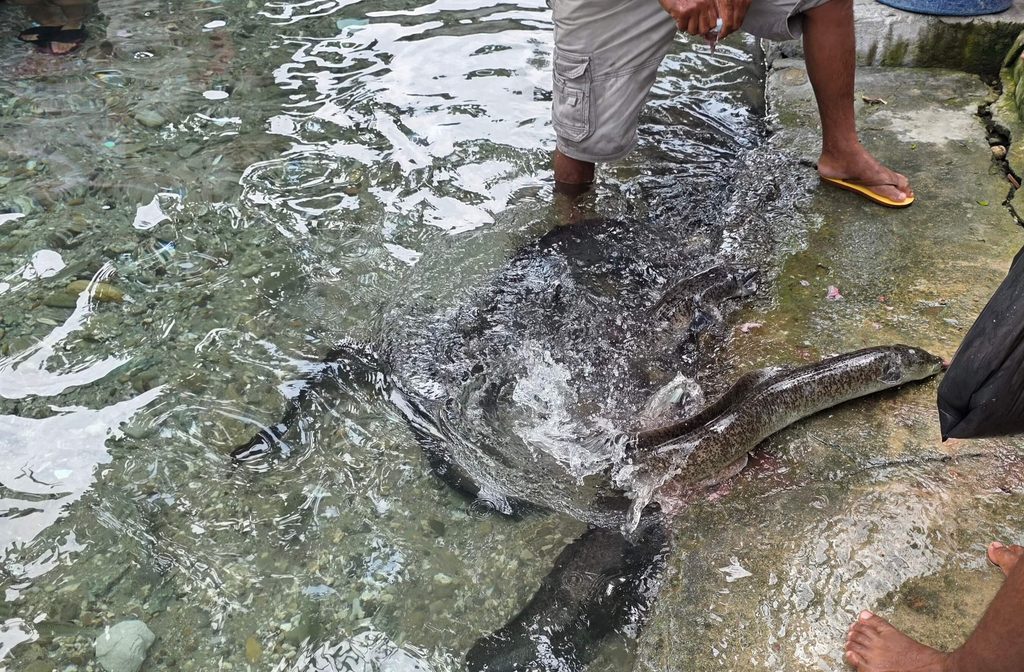
During our second stay in Natsepa—following a visit to the island of Seram—we made another attempt. We arranged for a driver through the reception; he spoke a little bit of English and took us to a spot in Tulehu that was teeming with sacred eels.
It is a narrow canal located within the village. The entrance fee is 100k IDR (€5). This is the right place. Later, at my request, we also visited the site in Waai. Sacred eels can be seen there as well, but it is very quiet; it seems that the main activity has shifted to Tulehu. Incidentally, we filmed the second video (“Ambon”) in Waai.

AMBON
CONNECTIONS
Flying:
Daily flights to/from Makassar, Jakarta and Ternate. Almost daily to Kei (Langgur). Several times a week to Banda Islands (not bookable online!). Ditto to the island of Buru and a number of other islands. A useful website for flight connections is FlightConnections.
Ferry :
Tulehu; usually 2 x daily (9-16) to Seram with fast boat. To Harakuru and Sapurua; daily. Banda Islands; daily. Multiple Pelni connections to various destinations.
More info chapter Seram
Liang Beach ; daily to Seram with a big boat.
MONEY :
10,000 Rupee = €0.50. The largest denomination is 100k. There are plenty of ATMs in Ambon city. Outside of that, hardly at all.
You can only withdraw 1,250,000 (€ 62) per transaction at the Mandiri Bank, among others. At many other banks you can withdraw even less at a time!
Fortunately, you can make multiple transactions in a row. Of course, you pay transaction costs every time. We paid an average of 50k (2.50) per transaction (of course your credit card also charges something ..) In the end, it’s not that bad.
With our Visa card we could pay in hotels, and you can also pay with your card in the more expensive restaurants. The handy thing is that you can just run GRAB, just like with Uber, via your card.
You pay the driver you hired for half a day in cash, just like in small shops and eateries.
PRICE LEVEL:
Like the entire Maluku archipelago and most other parts of Indonesia, Ambon is (very) inexpensive. The two of us spent about €80 per day, which is enough to live quite comfortably. Our first hotel cost €23 per night; the second hotel (Natsepa) was significantly more expensive during our first stay—around €52—but during our second stay, we paid only €39 per night.
That said, you could spend even less by keeping your accommodation costs to a maximum of €20 per night, eating at simple *rumah makans* (local eateries), and relying primarily on *angkot* (minivans) for transport. Do keep in mind, however, that the breakfasts at the slightly more expensive hotels (those costing over €20) are much better. With a good, extensive breakfast buffet, I don’t need to eat anything else until the evening.
TRANSPORT on the island
Outside of Ambon city and its immediate surroundings there is no GRAB. It is possible to get from Ambon city quite a bit outside the city (for example to Tulehu-ferry) with GRAB, but it is not possible to take a GRAB back to Ambon city. An Angkot offers a solution; almost all of them go to Ambon city. Follow the route of the Angkot on Google Maps and when you are just before your destination shout loudly “STOP”. When a ferry arrives, there are usually plenty of regular taxis waiting for you. Agree on the price in advance.
CLIMATE
Seasons in Ambon
- Wetter period: about May to July, with June often as the wettest month.
- Relatively drier period: about September to November, with October often being the driest month and temperatures being around 30 degrees.
Due to its location in the sea, Ambon does not have any major temperature differences between day and night. Even at night it usually stays around 24°C.
In August when we visited Ambon, it was alternating between sun and clouds and there was regularly a short shower. The temperature fluctuated between 26 and 28 degrees during the day.
POPULATION
Ambon has 620,000 inhabitants.
The inhabitants of Ambon are a mix of different population groups from the Moluccas. In addition to Bahasa Indonesian, many people also speak Ambonese Malay, a local colloquial language.
Music, hospitality and strong family ties play an important role in the culture. Ambonese are also known in Indonesia for their singing talent and rich musical tradition.
Many traces of the Dutch period are also still visible, both in architecture and in family names and cultural customs. We thought the people were very nice and honest. Remarkably, Belanda, as with the Netherlands, is quite popular. When the Netherlands won a match during the last World Cup, half the city walked out with horns and Dutch flags to celebrate the victory!
LANGUAGE
It is useful to know a few words of Bahasa, because hardly anyone speaks English. Only the larger hotels have an English-language reception. Furthermore, you will have to get by with Google Translate.
SIM
I purchased a physical SIM card from Telkomsel at one of their stores in Makassar (Sulawesi). It took a little while, but in the end, I had a registered SIM card with a local phone number. An eSIM, by contrast, does not come with a phone number. Furthermore, a standard physical SIM card is much cheaper than an eSIM.
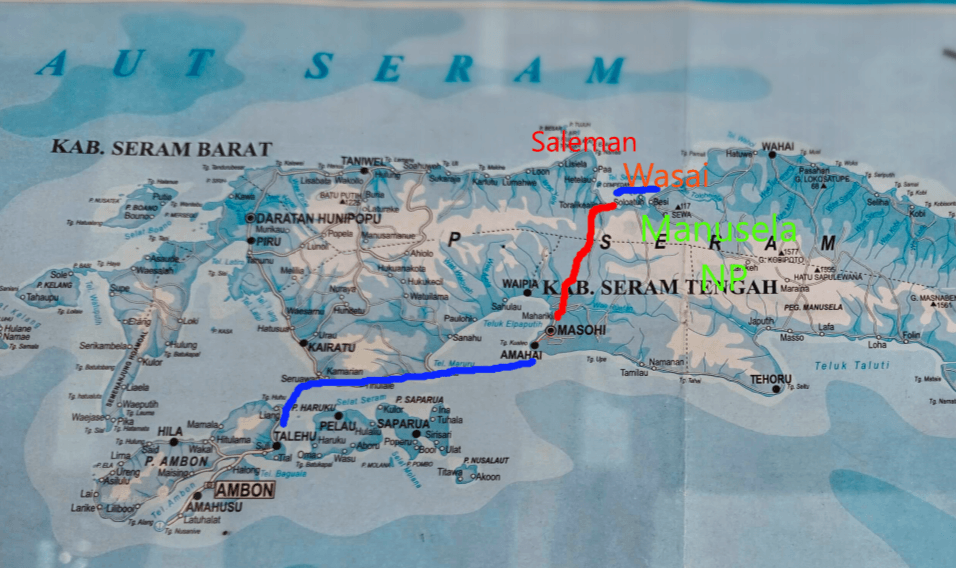
Our original plan was to travel to Seram via Saparua. Saparua is part of the Lease Islands, along with Haruku, Nusa Laut—known for its beautiful dive sites—and one other tiny island. However, it turned out there was no direct ferry from Saparua to Seram. To get there, you first have to return to Tulehu on Ambon and take the ferry to Seram from there. For this reason, we decided to travel directly from Tulehu to Amahai, the ferry port on Seram.
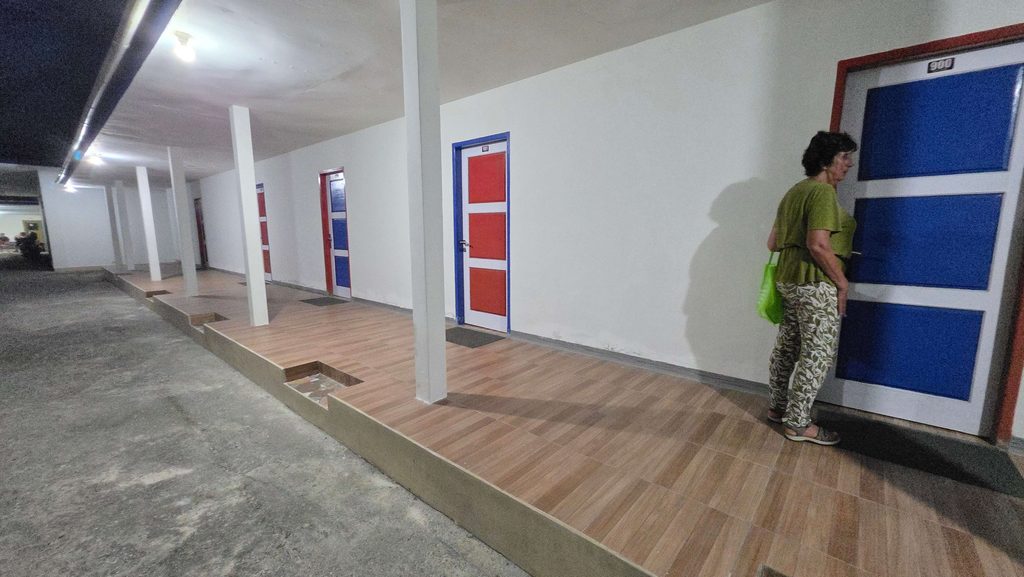
After waiting for some time in the departure hall, we boarded a medium-sized boat. The VIP section was only a quarter full. We sailed along the northern side of the islands of Haruku and Saparua. The sea was calm, but once we reached the open water, the boat began to roll and sway quite significantly. After two hours, we arrived in Amahai. Seram is the largest island in the South Moluccas; it is 329 km long and 70 km wide. We took a taxi, which brought us from the port town of Amahai to Masohi—the capital of the island of Seram—in about 10 minutes. We are staying at Hotel Isabella, one of the only two simple hotels available. There are no proper restaurants, either—just a handful of small eateries with limited menus. We managed to have a meal together for a total of 3 euros. The few tourists who visit this island are generally here to see family, and the even smaller number of visitors who aren’t here for that reason usually head straight to the north coast upon arrival. We decided to stay for one night, though it became clear as soon as we arrived that figuring out how to leave would be a challenge.
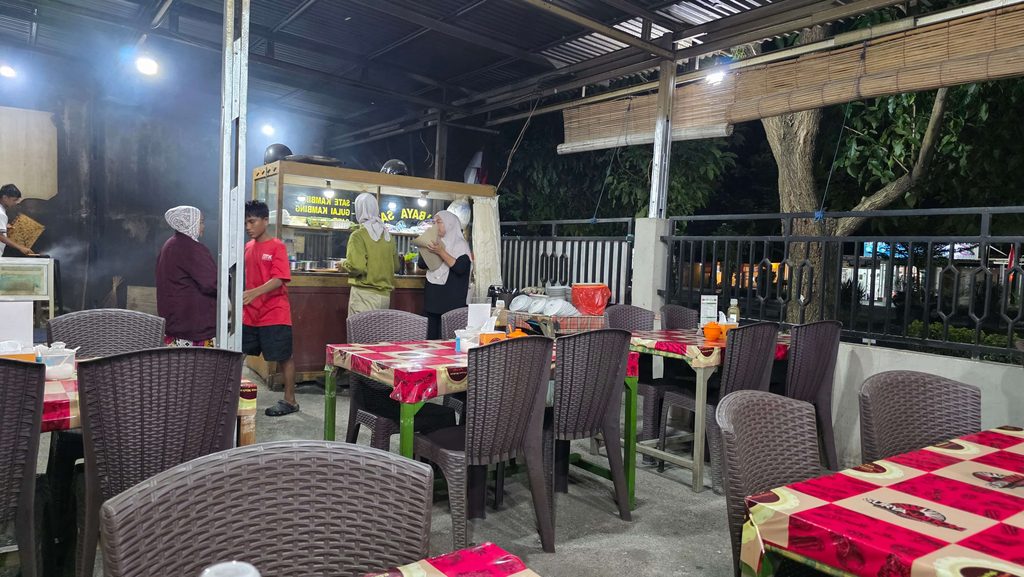
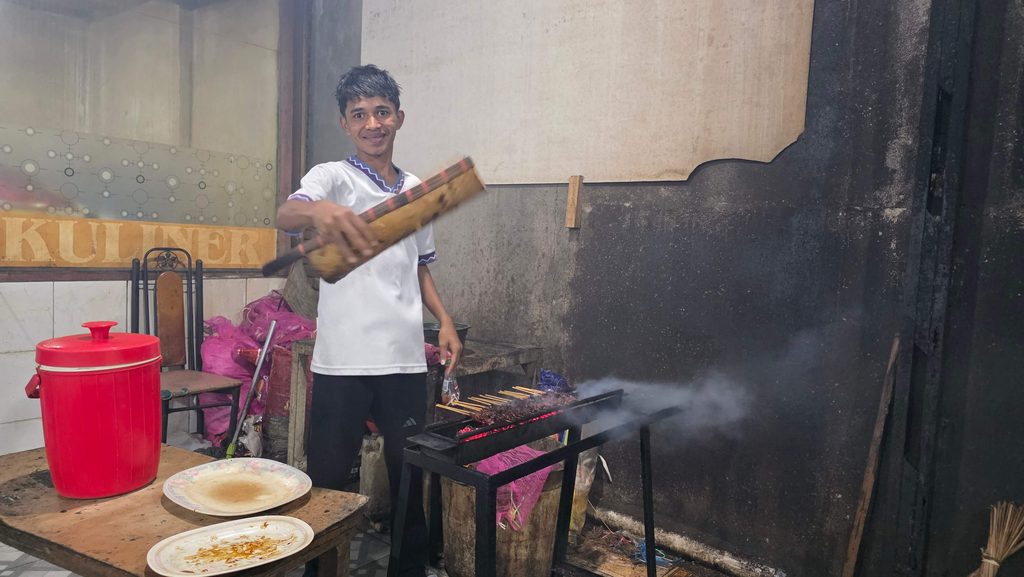
To get to an eatery, I pulled up the taxi app MAXIM—a tool I remembered from our trip through Borneo, which often comes in handy in places where GRAB doesn’t operate. The app is in Bahasa, so it took a bit of figuring out, but I managed to book a taxi. I also arranged for the same driver to take us across the island the following day.
MASOHI⭐½
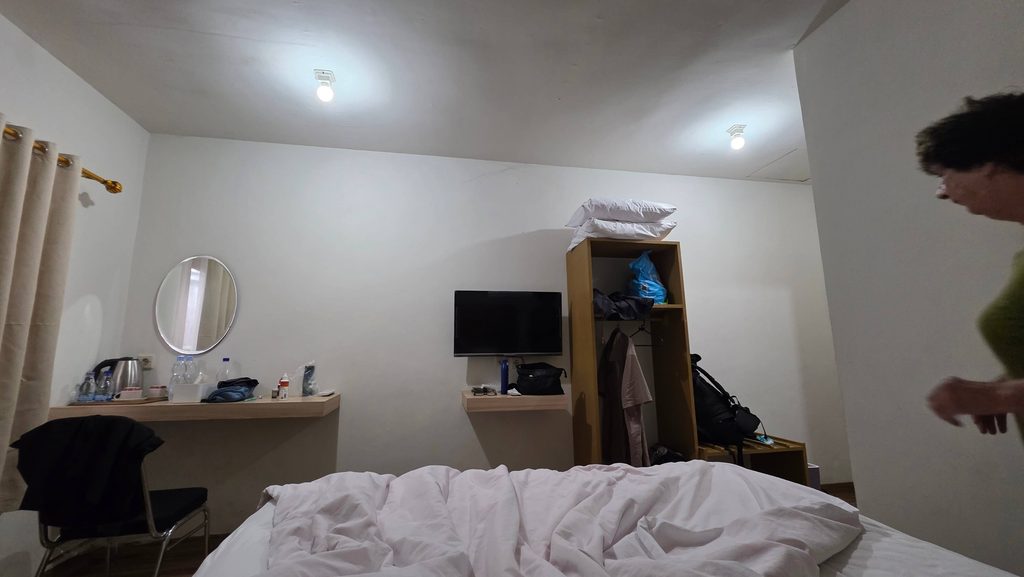
Hotel Isabella ⭐⭐⭐ €18, including a simple breakfast; clean standard room with well-functioning air conditioning. Bathroom facilities are okay.
+ There’s even a swimming pool!
– The common areas are very uninviting, and no one speaks English. There is no restaurant. Book via Agoda.
Warung Makan Surabaya ⭐⭐⭐ A simple eatery serving good satay and gado-gado. We ate there for a total of just €3!
Getting around Masohi:
On foot, or use the taxi app MAXIM (you will need a local phone number to create an account, so a physical SIM card is required—an eSIM won’t work), or ask the hotel to call a taxi for you.
Leaving Masohi:
We saw angkots (minibuses) and shared taxi services operating along the route to Saleman/Sawai.. We arranged private transport (see blog) and paid only €25 for the entire trip to Saleman. At that price, it’s hardly worth the extra hassle…
Note: A 10% tip is greatly appreciated. For a 3-hour drive, you are not expected to stop for lunch or similar for the driver.
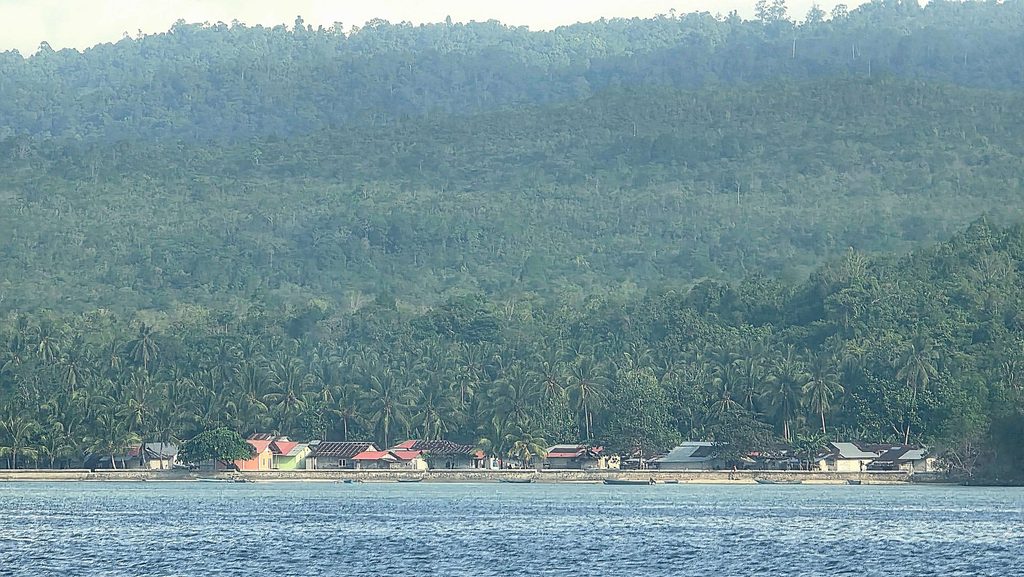
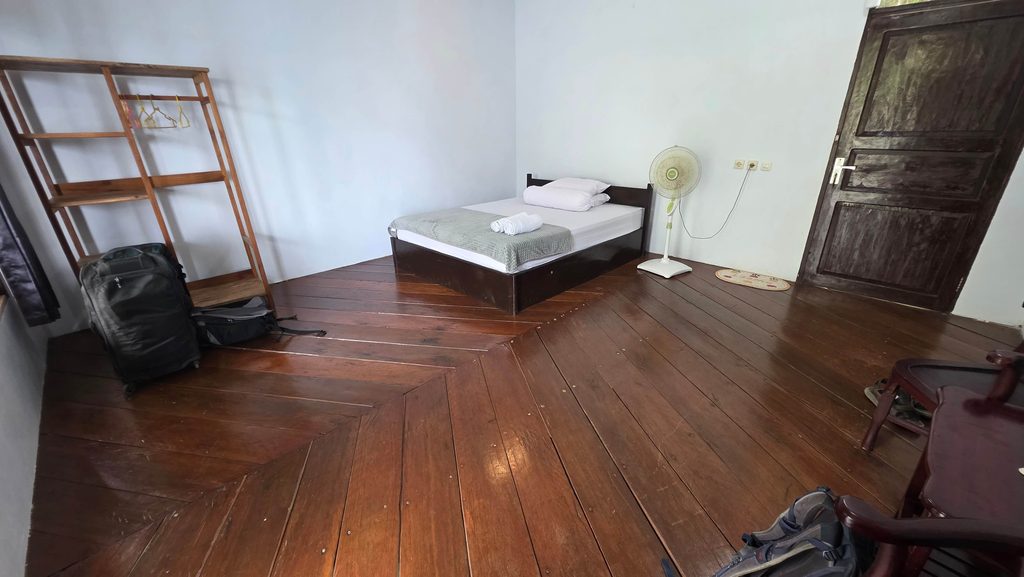
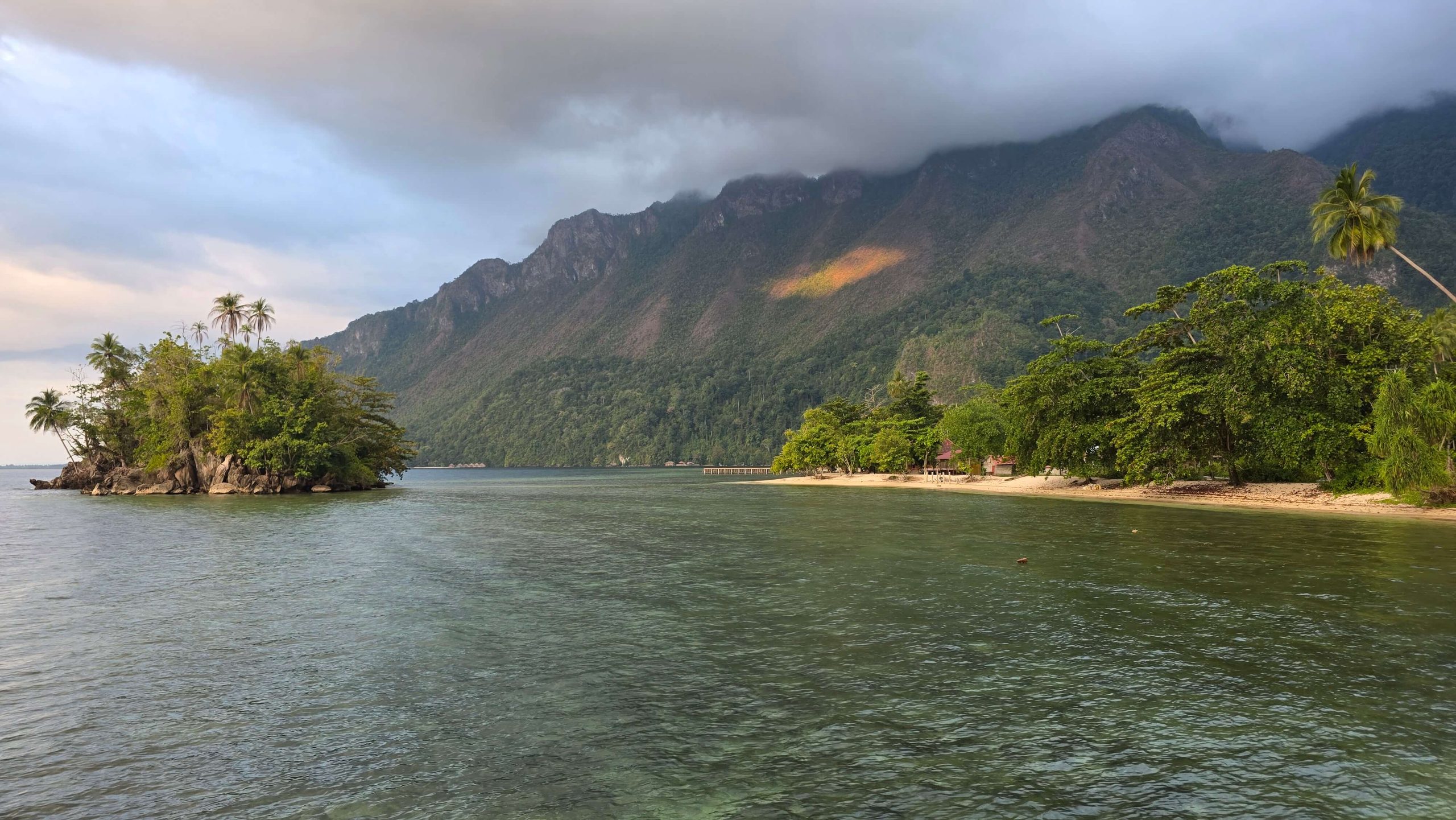
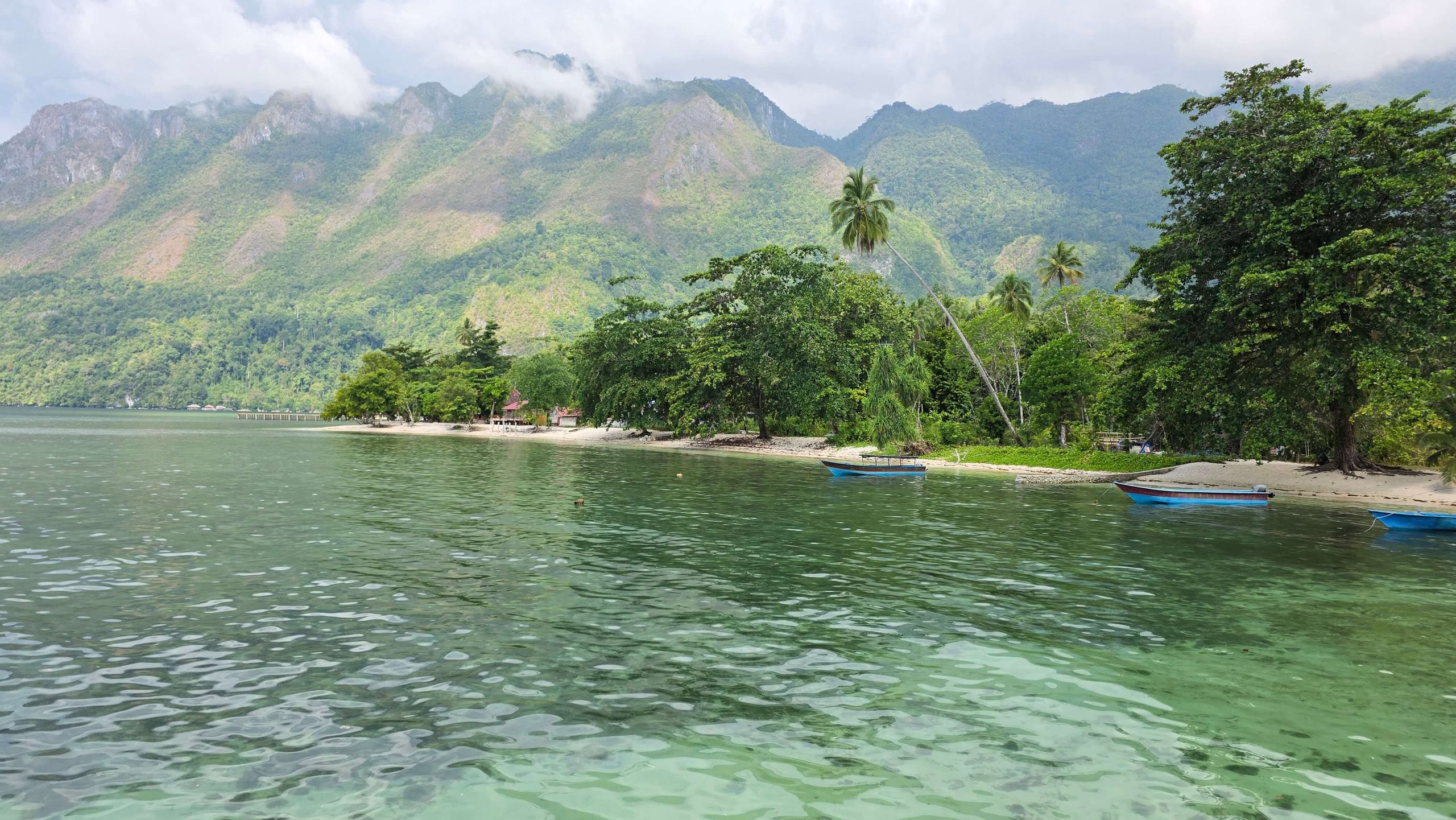
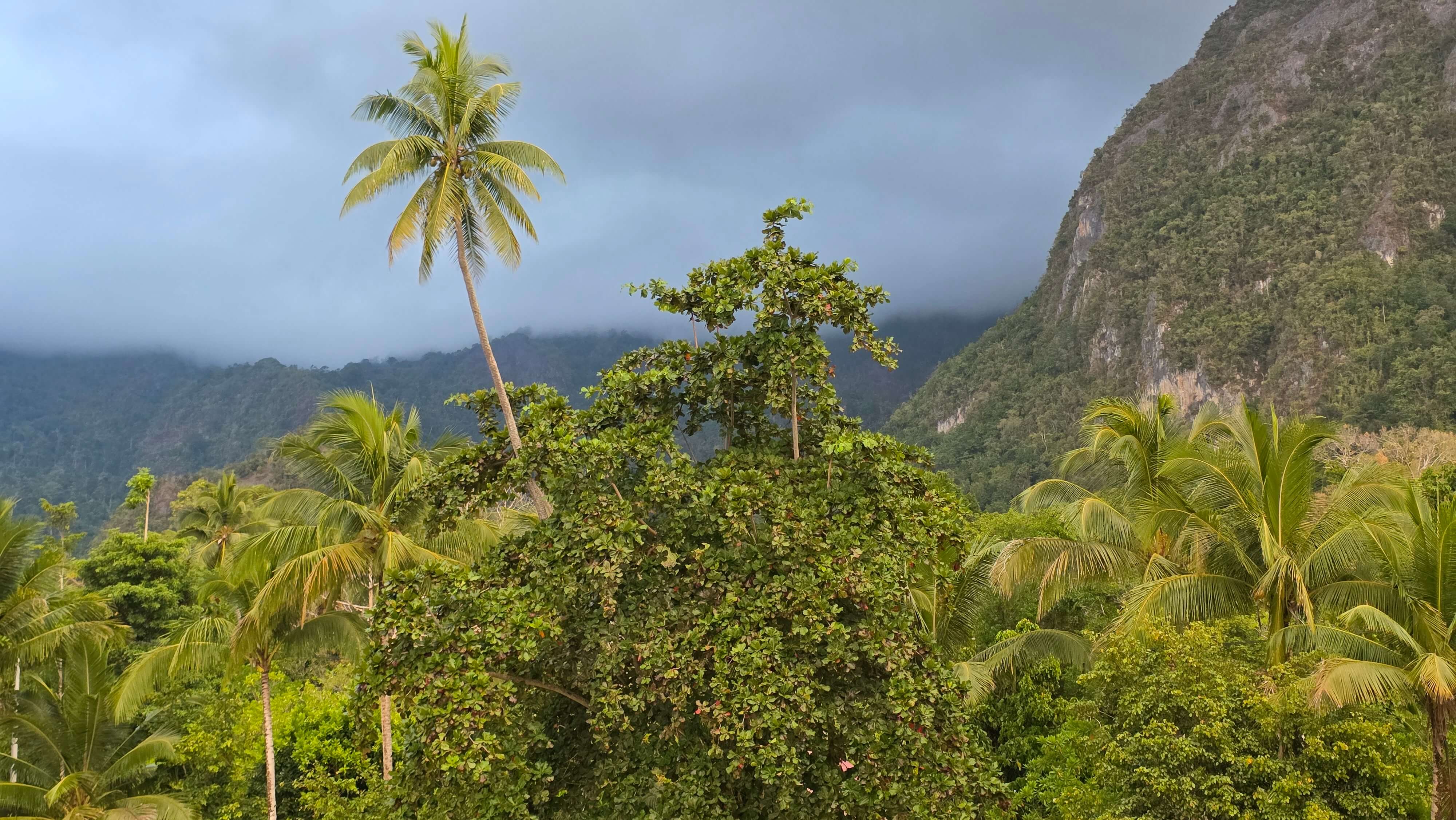
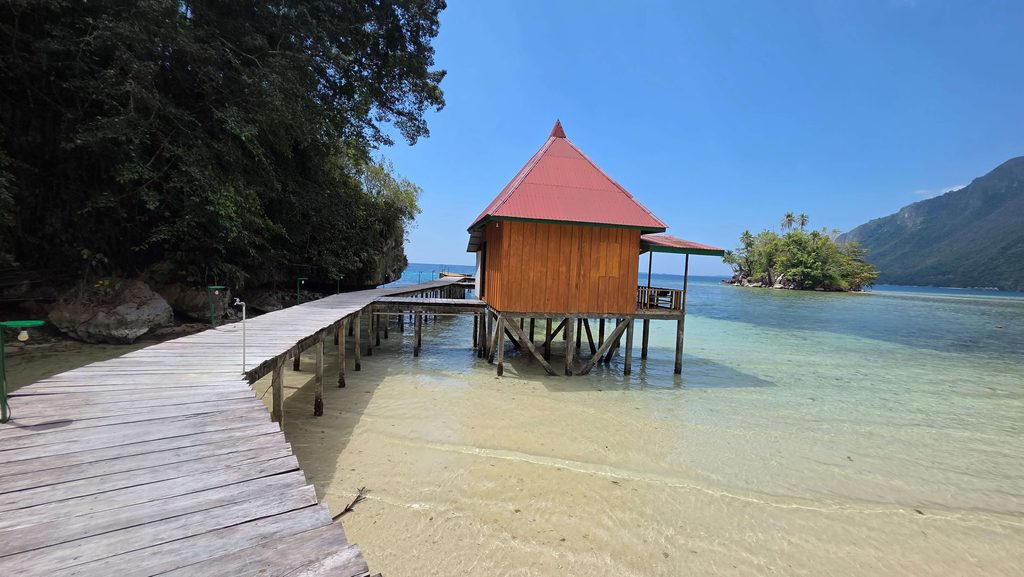
The next day, we crossed the island of Seram, a journey that took two and a half hours and cost 25 euros. The first stretch was covered in sago palms—sago is the traditional staple food here. From there, we headed into the mountains, an area defined by pristine rainforest. We ended the trip in the village of Saleman, on the island’s north coast. From there, a short boat ride brought us to Singkey Beach—our own little slice of paradise. Singkey is a dreamlike tropical beach; it features three stilted bungalows built over the water, and we are provided with three meals a day. The bungalows are spacious and include large terraces with fantastic views. The water is crystal clear and pleasantly warm, and there are only four other people on the entire beach. It’s incredible that places like this still exist. We feel rich
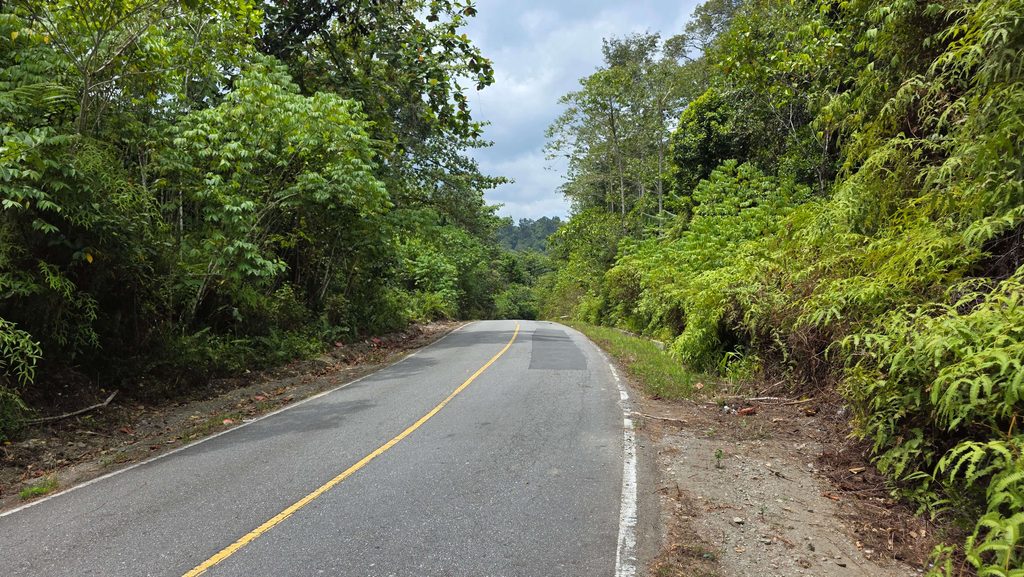
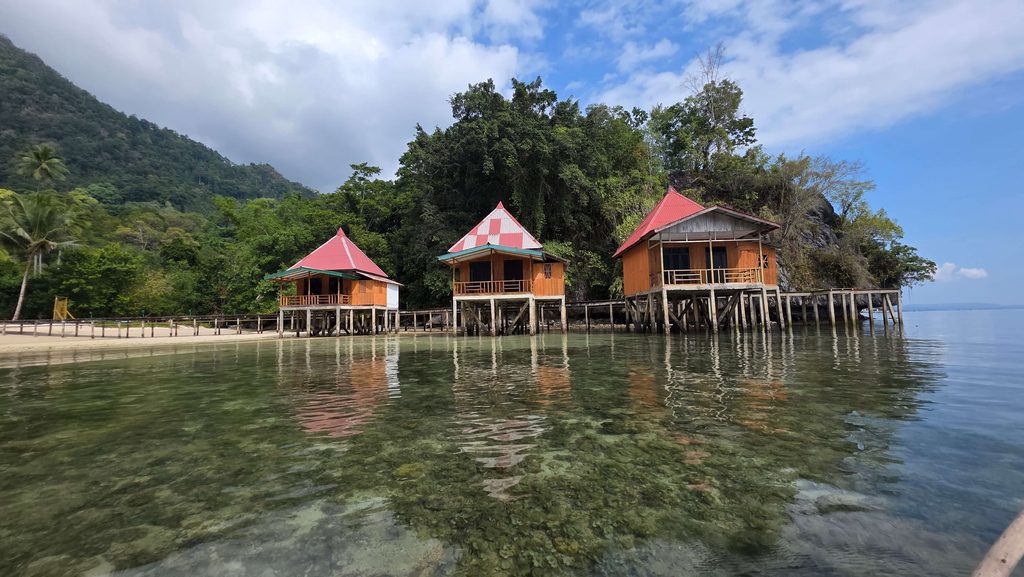
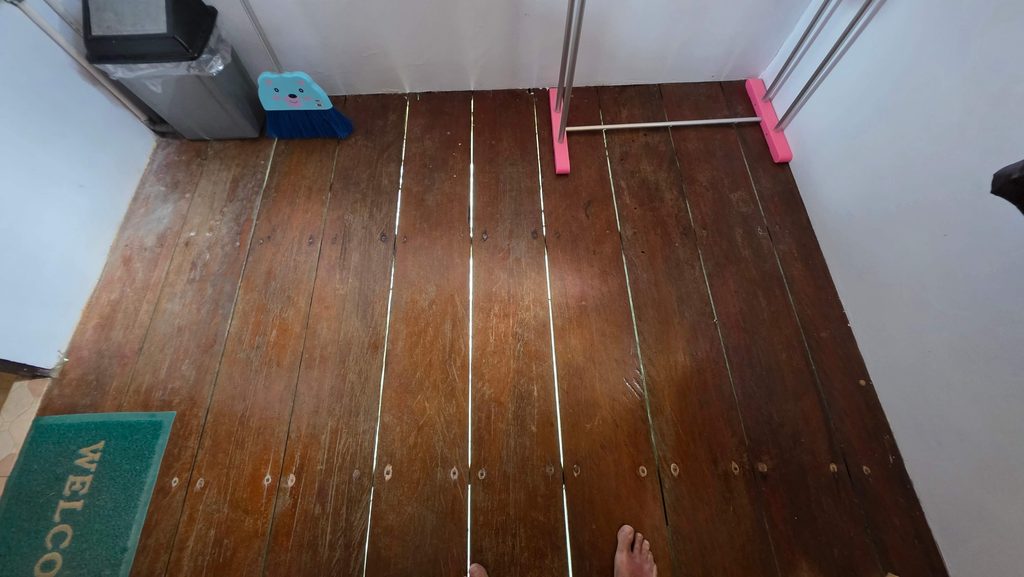
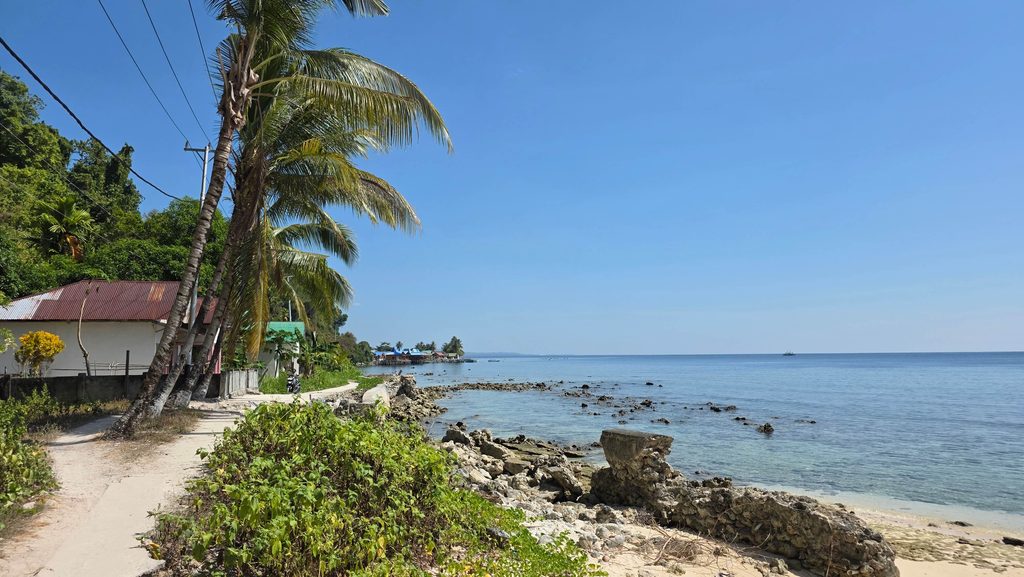
Waking up in our little house by the sea is wonderful. Through the gaps in the floorboards, you can see the clear seawater. After breakfast, we took a walk to the village. Our cottage isn’t accessible by car—only by boat or via a narrow, steep path along the beach. The village consists of a single (sandy) street lined with tiny shops. The houses there are very simple, as is the life the people here lead. Life in the villages of the Moluccas often reminds us of Africa. The language barrier has been a bit of a challenge on this trip; where we are now, we haven’t met a single person who speaks English. Everything has to go through Google Translate—a tool we’re becoming increasingly adept at using. Conversations here involve almost no spoken words; instead, there’s a lot of tapping on phone screens. Even the simplest English words aren’t recognized, which sometimes leads to some hilarious moments. After our walk, we enjoyed a lovely lunch. Food is important in Indonesia—and therefore a key part of our journey—especially since the Moluccas have so many unique local dishes. Afterward, we had a wonderful time heading into the sea. It is so incredibly clear; we spent the rest of the day relaxing around our little cottage and enjoying the immediate surroundings.
Failed Excursion
Today, things didn’t go quite as planned. We were supposed to take a boat trip through the bay where we are currently staying, with stops at several locations. We had hoped to spend the most time in the village of Sawai, as that is where the entrance to the National Park is located. Since we have a bit of flexibility in our itinerary, we might still be able to visit it over the next few days—we had intended to look into that while in Sawai. However, because no one here speaks English—including our boatman/guide for the day, who doesn’t know a single word—it all turned into a big mess.
We had made it clear yesterday what our wishes for the day were, but that hadn’t quite come across. The boat headed straight for Sawai. We went ashore, unsure of what to expect; we found ourselves at a lodging place called Lisar Bahari. Did they think we were planning to book a room there? We asked for coffee, which they were able to provide. The boatman sat with us, and half an hour later, he took us for a stroll through the village. It was a pleasant enough place—nice to walk through, but certainly not the right spot to arrange a visit to the national park. We got back into the boat, wondering what would happen next. But nothing else followed: twenty minutes later, the boatman—who also acted as our guide—dropped us back off at our cottage. For an excursion lasting one hour and forty-five minutes, we paid the agreed-upon 800,000 IDR (€40). We felt that was far too much. The language barrier remains a challenge! Fortunately, the area around our cottage is a wonderful place to relax.
SAWAI
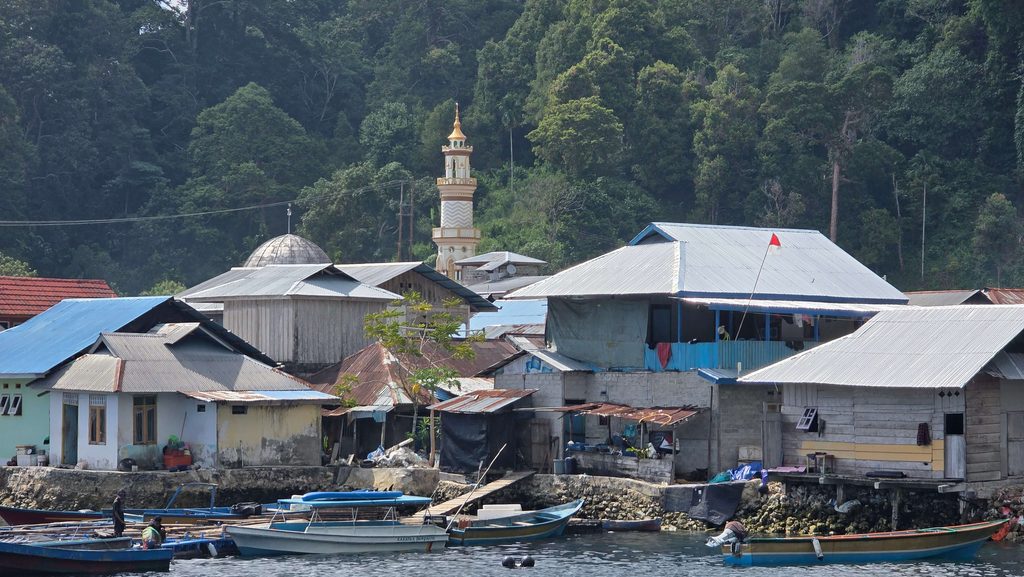
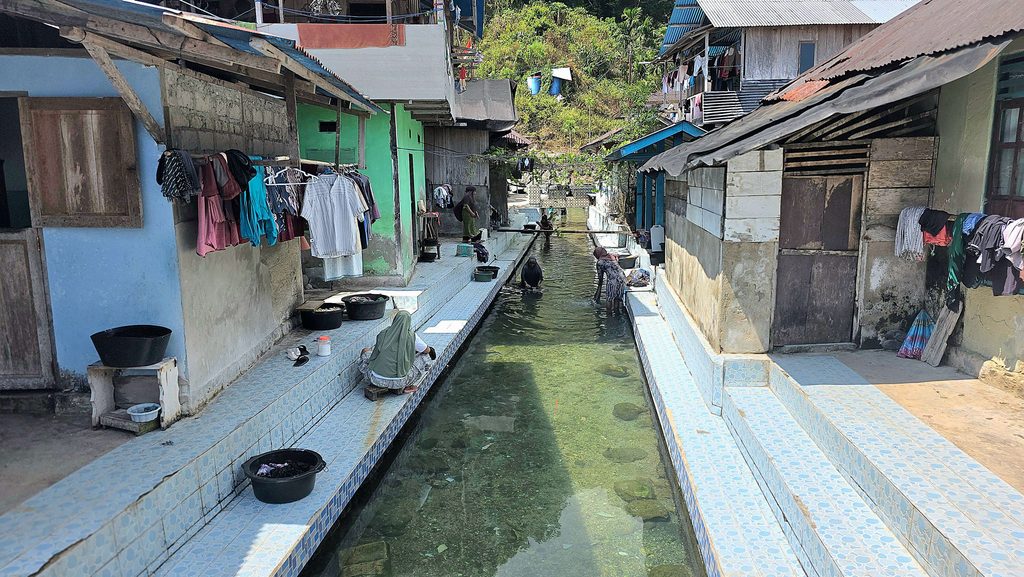
Sawai ⭐⭐⭐ is a nice village to visit. The beautiful minaret of the main mosque towers over the village.
Lisar Bahari Resort ⭐⭐ is frequently mentioned in blogs and travel guides as the place to stay in this area. Tour operators specializing in Indonesia, such as Van Verre and Ramatours, also make use of this resort.
It is likely the only acceptable place to stay in Sawai. During our visit in August (2026), the complex appeared very deserted and somewhat “run-down.” We did not see anyone who could provide us with any information about the surrounding area. Nevertheless, this location is cited as the place to arrange tours to Manusela National Park.
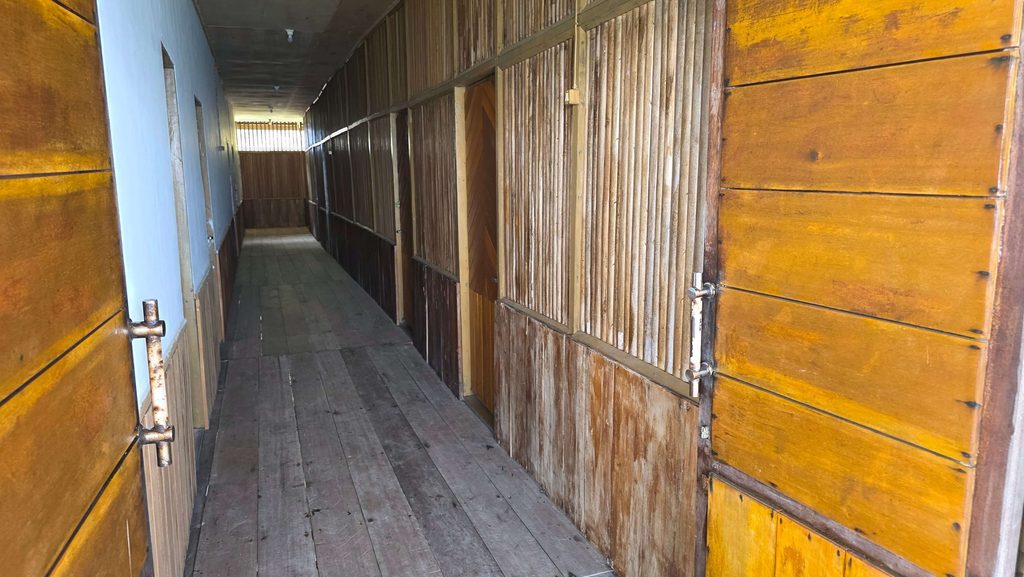
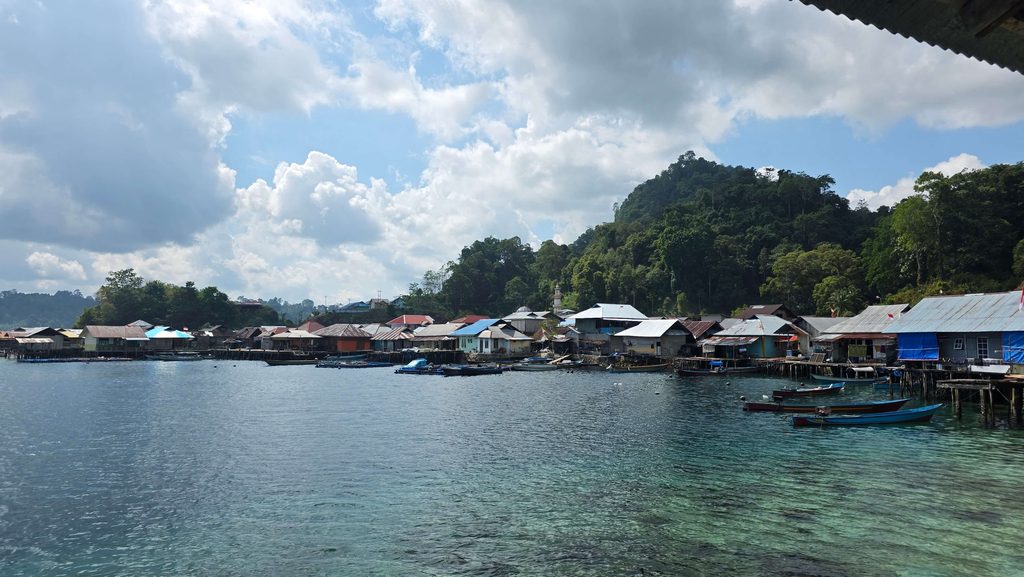
SAWAI BAY⭐⭐⭐⭐
A beautiful bay, but what is the current state of the various resorts located there? We sailed past several of them from a distance. One was completely dilapidated, and the frequently mentioned Oro Beach also looked very deserted. Hatu Tinang Cottage, however, is in operation and has good reviews.
What can you do around Singkey Beach/Saleman?
First and foremost, there’s swimming; the sea is calm, and the water is clear and delightful.
Snorkeling seems to be the primary activity here—other guests at our resort took part in it. You can arrange this through the owner of Sing Key Beach, but be aware that language barriers can lead to misunderstandings! I’ve seen other reviews mentioning similar issues regarding snorkeling arrangements.
There’s a walk to the village of Saleman, which takes about 20 minutes. We didn’t find the village particularly remarkable, but it was nice to look around. There are a few small shops with a limited selection of goods. Near the central square—where boats depart for the resorts in Sawai Bay—there is a small supermarket.
You can also walk toward Ora Beach. We followed a manageable path in that direction and passed a simple lodging area, mostly used by locals. At one point, the trail becomes quite steep; that’s where we decided to turn back! 😝
Boat trips in the area: We went on one, but it didn’t go as expected (see the section on the Sawai Bay excursion).
Keep an eye on prices—they are definitely geared toward tourists. It’s a good idea to clarify the price and the specific details of any excursion in writing, perhaps using Google Translate.
We stayed in one of the three stilt cottages at the Singkey Beach Resort. During our visit, all three cottages were occupied (including ours). You can book them via Agoda or Booking.com.
⭐⭐⭐⭐⭐ The setting is fantastic!
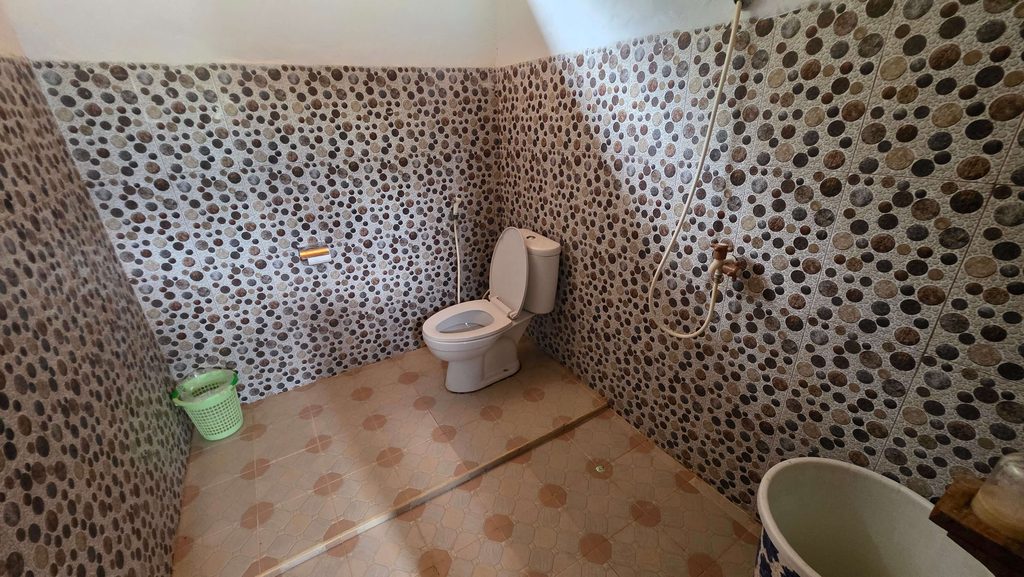
⭐⭐⭐⭐ The cottage is simple but clean. There is a fan that provides sufficient cooling—after all, you are positioned directly over the water. The bathroom facilities are basic but adequate. We paid only €29, which included a reasonably good breakfast.
⭐⭐⭐½ The food is “whatever is being served” (set menu). You can, however, specify if there are things you don’t eat or like, or if you are vegetarian. The quality is good—sometimes even surprisingly so!
⭐⭐ Communication with the family that manages the cottages is difficult. Only one family member speaks a few words of English. It is challenging to arrange further information or excursions from here; for instance, an excursion to Manusela National Park cannot be organized.
Accommodation nearby:
Located right by the village of Saleman is the Bellarizki Resort; the overwater cottages there appear well-maintained and are equipped with air conditioning.
MANUSELA NATIONAL PARK
The Manusela National Park is a vast rainforest area with the highest mountain in the Moluccas, the Gunung Binaiya (3,027 m). The park is known for its unique flora and fauna, including rare birds that are only found in the Moluccas. It is one of Indonesia’s largest National Parks.
Before our trip it was already clear that you cannot travel this area on your own.
Via the internet I came across the website https://moritebirdwatching.com/. Because there were no prices listed, I contacted them via WhatsApp. I received the following quote for two nights in a tree house:
Morite Birdw Seram: For total cost including
Acomodation 2 night IDR :1,400.000 (=€70)
Fee tour guide/ 3 day IDR:2,100.000 ( = €105)
Donation/2 day/2 person IDR:400.000
Car from Amahai – masihulan,kaisuku village(morite ecolodge)
Come and back IDR:2.000.000 ( €100)
Total price for 3 day 2 night/ 2 person
IDR:5.900.000 = €285
[16:09, 07-07-2026] Morite Birdw Seram: Mr. Eric, that’s the total cost for a 3 day 2 night trip
For two nights I found the price on the high side, especially the transport to and from the ferry port (€ 100) and the guide for three days (€ 105). We paid about half for a comparable ride. I told them that we are seniors and only wanted to spend the night to experience the atmosphere of the rainforest. Although the contact person spoke good English, the price was non-negotiable
On the spot we did not manage to organize a visit to the Manusela NP
In retrospect, maybe we should have done the excursion offered! After all, you miss out on a unique experience in the rainforest!

Flying: There are no flight connections with Seram
Ferry;
There are two ferry connections from Ambon to Seram;
The best known is the Express ferry from the Ambonese port of Tulehu to Amahai on Seram. Duration about 2 hours. Only passengers can be accommodated on this boat.
Departure times (August 2026) Tulehu. 09.00 and 16.00 Amahai: 09.00 and 14.00. Different times on Sundays! I got the impression that these are fixed times for a longer period of time.
Tickets can be bought at PT Pelayaran Dharma Indah, a 10-minute walk from the departure point of the ferry, so not at the ferry itself! Buy the tickets at least an hour in advance. a VIP ticket costs just under €17.

There is also an app on which you can book many ferries online if you create an account.
Non-Indonesian cards do not work on this app as far as I know.
The VIP area was only a quarter occupied during our trip there and back, so that you can at least grab a window seat. The windows are dirty, by the way. Fortunately, a large TV screen is not on. By the way, a VIP ticket does not really seem necessary to me. For less than half you have a regular ticket. The speed is dependent, but halfway the boat goes back and forth a bit. Are you sensitive to that; Take a pill against seasickness! There is no WIFI but there is a 4G signal during the entire trip.
There is a second ferry between lliang (Beach) and Wapaitu; vehicles can also travel here
I have no data on the sailing times.
PREVIOUS
Taxi from Amahai Ferry to Masohi hotel €8
Cab from Masohi to Saleman € 25 + € 5 tip ; Return from Saleman to Amahai Ferry €28 + tip €3
MONEY
There are ATMs in Masohi. Most payments are made in cash. In Saleman and Sawai there are no ATMs
PRICE LEVEL
In six days, the two of us spent €482, averaging about €80 per day. Of this, €87 went to transport: €60 for two long car journeys with a driver, including tip; € 8 for the taxi from the ferry to Masohi (ten minutes); €4 for two taxi rides in Masohi; and €15 for two boat rides between Saleman and Sing Key Beach. In addition, we paid € 40 for a failed excursion.
Can it get any cheaper?
Yes: from Masohi to Saleman, you will most likely be able to take an angkot (minivan) or shared taxi. We saw them driving every now and then. Ask your hotel in Masohi where they are leaving, with the help of Google Translate. 😝
The boat ride from Saleman to Sing Key Beach (€8) takes ten minutes and is ridiculously expensive in our opinion. You can avoid that cost by walking along the path to the beach from the village, especially if you’re a little younger. Count on a short half hour walk, mostly in the sun. ♨️
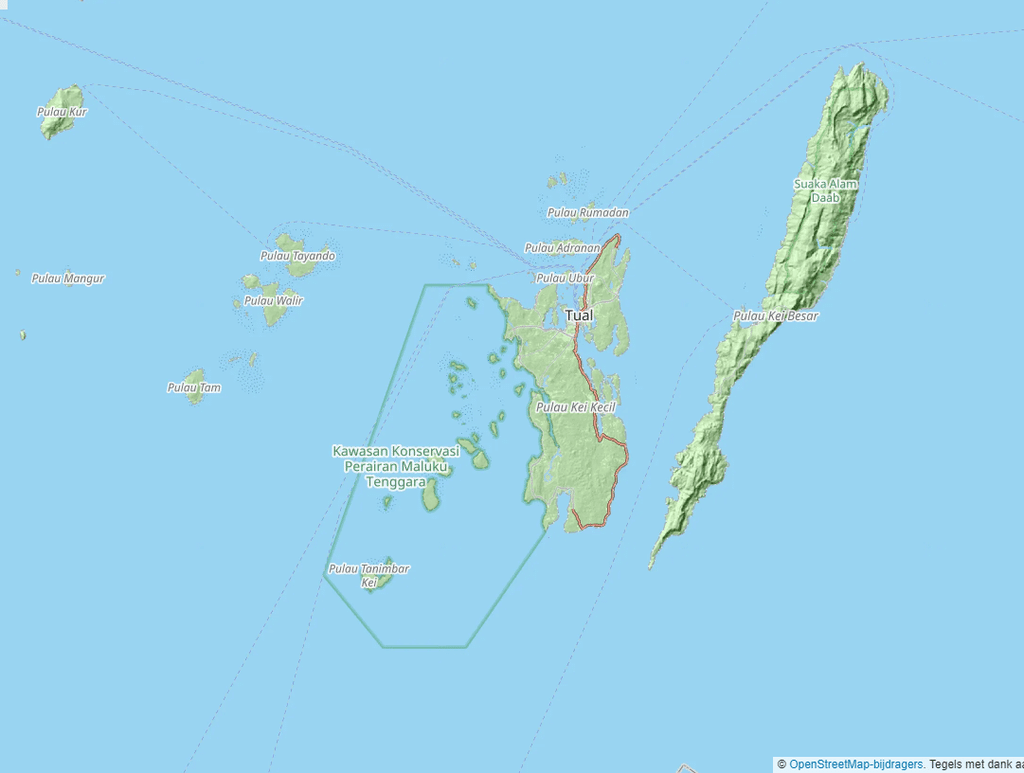
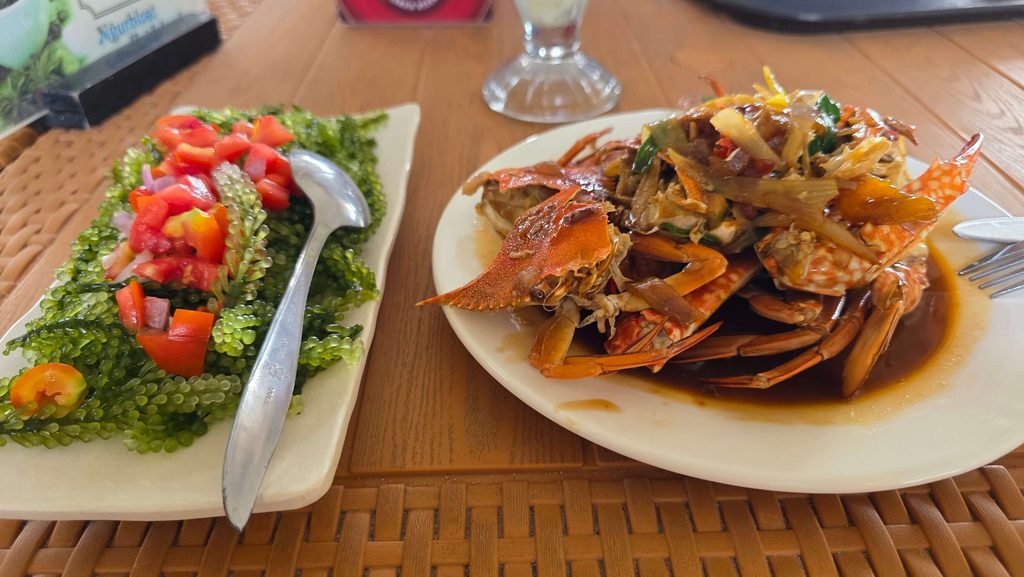
Our arrival on the Kei Islands started with a cheerful welcome: at the small airport, a choir sang welcome songs next to the baggage carousel. The Kei Islands are a group of beautiful islands with beaches that look exactly as you would expect from a tropical beach. And we also have those beaches practically to ourselves. We have a beautiful new house on the beach with a private terrace in front of the house and another one with sun loungers and a restaurant a few hundred meters away. The intention is to start tourism here and to make it a second Bali one day. We think this will take a long time, but we enjoyed it for five days! It is a pleasure to visit the Kei Islands. They consist of 2 larger islands, Kei Besar (means: large) Kei Kecil (means: small), 119 islands/islets of which most are uninhabited They are located in a transition area between Asia and Melanesia The population has genetic ties with the Melanesians. They also have their own kitchen. We eat things here that you won’t find in other parts of Indonesia The animal and plant world also differs. We enjoyed beautiful beach days and delicious food for little money. A lunch with crab, chicken, rice, sea grapes as a vegetable (!), slices of cassava, red bananas and two large fruit juices together cost only €11.25.
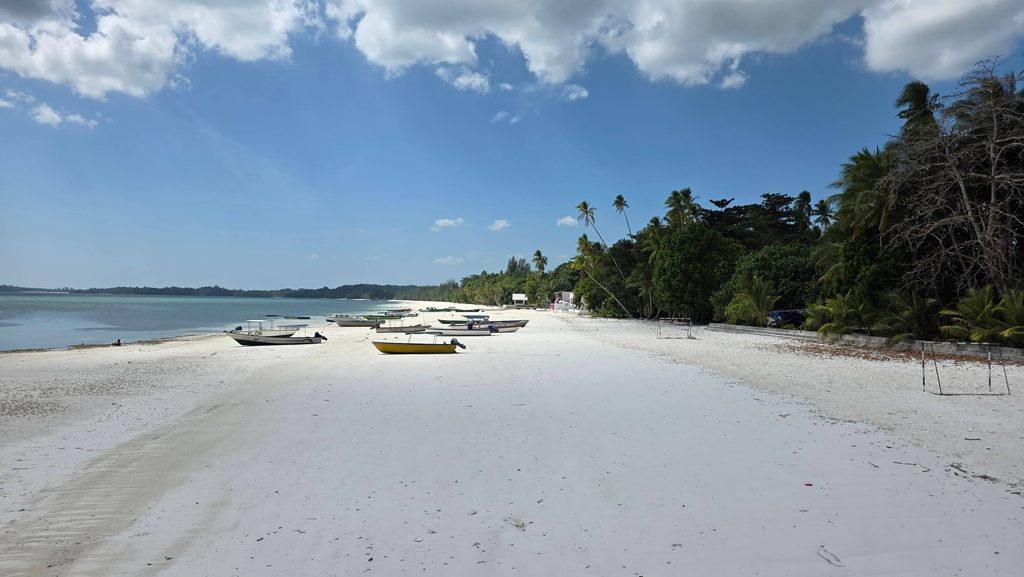
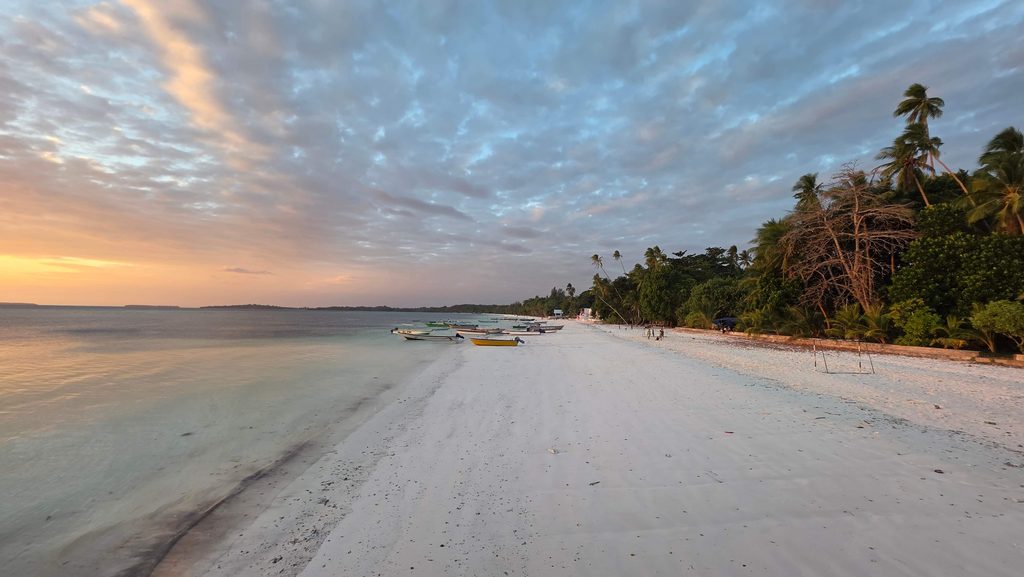
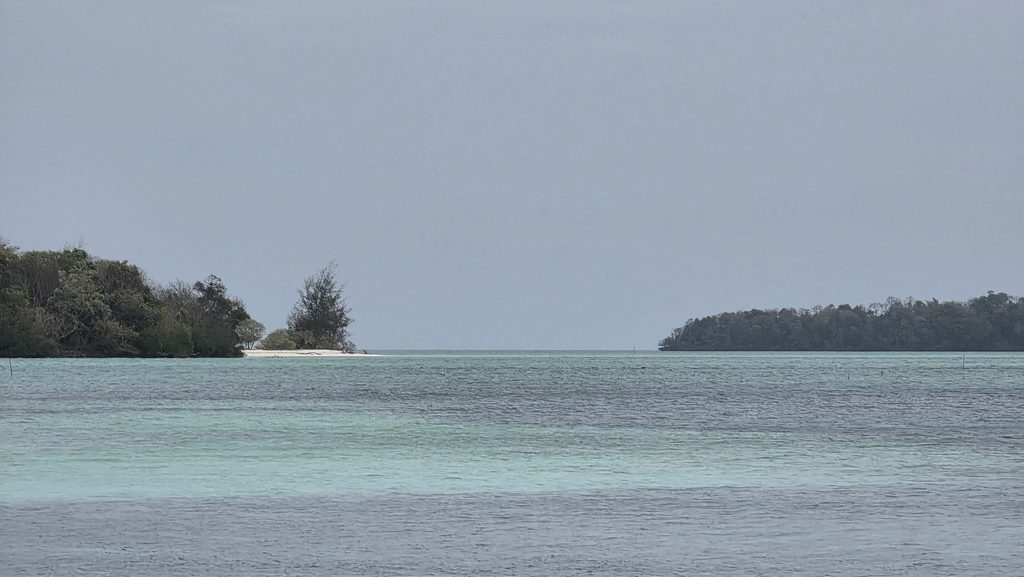
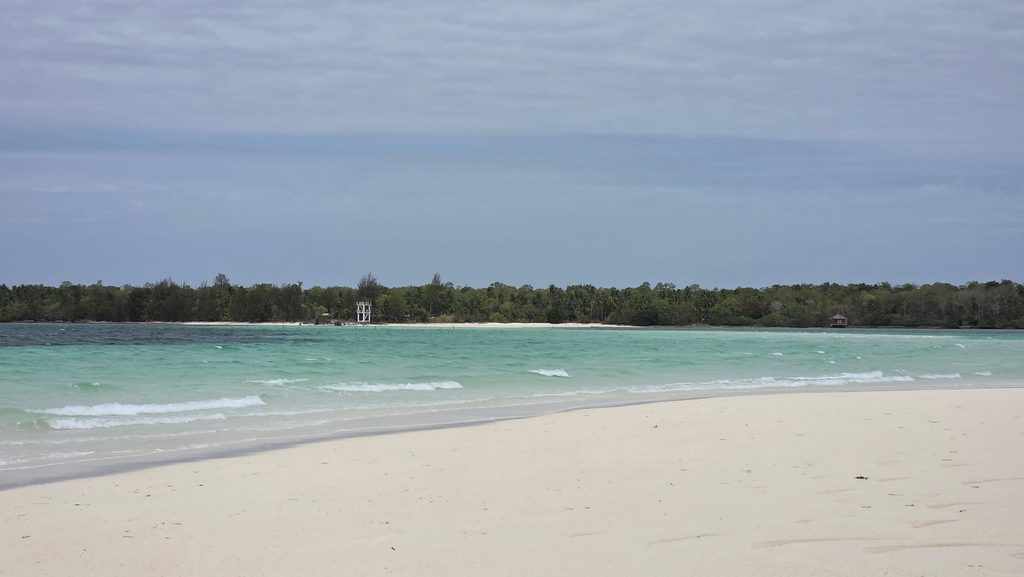
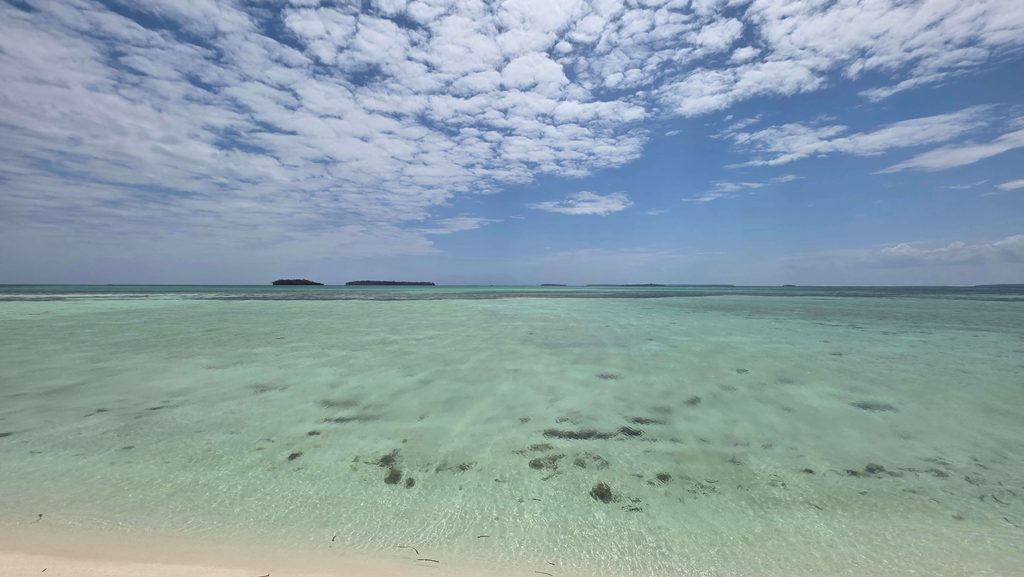
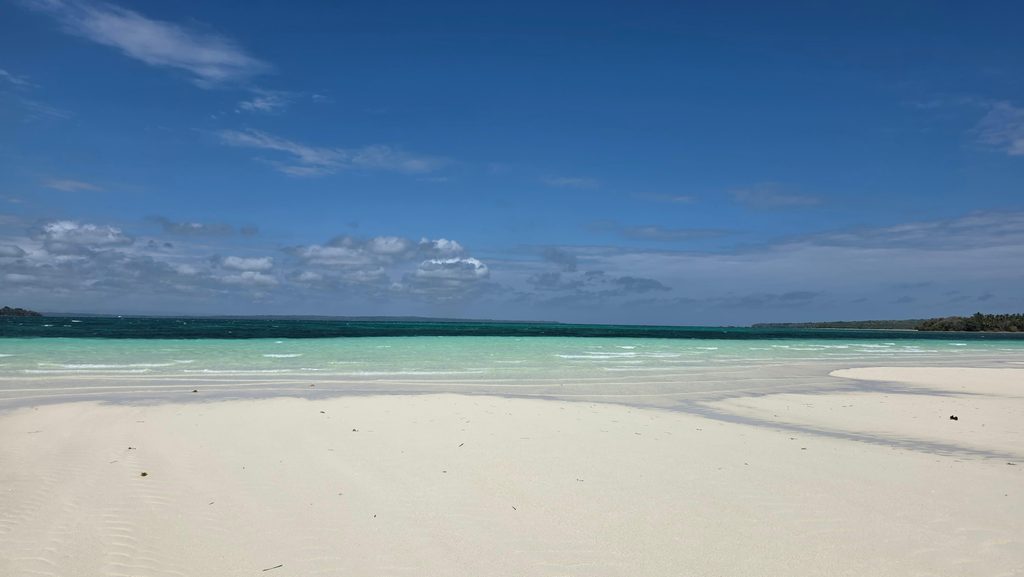
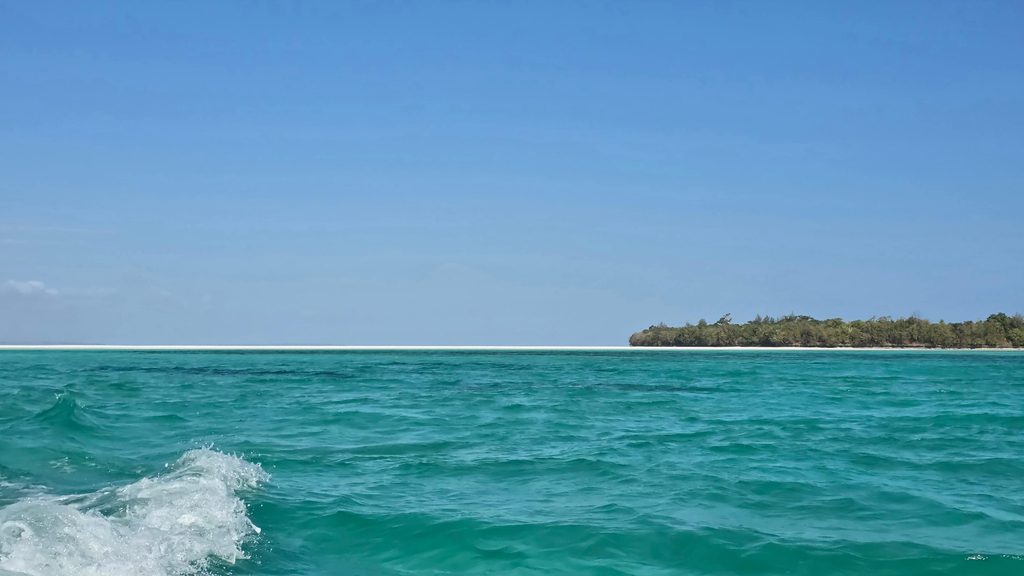
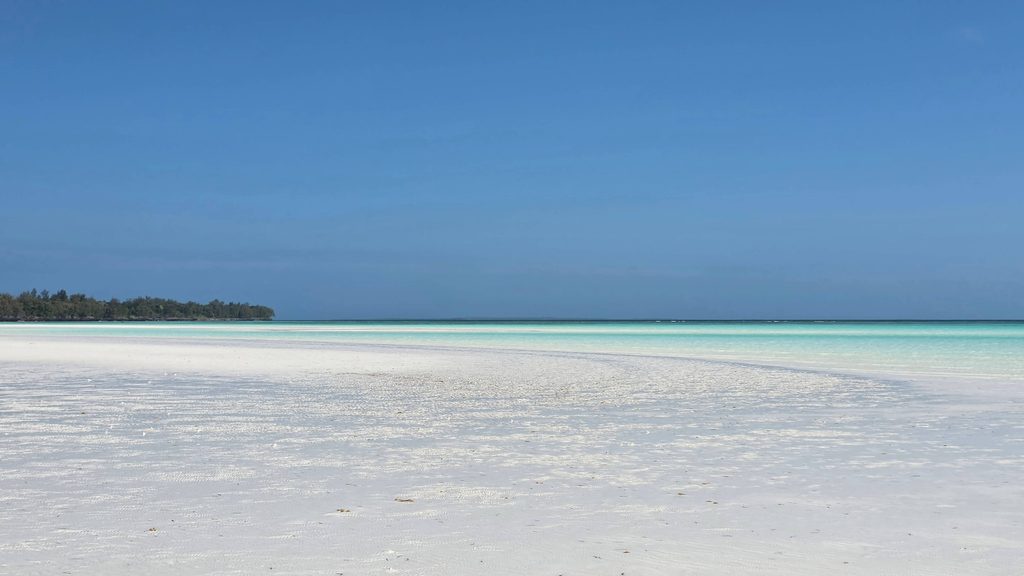
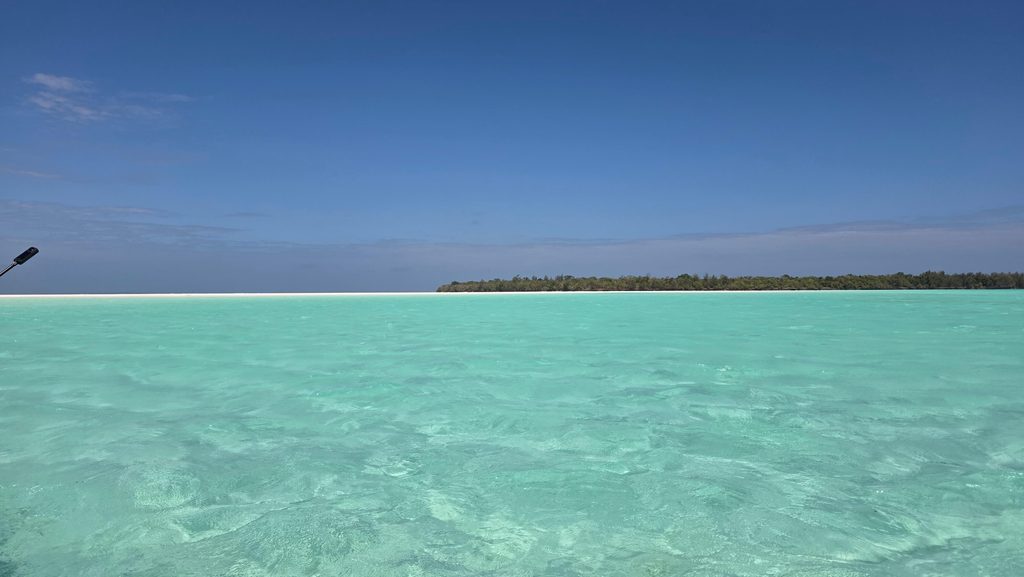
Undiscovered paradises are becoming increasingly rare, but during our stay at Kei Kecil we found one. It is the same size as the Isle of Man, the bottom consists of coral pushed up, the beaches of snow-white powder sand and the crystal clear water has different green and blue colors. On the beach there are a handful of hotels, each with 4 to 6 houses/rooms, which are not fully booked even in the high season. You can’t eat there. There are two beach restaurants (where you have to wait😱 more than 2 hours for your food) The number of tourists is minimal. With 8 of them, 6 Indonesians, 1 Colombian and 1 Russian living in Portugal, we made a boat trip from 9 to 5 o’clock along uninhabited islands and visited two islands and Pantai Ngurtavur, a huge sandbank. It is difficult to describe how beautiful it was, it looks like islands in the South Pacific where the Moluccas border
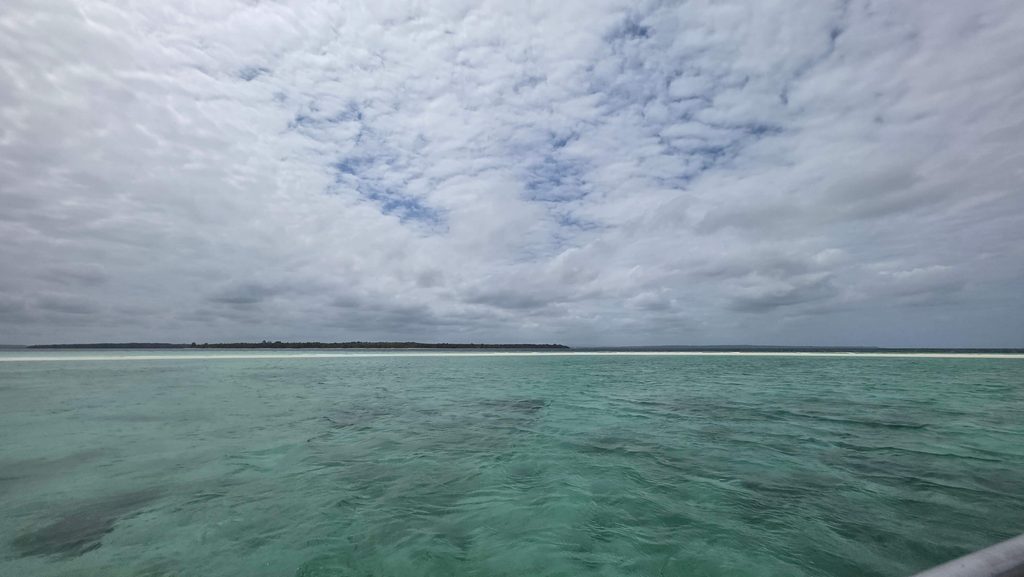
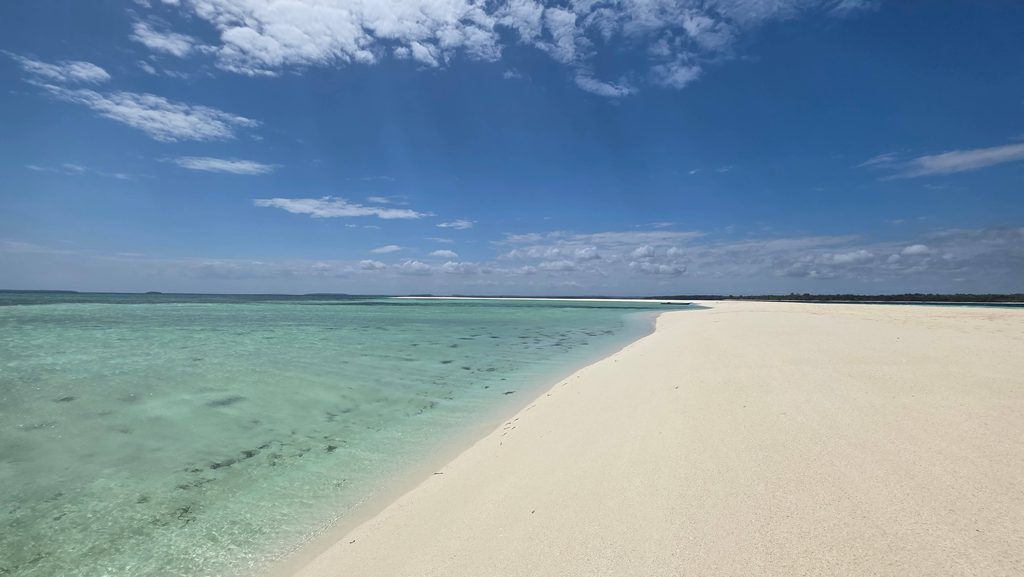
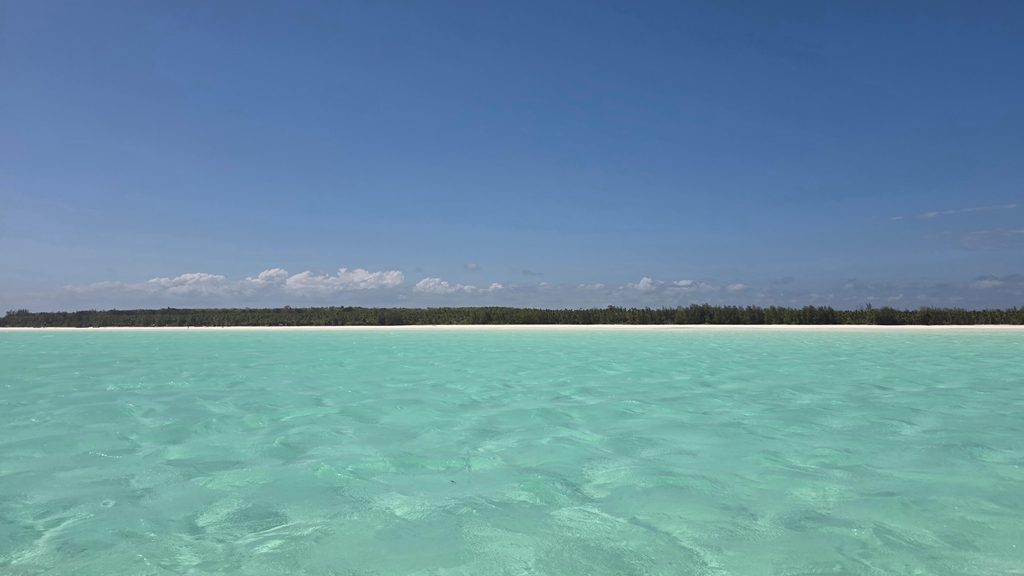
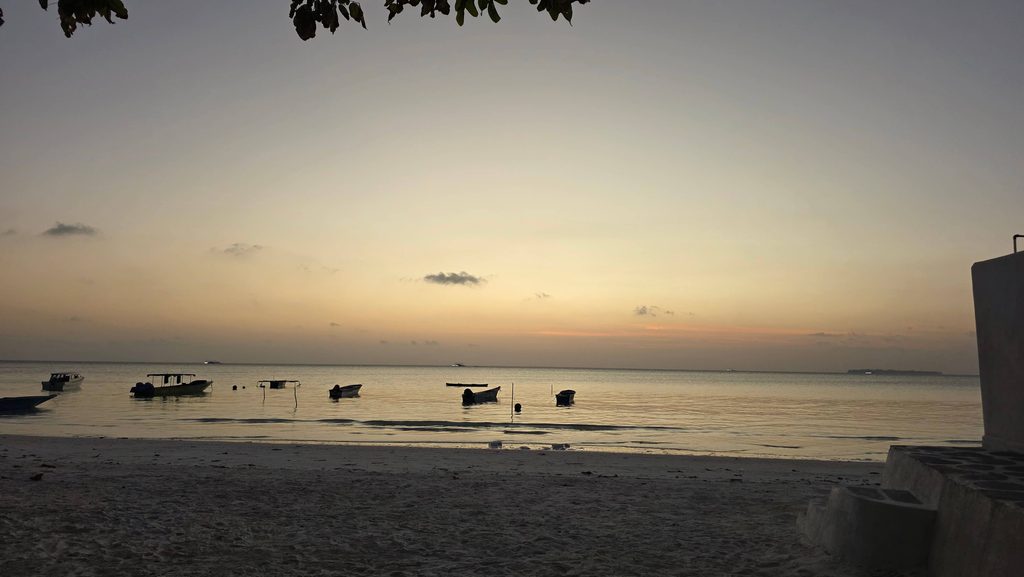
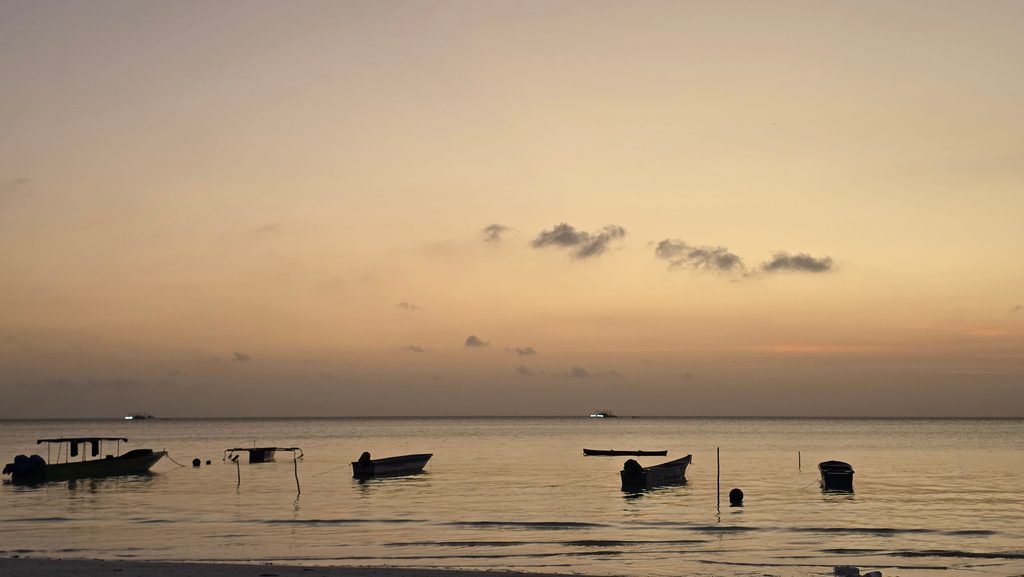
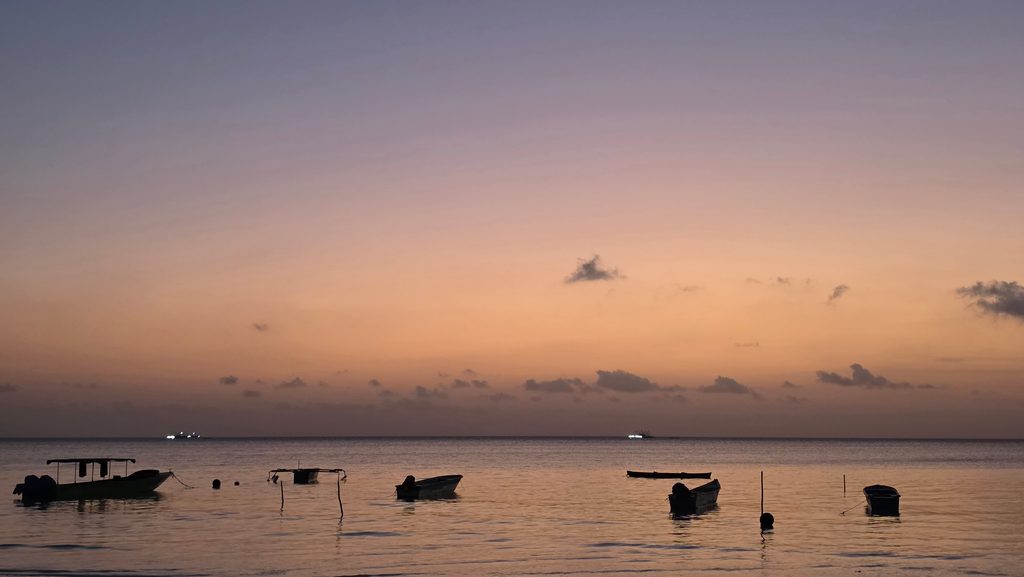
On the islands visited there was not a single structure, nothing, no garbage or anything else that indicated the presence of people. Nothing at all, just miles of very wide white beaches bordered by trees on one side and water on the other. We also took a long walk, partly on the beach and partly on a winding path through the trees along the coast. The beauty here continues to amaze us. Sunday afternoon is the only day of the week that the locals come to the beach and it is suddenly much busier as you can see in the photos. Tourism is still in its infancy here and people are a bit inexperienced in this, but that also has its charm. Few people speak English, which means that even with Google Translate, misunderstandings regularly arise.
The two restaurants also have their peculiarities. Usually there are 3 or 4 tables occupied, these are finished table by table Per table this can take between 30 and 60 minutes so it is not strange that you have to wait 2.5 hours for your meal. The food, on the other hand, is delicious. We have already tried to make a reservation and ordered the food earlier in the day. That was neatly noted but when we arrived in the evening we just had to wait🤣 2 hours Time is a flexible concept on the Kei islands
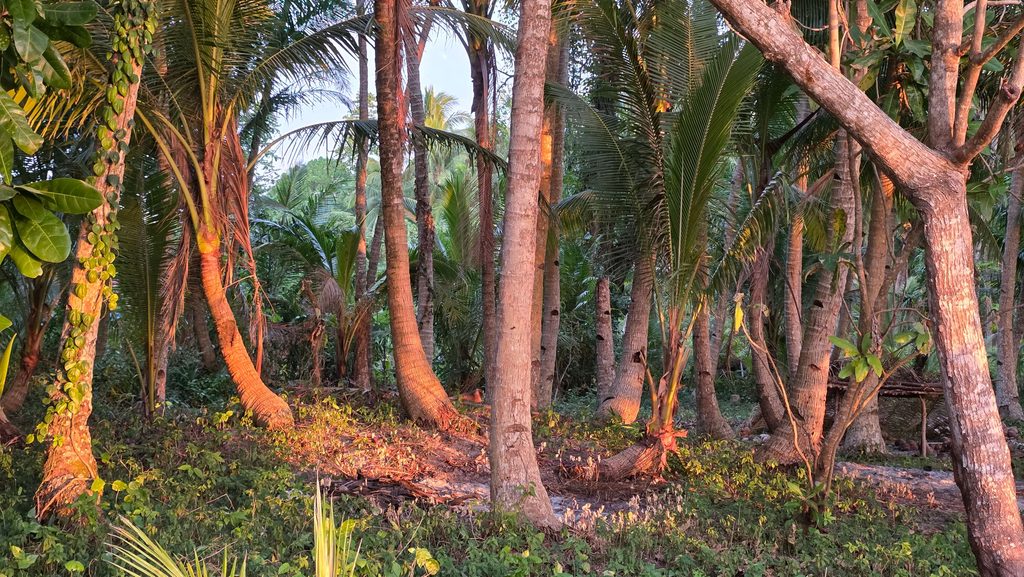
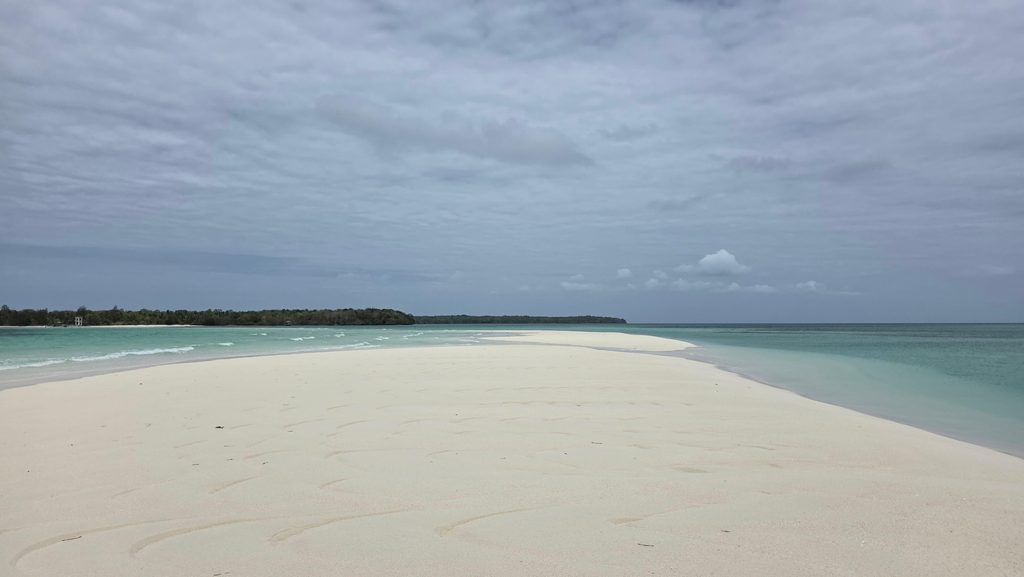
KEI KECIL 220,000 inhabitants
Capital: Tual, with 100,000 inhabitants
Religion: 50% Christians and 50% Muslims
HOW TO GET THERE
FLIGHTS;
Ambon–Langgur: daily, (sometimes) not on Tuesdays. Lion Air; Flight duration: 1 hour and 10 minutes.
Departure: 09.45 hrs ; Return flight: 11.45 am; the same flying days.
Transport to and from the airport is usually arranged through your accommodation. Grab does not operate there.
FERRY;
Pelni: 12–16 hours of sailing, with varying departure days. You can’t book online with a non-Indonesian card.
CLIMATE
Southeast monsoon: dry season from July to October, sometimes from June or until November.
Northwest monsoon: rainy season from December to May.
In August we had fine weather: alternating clouds and sun, without rain.
At Ngurbloat Beach the water initially felt a bit chilly in August, but after getting used to it it was wonderful!
During our boat excursion to Ngurtavur, we also swam in warmer seawater.
The seawater is warmest from November to May and least warm in August. (source: SeaTemperature.re)
MONEY
There are no ATMs here; in Tual it is. Therefore, take enough cash with you. By booking and paying for your accommodation in advance, you don’t have to carry as much cash. Please be aware of possible flight cancellations: our previously booked Tuesday flight was cancelled.
PRICELEVEL
In five days the two of us spent about €300, about €60 per day. You can’t spend much money here: during the week there are only two eateries, both with very long waiting times. On Saturdays and Sundays, some simple stalls with a very limited offer also open. Our only extra expense was the wonderful excursion to Pantai Ngurtavur, which cost a total of €40.
LANGUAGE
Austronesian language group The local language is Kei; Bahasa Indonesian is spoken everywhere.
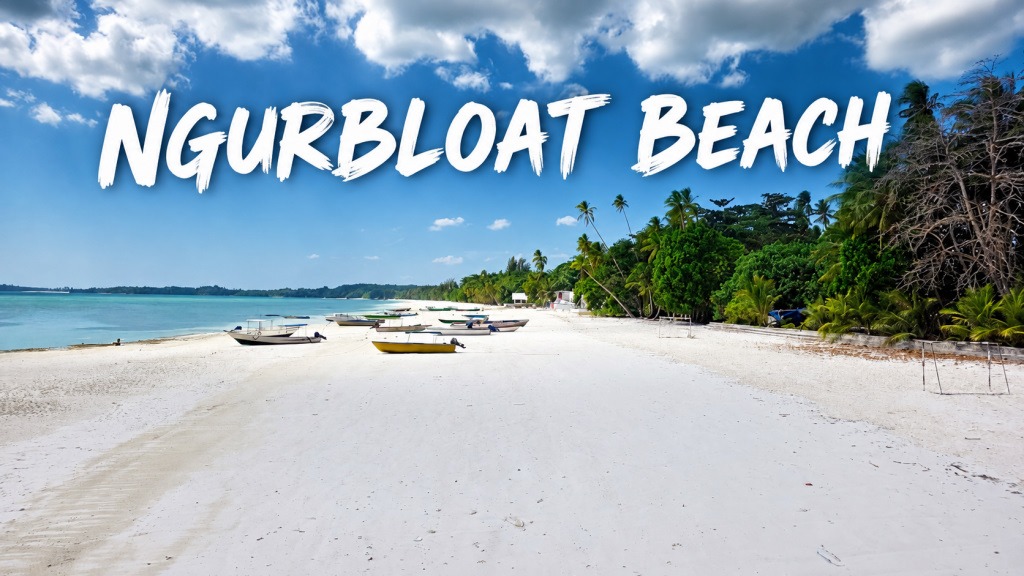
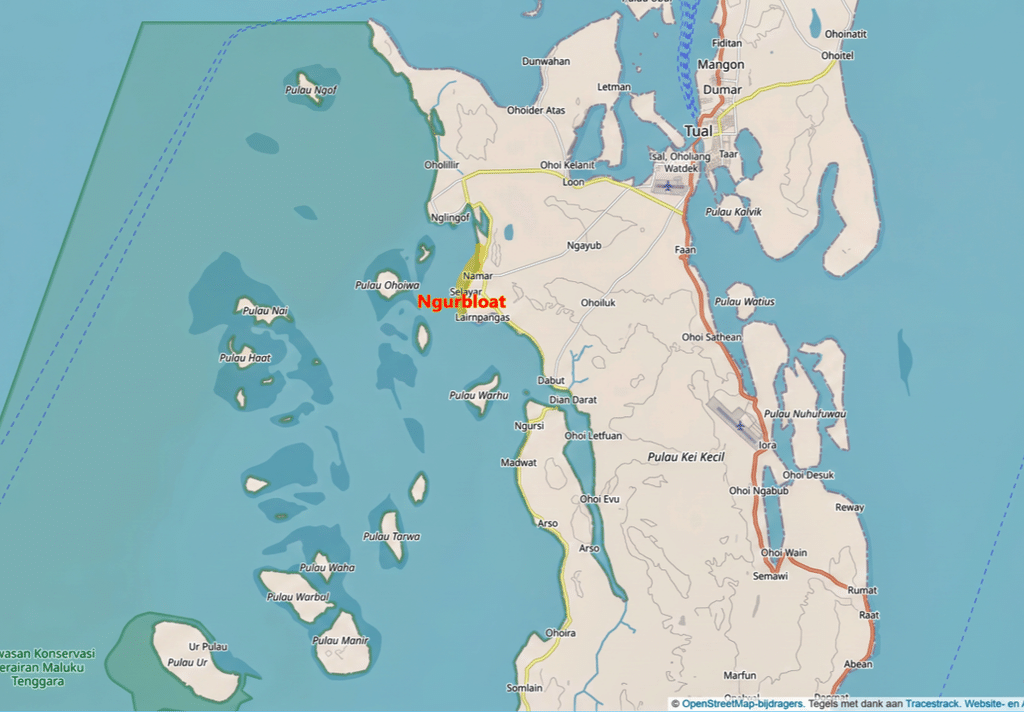
Ngurbloat / Pasir Panjang (in Bahasa)
The beach consists of two parts:
Northern part;
Here are the Coaster Cottages: the largest accommodation we have seen. We found the surroundings and the beach a little less beautiful.
Between the two parts is the village of Ngurbloat.
Southern part
A strip of cottages, including Stella Homestay and two Rumah Makans. There are a striking number of beach houses and similar accommodat
Beaches
Beach: ⭐⭐⭐⭐⭐. Swimming: ⭐⭐⭐⭐
The sea is very calm and well-suited for swimming.
At high tide: sandy bottom, ⭐⭐⭐⭐⭐
At low tide: sea vegetation, ⭐⭐⭐
The water is cooler than expected (august) ; I’d estimate 23–25°C.⭐⭐⭐⭐
According to seawater.org, August is the month with the coldest seawater.
Crowds
From Friday onwards, it gets a bit busier on the water—partly due to the banana boat. Sunday afternoon is the busiest time; but its absolutely not overcrowded! ⭐⭐⭐⭐. Monday through Thursday are very quiet: ⭐⭐⭐⭐⭐
On weekends, some loudspeakers are played, but never until late in the evening.There is very little karaoke.
Accommodation
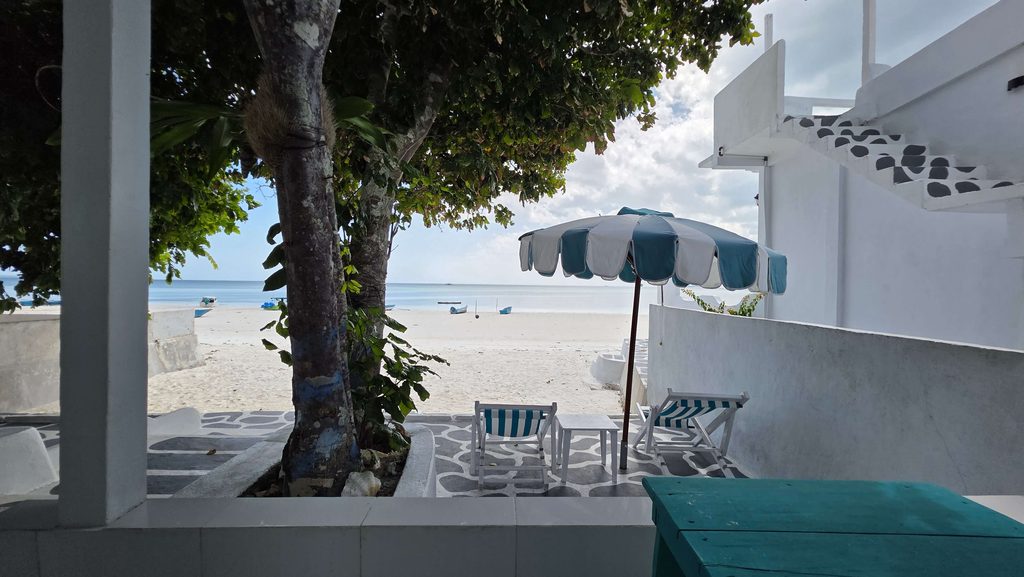
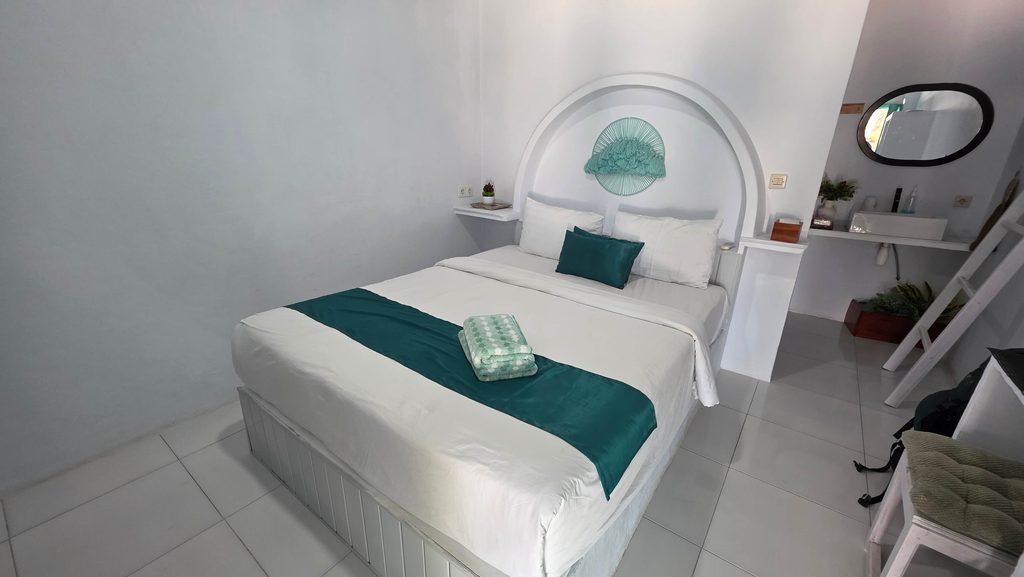
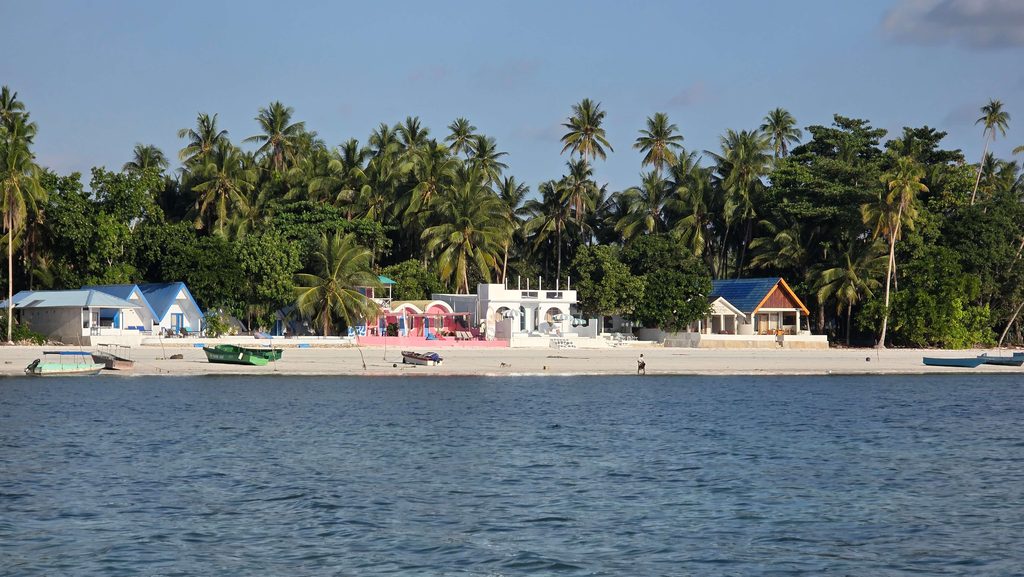
Casa di Stella: €25 including breakfast for a neat room with a terrace right on the beach. The owners are a Dutch-Moluccan couple and speak English.
Note the difference: Casa di Stella is located directly on the beach (⭐⭐⭐⭐); Villa Stella is located opposite, on the road (⭐⭐⭐). Casa di Stella clearly has our preference. Be sure to book Casa in advance!
There are a few other small-scale accommodations along the same strip.
Dining
Ten Cafe: good food, but wait times can be as long as two hours! ⭐⭐⭐
Viera: good food, also with long wait times; a meal for two costs approximately €14 at both restaurants.⭐⭐⭐
Even when we ordered in advance, we still had to wait an hour at both Cafe Ten and Viera.
Activities
Pantai Ngurtavur ⭐⭐⭐⭐⭐
Shared tour to Ngurtavur, 9:00 AM–5:00 PM: €40 (400k; €20 per person).
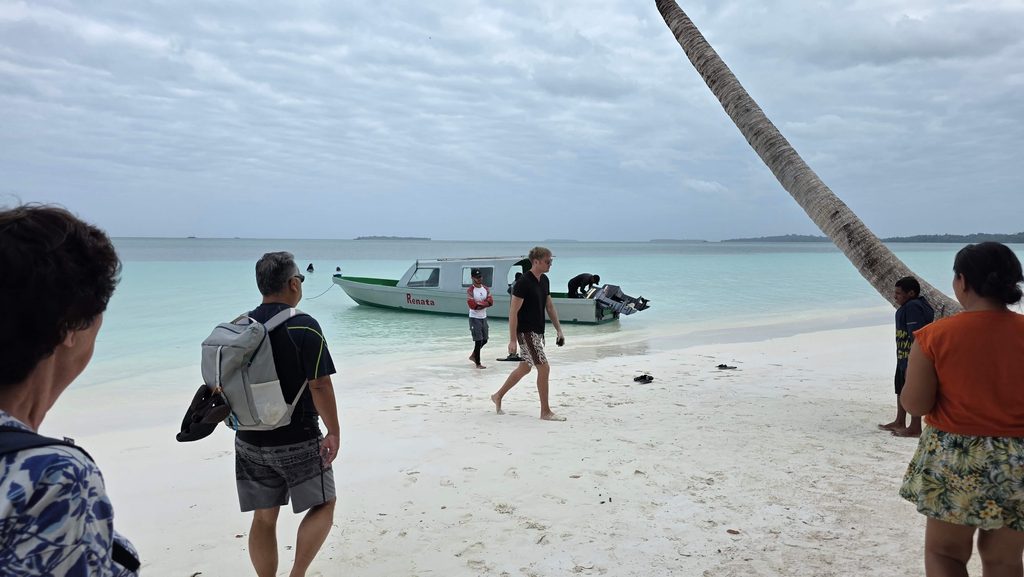
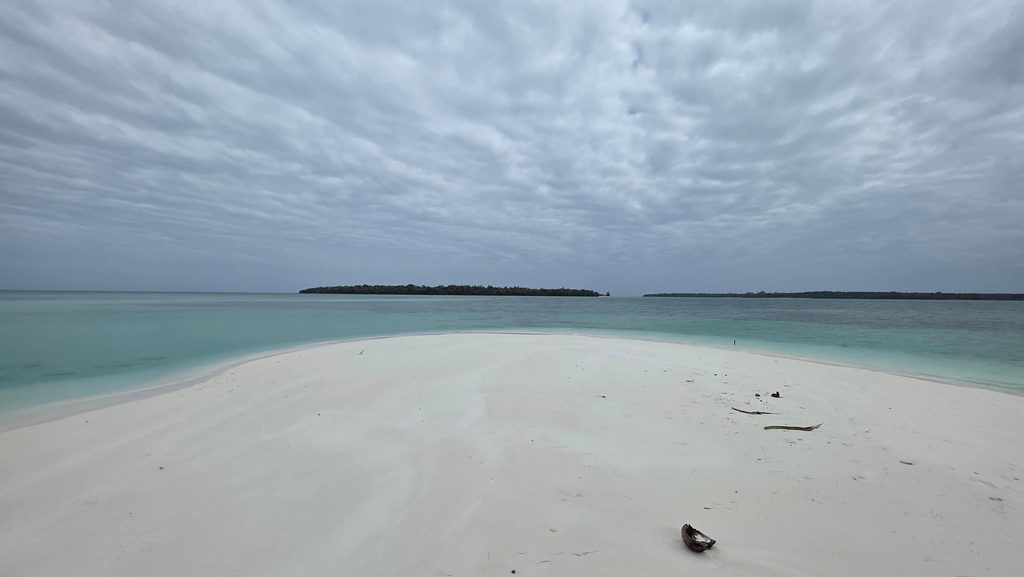
Other options include:
A (cultural) tour around the island.
Boat excursions to other islands.

NORTH MOLUCCAS
North Moluccas: They are two different Indonesian provinces with their own administration, culture, cuisine, history and climate. In the north there used to be the powerful and rich sultanates, these were the historic spice islands. The south is more like the Moluccas as we know them in the Netherlands. There is much more colonial influence here and most Moluccans who came to the Netherlands after the war come from the south In the south you can still feel the connection with the Netherlands. In the north, hardly any
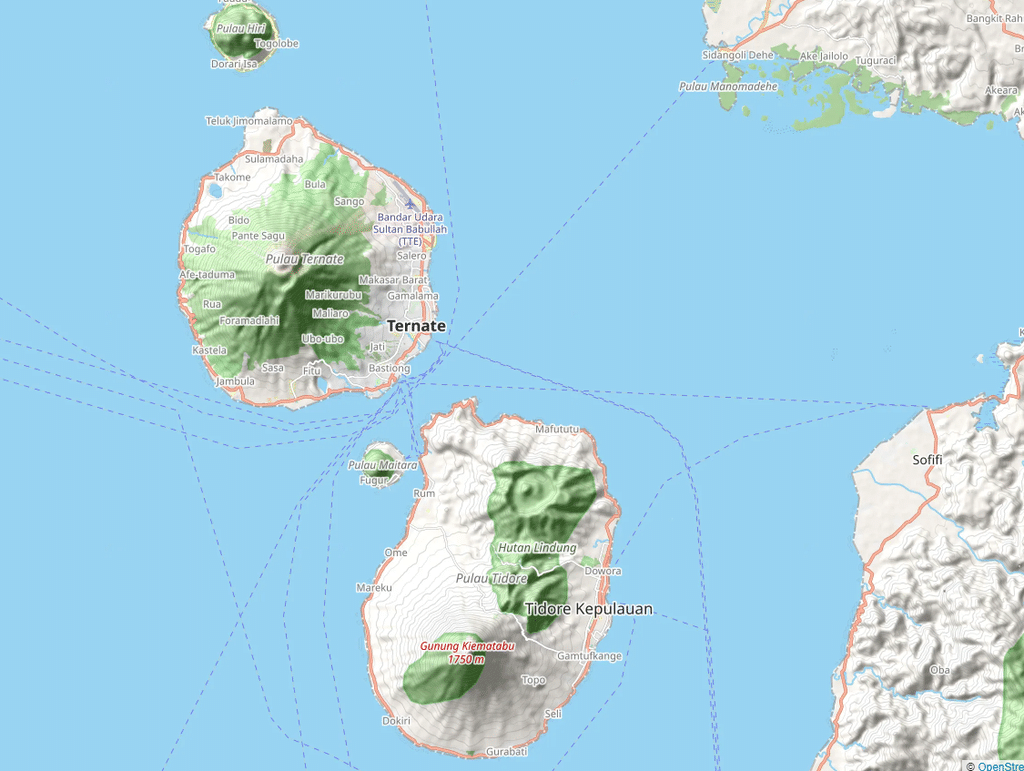
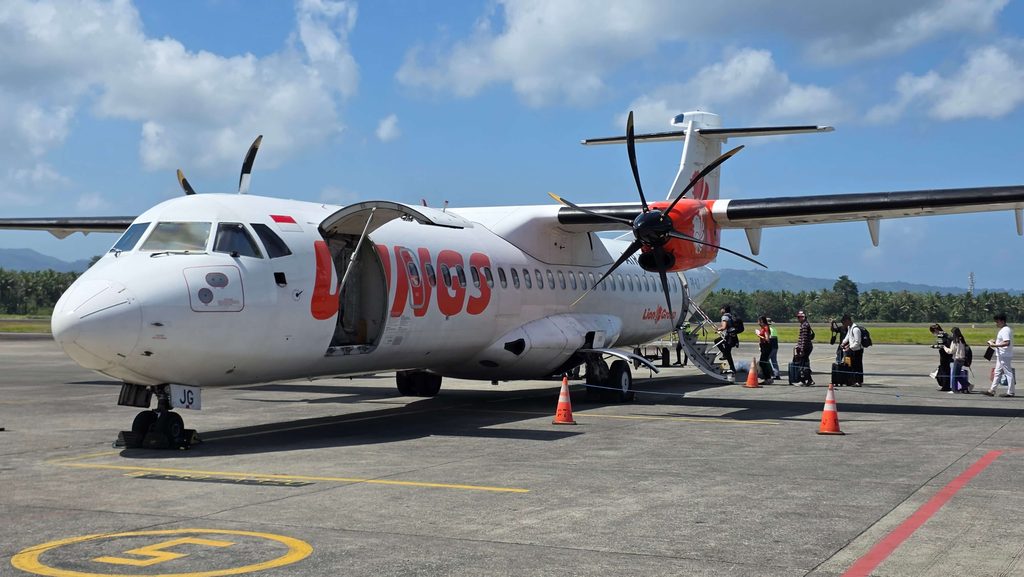
After an hour and a half of flying with a propeller plane, we arrived at Ternate, once the VOC center of the spice trade. The heat was immediately noticeable: it is warmer here than in the south. Ternate makes little impression on us: a busy, messy city with about 200,000 inhabitants. Our hotel is located on the outskirts of the city, on a site with 10,000 m² of rainforest. Between the trees are some buildings with older, but beautiful rooms with balconies. There is also an uninviting restaurant and a small swimming pool surrounded by the forest. Although the hotel is beautiful, it lacks the coziness of our previous hotels in the south. On arrival we also noticed that people here are even less attuned to tourists. The mosques in the area are making themselves heard loudly. Ternate has an eventful history. Already in the fifteenth century it was a rich sultanate thanks to clove production. This spice has its origin in the Moluccas; Nutmeg and pepper also brought prosperity. First the Portuguese took over the trade, later the Dutch. In 1607, the Netherlands founded the VOC, the first public limited company and multinational in the world.
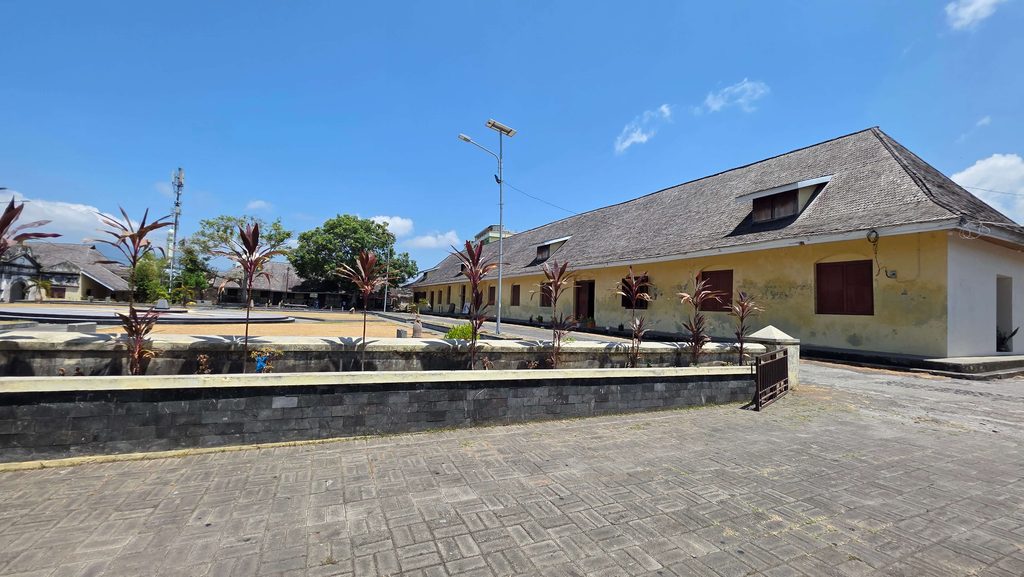
The spice trade brought enormous wealth to Netherlands and contributed to the Golden Age. But the VOC also had a dark side: violence, exploitation, slave trade and colonial oppression. In the same year, Fort Oranje was built in Ternate as a headquarters. In 1619, the headquarters moved to Java. Today we visited the fort. Despite the earthquakes, much is still standing. After years of neglect, it is now being refurbished, with small galleries and coffee shops in a park-like setting. A nice initiative, especially because there is little else to visit. The sultan’s palace, which is now a museum, was unfortunately closed today.
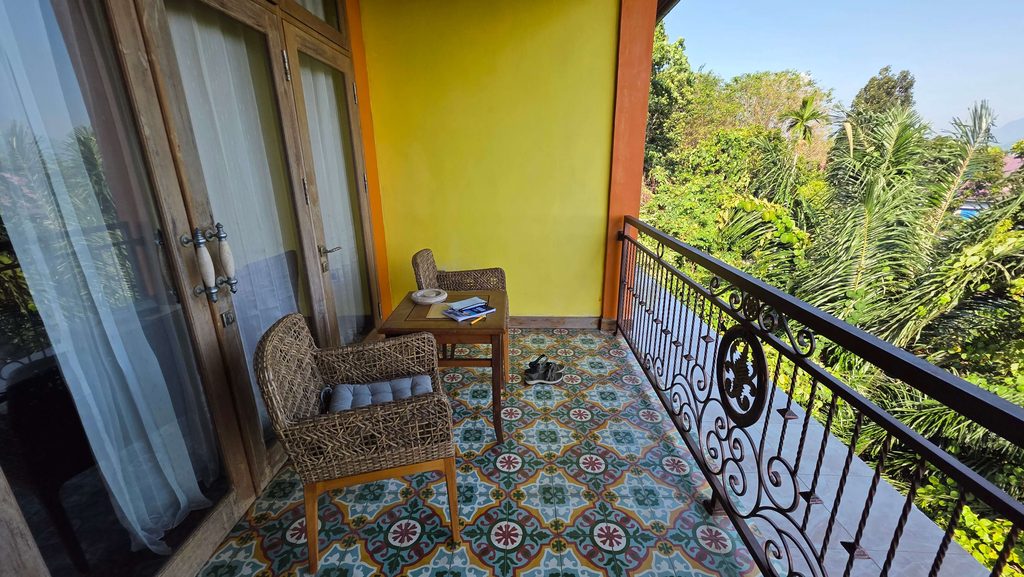
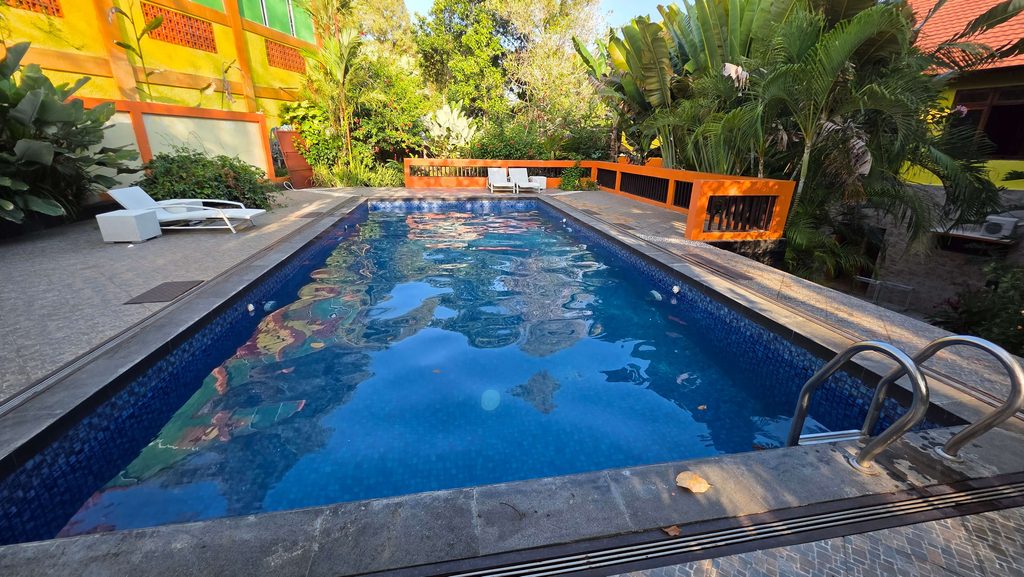
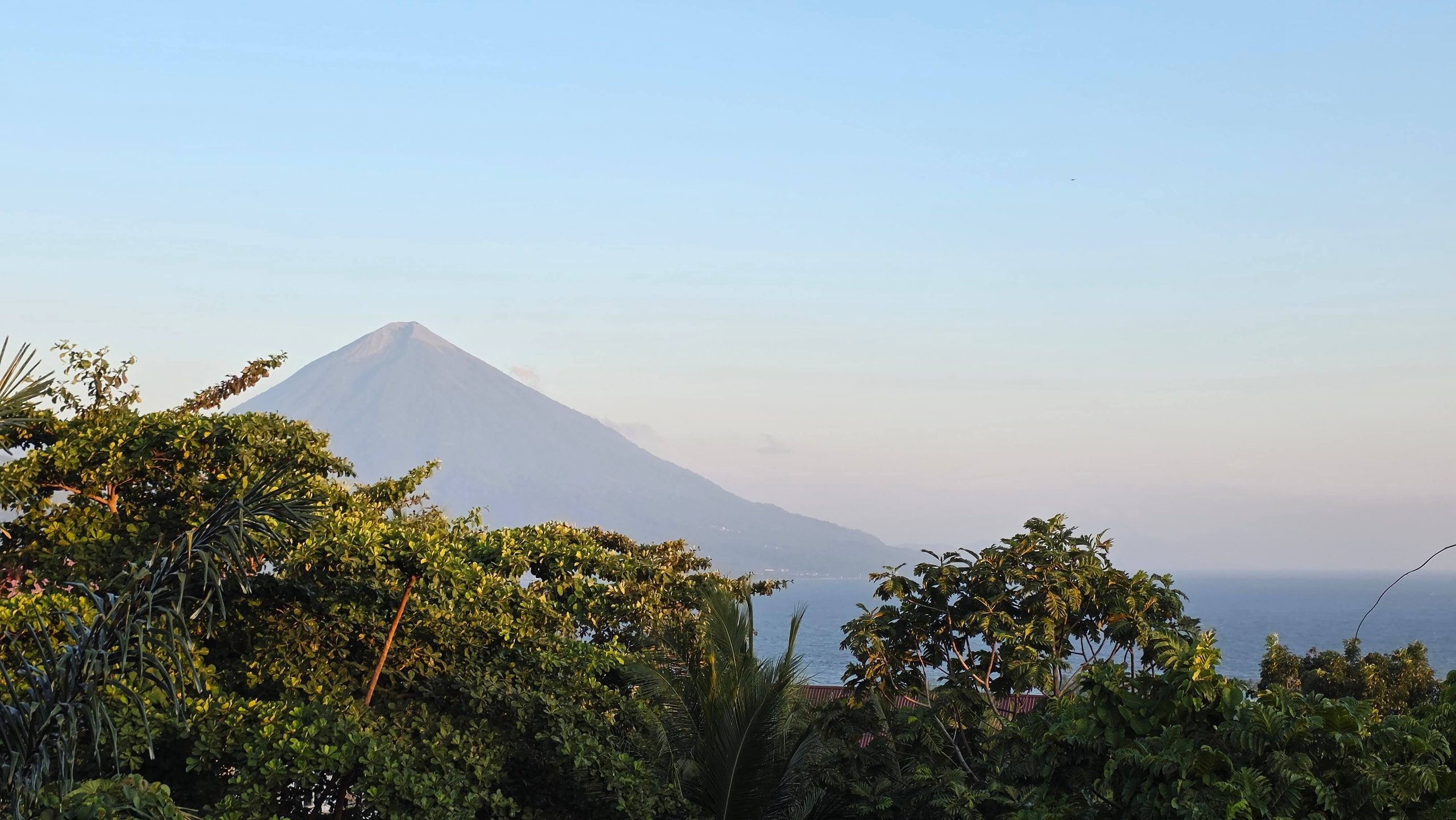
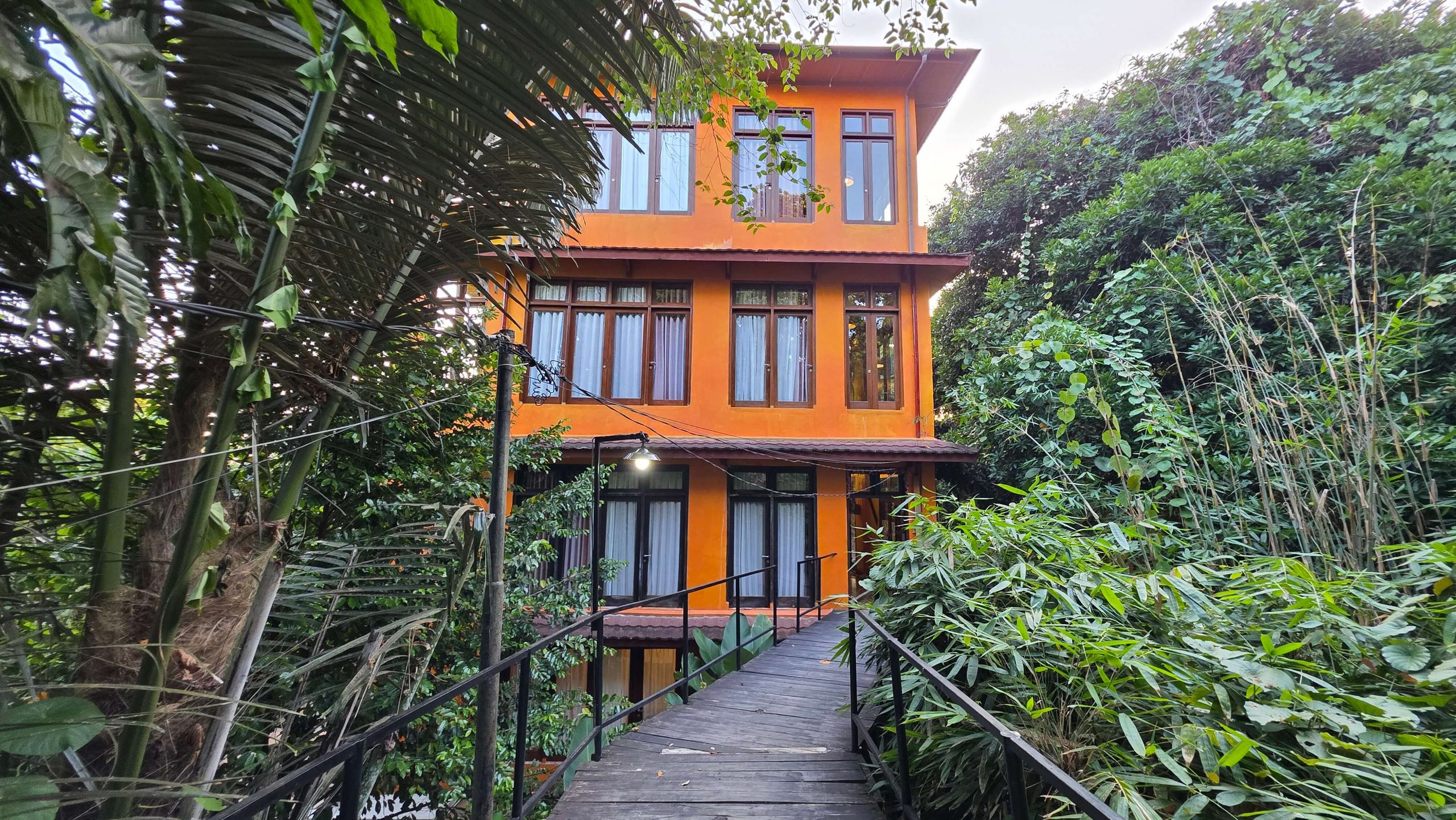
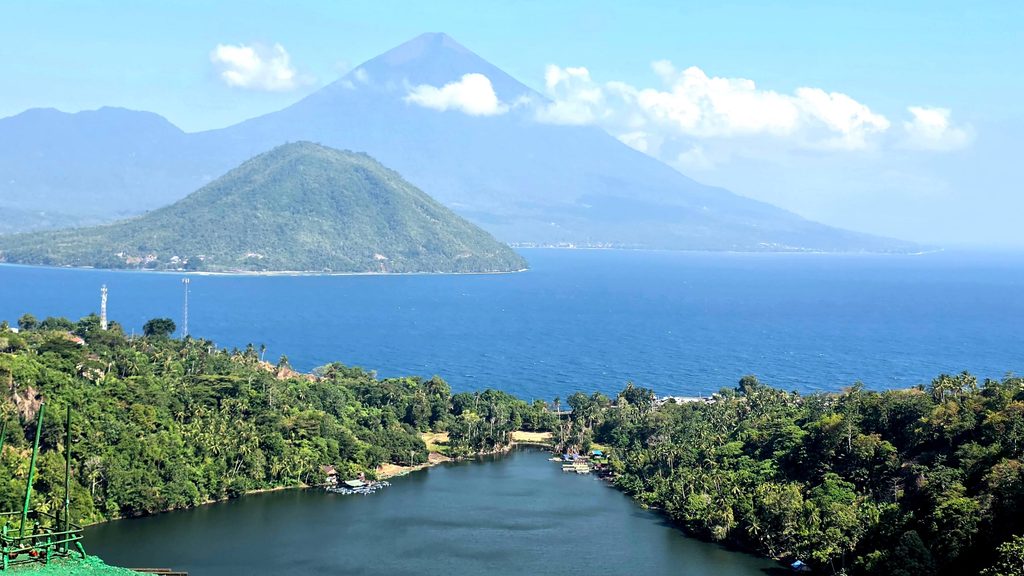
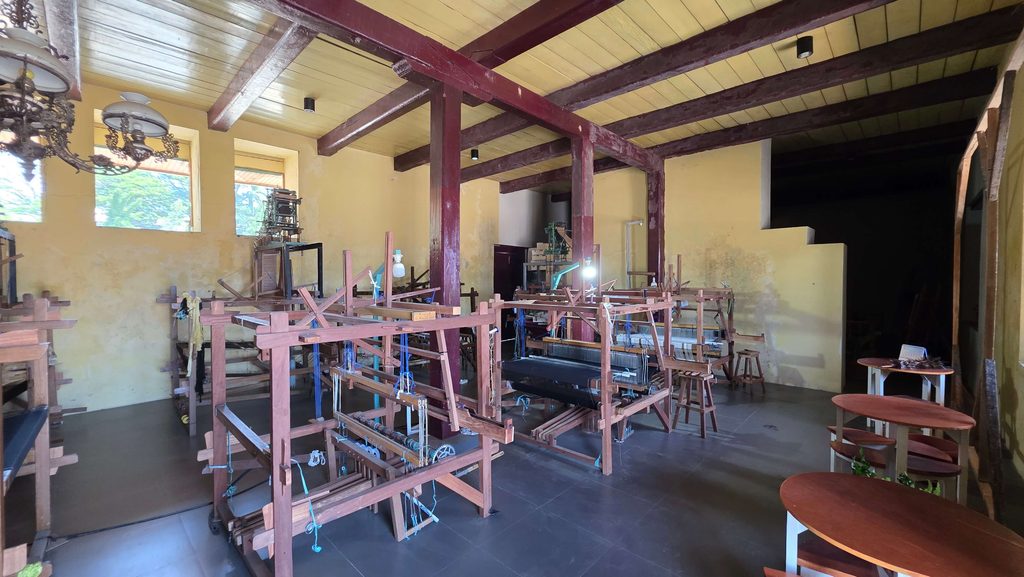
Ternate has an eventful history. Already in the fifteenth century it was a rich sultanate thanks to clove production. This spice has its origin in the Moluccas; Nutmeg and pepper also brought prosperity. First the Portuguese took over the trade, later the Dutch. In 1607, the Netherlands founded the VOC, the first public limited company and multinational in the world. The spice trade brought enormous wealth to our country and contributed to the Golden Age. But the VOC also had a dark side: violence, exploitation, slave trade and colonial oppression. In the same year, Fort Oranje was built in Ternate as a headquarters. In 1619, the headquarters moved to Java. We visited the fort. Despite the earthquakes, much is still standing. After years of neglect, it is now being refurbished, with small galleries and coffee shops in a park-like setting. A nice initiative, especially because there is little else to visit. The sultan’s palace, which is now a museum, was unfortunately closed.
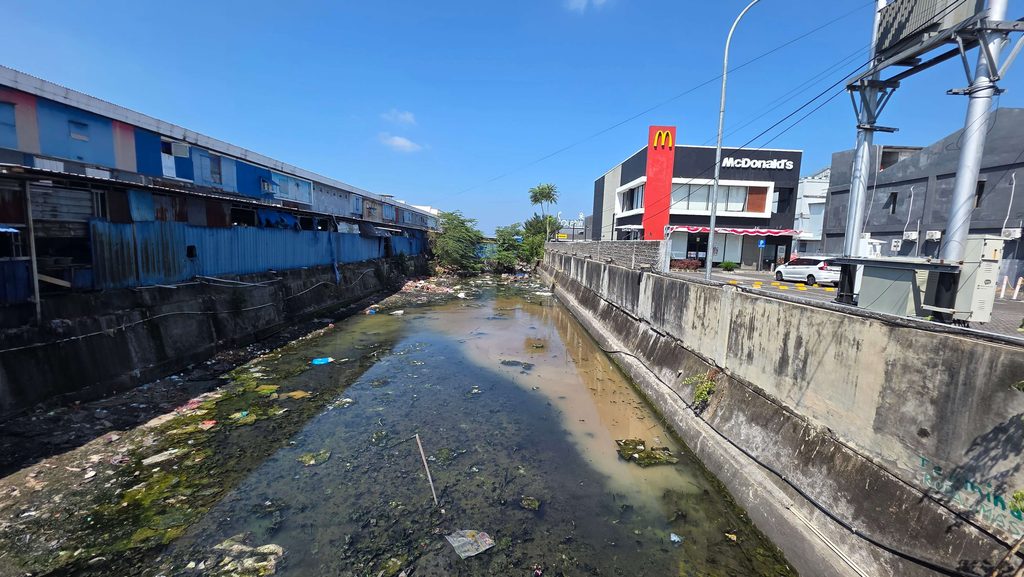
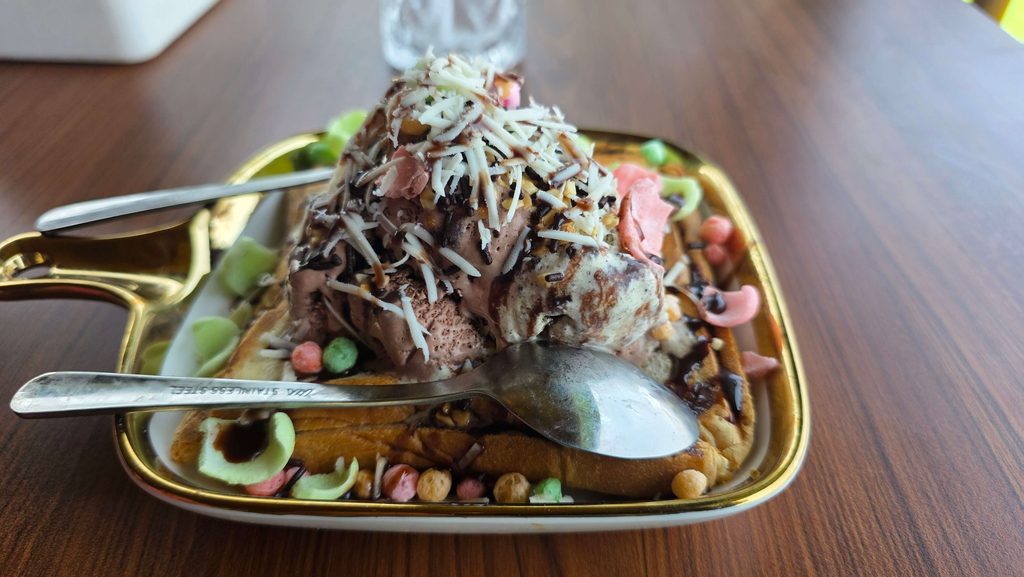
On our first visit we found Ternate still a large village, after two weeks of villages on Halmahera and Morotai it feels like a city. With even a few nice terraces with beautiful views; View café, and even a hip coffee shop Kelana Kopi with a DJ. We tried these terraces and enjoyed tasty juices with something tasty such as. A few beautifully decorated ice cream balls on a slice of casino
ISLAND TOUR ⭐⭐⭐⭐
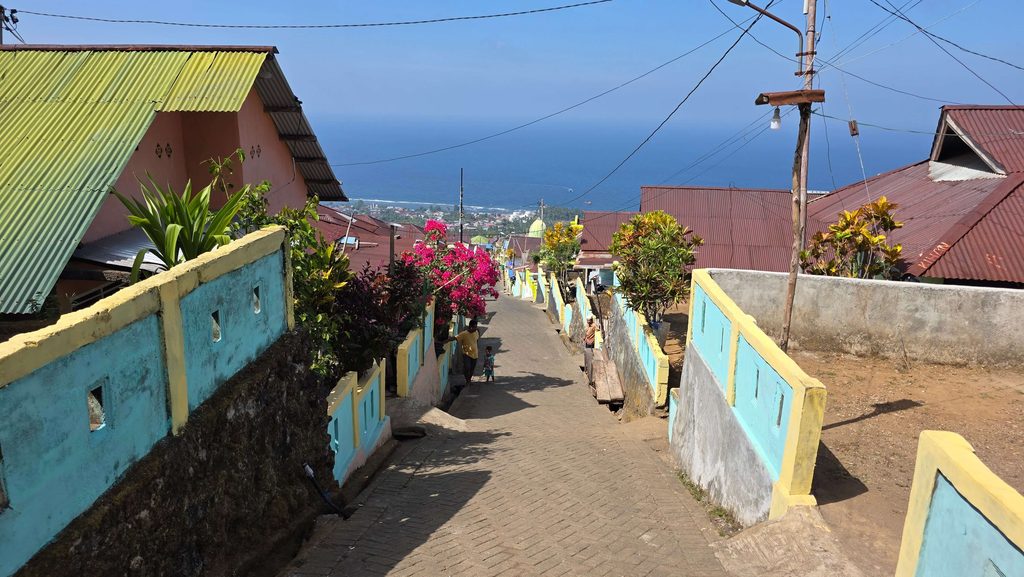
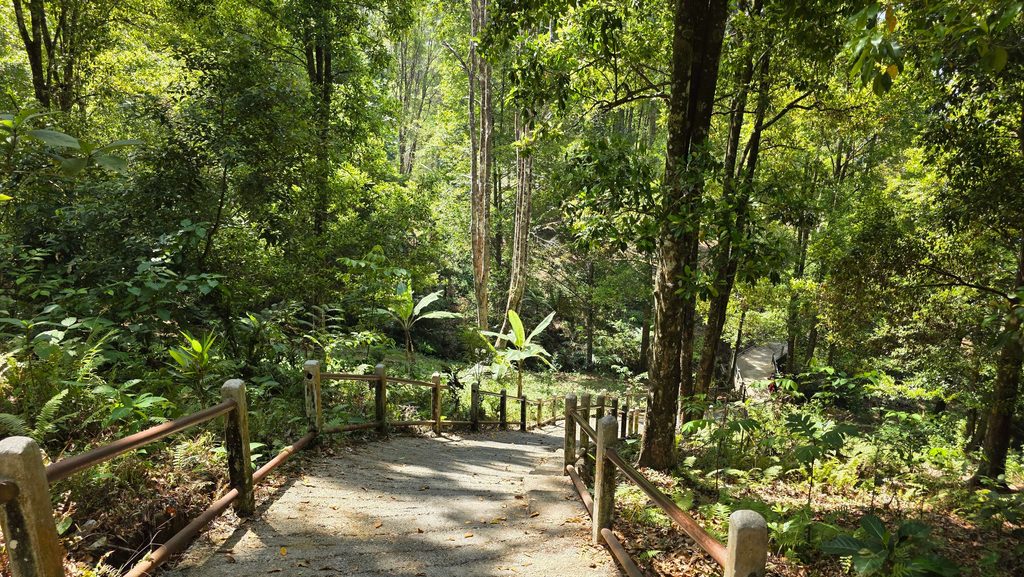
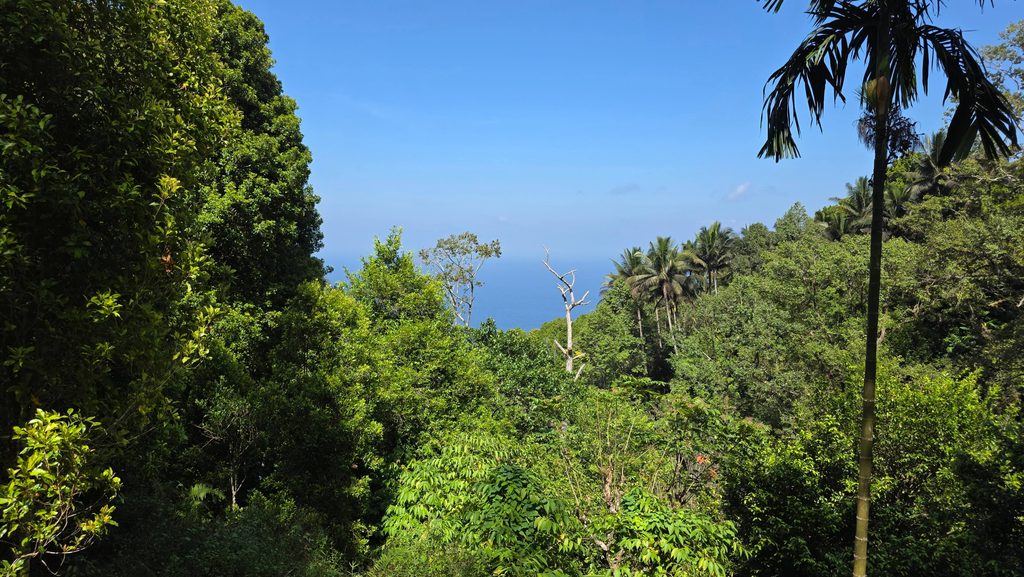
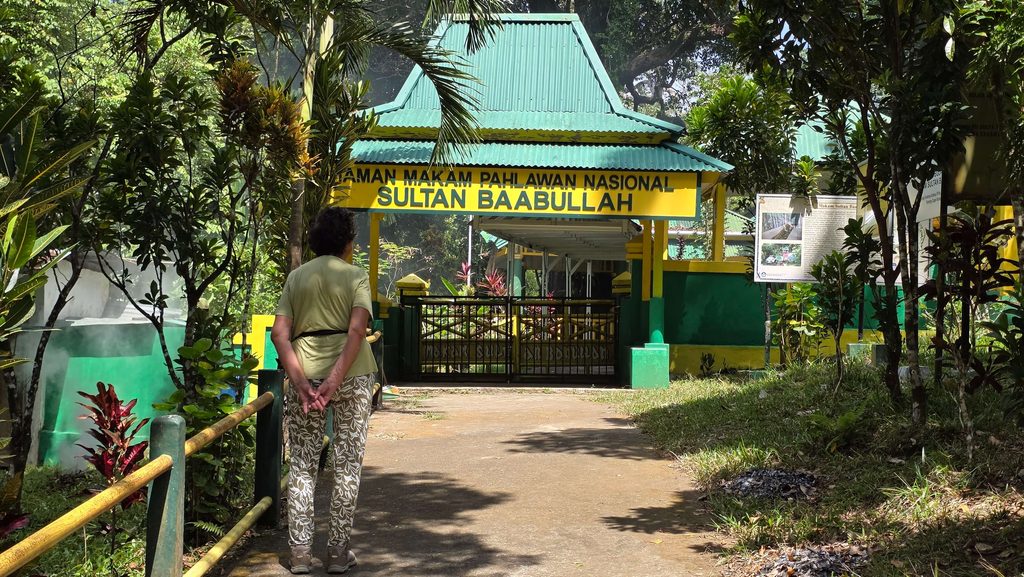
Today we drove around the island of Ternate in a car with a driver/guide The total circumference is 45 km. In the middle is the 1715 m high active volcano Gamalama that forms the entire island. The beaches here are black and in some places there are large lava chunks. Around Ternate there are several other volcanic islands, partly with active and partly with dormant volcanoes and also with dead volcanoes. On the neighboring island of Halmahera, the largest island of the North Moluccas, there are 16 active/dormant volcanoes alone. So today a tour around the Gamalama volcano. We finally had a real guide who also spoke good English. That was a relief and made for a relaxed day although the start was tough. We wanted to visit the tomb of Sultan Baabullah. Little did we know that we had to climb a very steep hill for that. At the very top was his tomb Pffff. But we made it.
When we walked down the mountain again we saw how beautiful the surroundings were, then we visited the volcanic lake Tolire. We drove higher up the volcano and at 800 m altitude we arrived in the village of Moya where we had lunch in a restaurant with a nice view. After eating too much we drove to an abandoned clove plantation where there was a clove tree that was 270 years old and therefore survived the VOC. We ended the tour with a coconut on a terrace with a beautiful view of Lake Ngade. The day ends with a concert of mosques
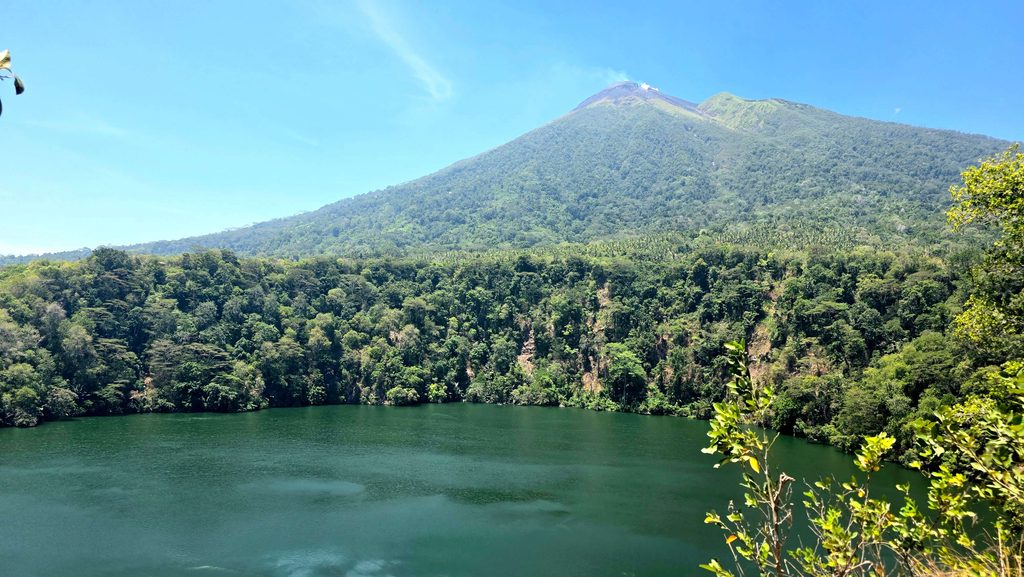
VISIT TIDORE ISLAND
We didn’t do that. I think it has little added value.
TERNATE ISLAND ⭐⭐⭐½
KOTA TERNATE ⭐⭐
HOW TO GET THERE
Wings Air (onderdeel van de Lion Groep) vliegt dagelijks van Ambon naar Ternate. De vlucht duurt anderhalf uur.
Er zijn dagelijks vluchten naar Manado en Jakarta.
Between Ternate and Morotai there are flights twice a week .
There is currently no flight connection between Ternate and Tobelo .
Ferry
Between Ternate and Sofifi (Halmahera), small speedboats run continuously from Pelebuhan Mangga Dua during the day. The crossing takes about an hour and can be quite rough.
Prefer not to have a small speedboat? You can also take a regular ferry, but I haven’t been able to find out where it departs.
There is also a ferry from Ternate to Jailolo.
Most other ferries depart from Pelabuhan Ahmad Yani Ternate, including the Pelni boats to destinations throughout the archipelago. There is also a night boat to Tobelo.
The boats to Tidore depart from Pelebuhan Speedboat Tidore.
Transportation to and from the airport
To get a Grab, you’ll need to be outside the airport grounds, a 5–10 minute walk from the arrivals hall. You can take a regular taxi directly at the hall. We paid about €13 (250K) for the ride to our hotel; to the center it is probably cheaper.
In heavy traffic, the journey can take longer than 45 minutes.
Transportation in and around Kota Ternate
In the city you can take a Grab. Sometimes the driver calls after booking, which is😕 difficult for us. Avoid misunderstandings by sending a photo of your waiting spot with “Bulle” (= foreigner) next 😃 to it. A city ride costs €2 to €4.
Getting around the island
On the island there are angkots and ojeks (moped taxis).
ACTIVITES
Those who are younger can climb the volcano Gamalama. The best period is the dry season, from May to September or October. The summit is at 1,715 meters; the hike there and back takes about 7 to 8 hours.
Through our hotel we arranged an island tour for 820k (€41). We hiked to Balabulla’s grave, through beautiful rainforest with panoramic views, and visited Danau Tolire, restaurant Fatma and Danau Ngade, with its beautiful view.
Island tour with an English-speaking guide/driver: 820k (€41). Rating: ⭐⭐⭐⭐ . The walk has considerable slopes. Effort: 🚶🏻 🚶🏻 🚶🏻 🚶🏻
- Hike to Balabulla’s grave: ****
- View at Danau Ngade: ****
A visit to Fort / Benteng Orange is worthwhile. Rating: ⭐⭐⭐ . There is also a nice café.
MONEY
In Kota Ternate you will find ATMs from all banks. You can withdraw a maximum of 1000k (€50) or 1250k (€63) per transaction; Sometimes the limit is lower.
HOTELS
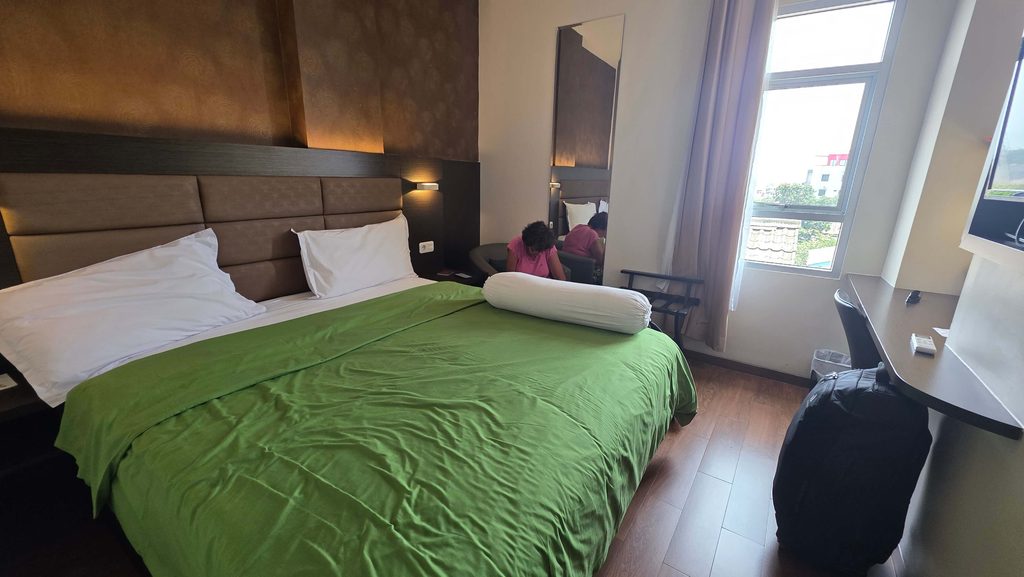
ViIla Marasai ⭐⭐⭐⭐ — €35, breakfast included.
Excellent value for money. 😄😄
- Beautiful location
- Good food
- English reception
Nicely decorated, but the dining room is unpleasant. The room is a bit outdated, but has a balcony with a view. The shower has a low water pressure.
Hotel Emerald — €32. ⭐⭐⭐ A great business hotel right in the center, with a restaurant that unfortunately looks uninviting.
EATING OUT
Marasai ⭐⭐⭐ — €15 for a meal for two, with two slices of tuna per person. 😀😀 Too bad the dining room is uninviting.
Fatma restaurant ⭐⭐⭐⭐ — €21 for a lunch for three people (us and the guide). Beautiful view of the city and the volcano Tidore.
Podok Katu ⭐⭐ — €9 for two main courses with drinks. A somewhat worn, but visited place with fish dishes and many Chinese influences. Cheap.
View Cafe ⭐⭐⭐⭐ — Fresh juices and mocktails for €1.50 to €2. Also a sandwich with ice cream. 😉
Kelana Kopi ⭐⭐⭐ 1/2 vanilla iced coffee: €1.50.
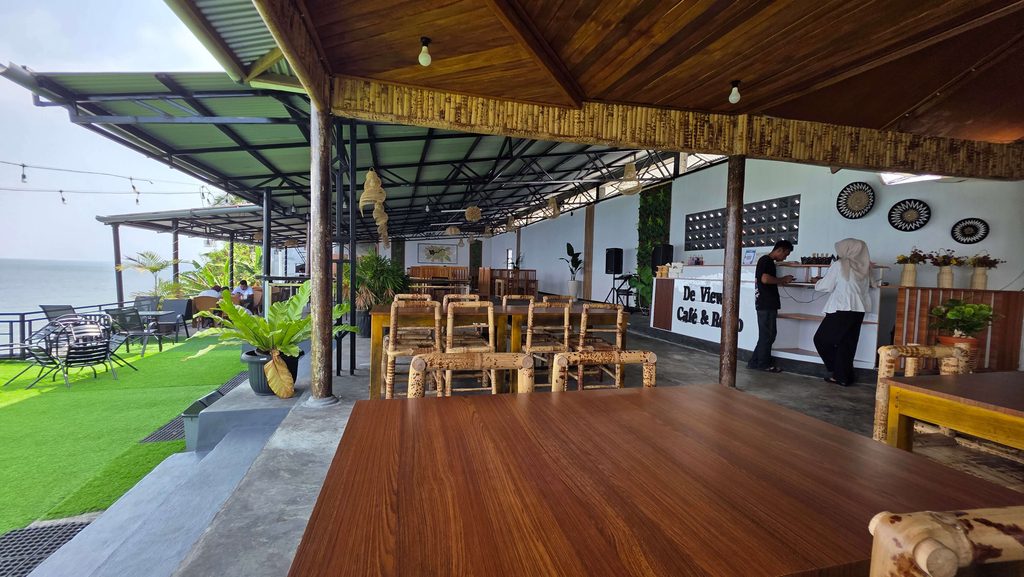
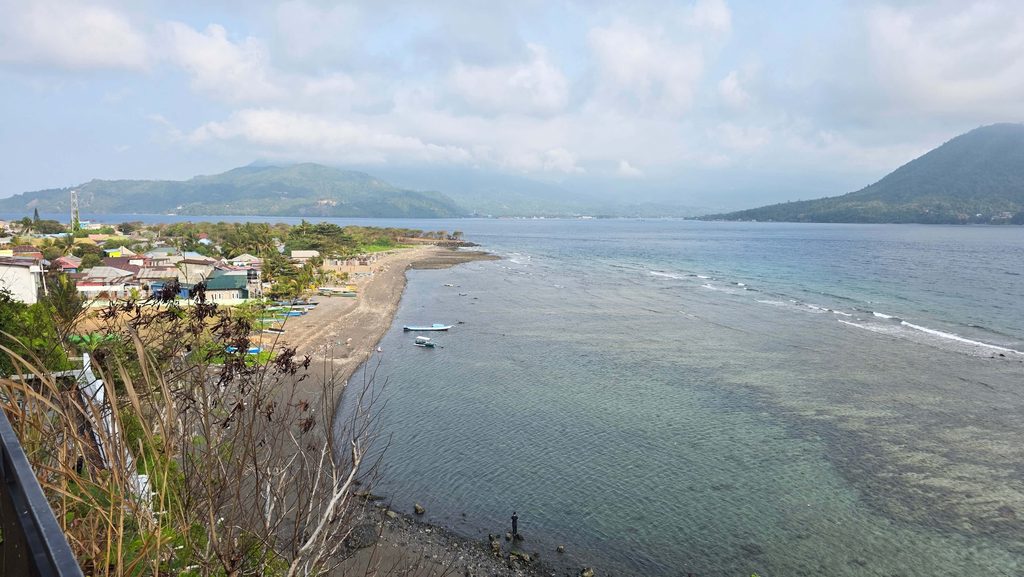
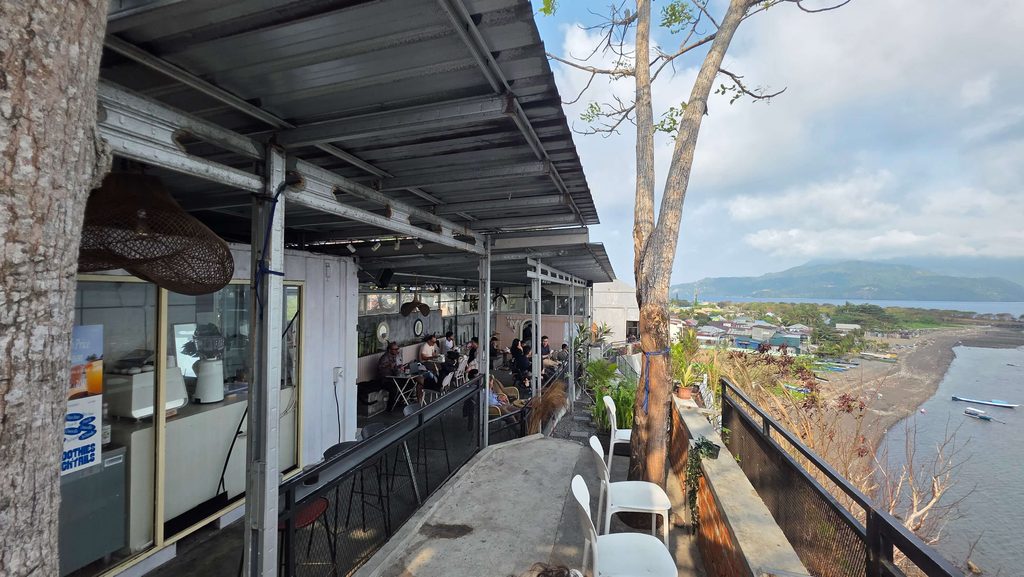
THE BEACH
For beautiful beaches it is better not to be on Ternate.
PRICE LEVEL
In four days we spent about €370, an average of €93 per day. The excursion cost €50; including tip.
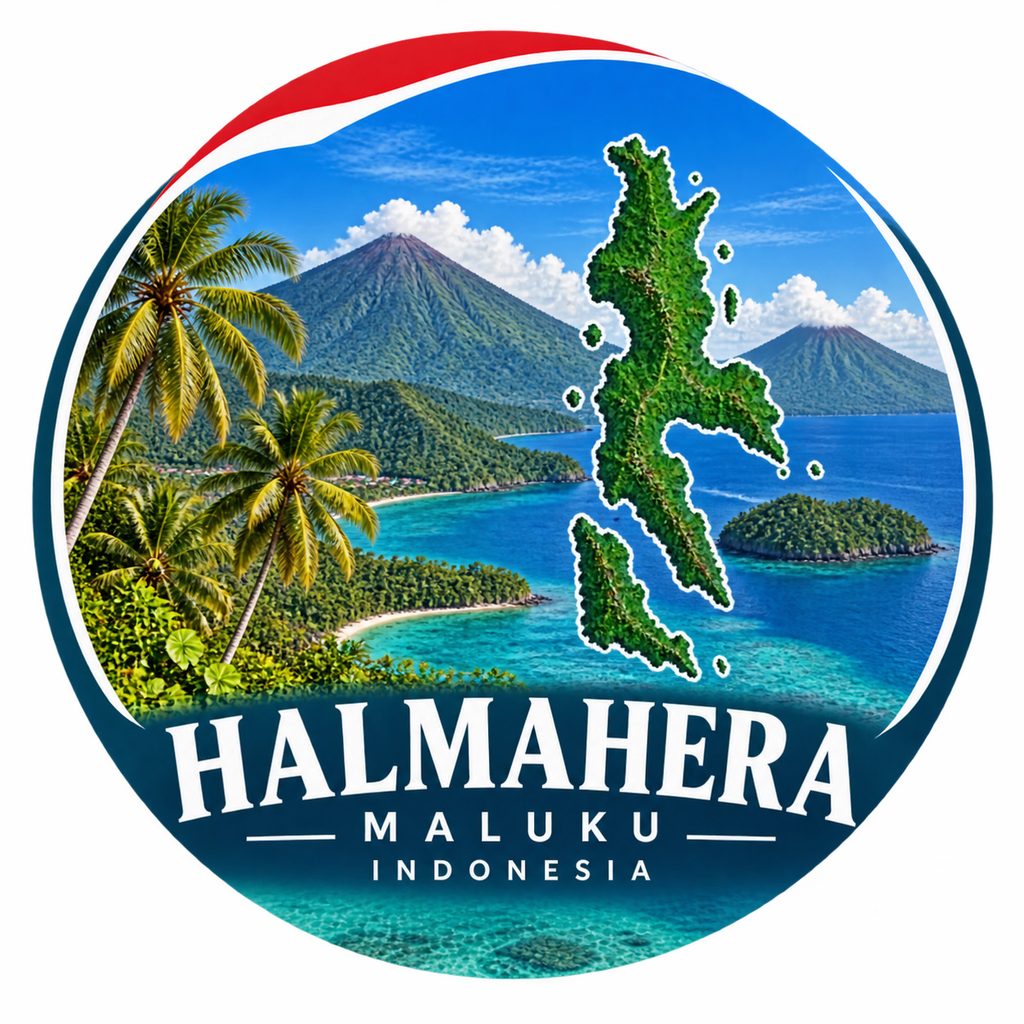
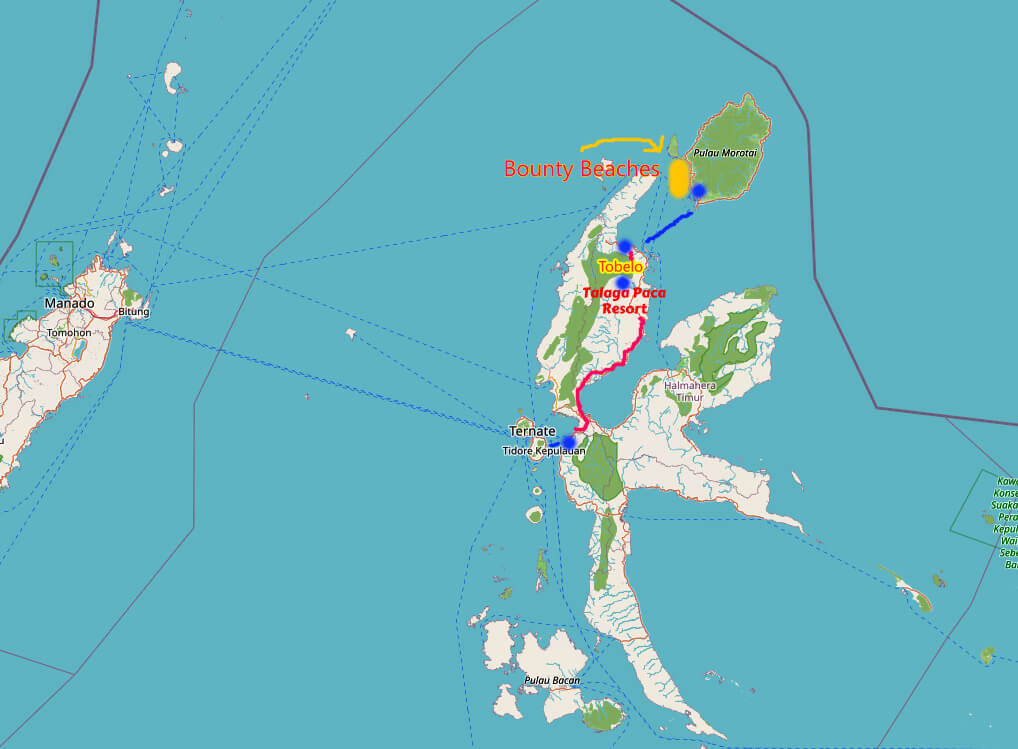
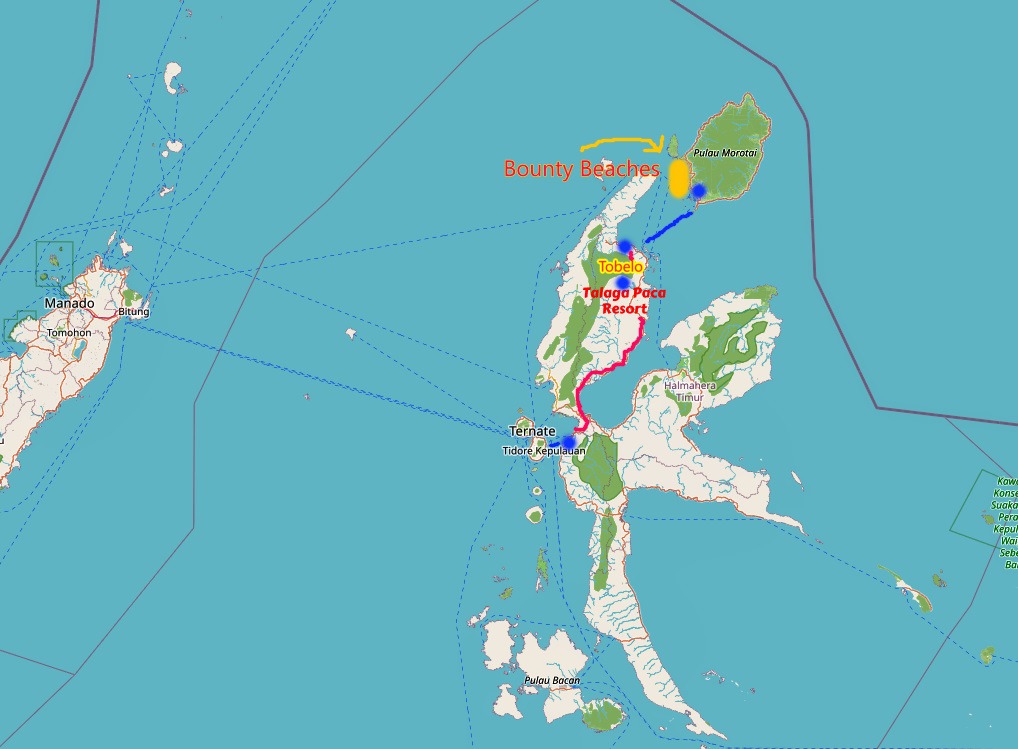
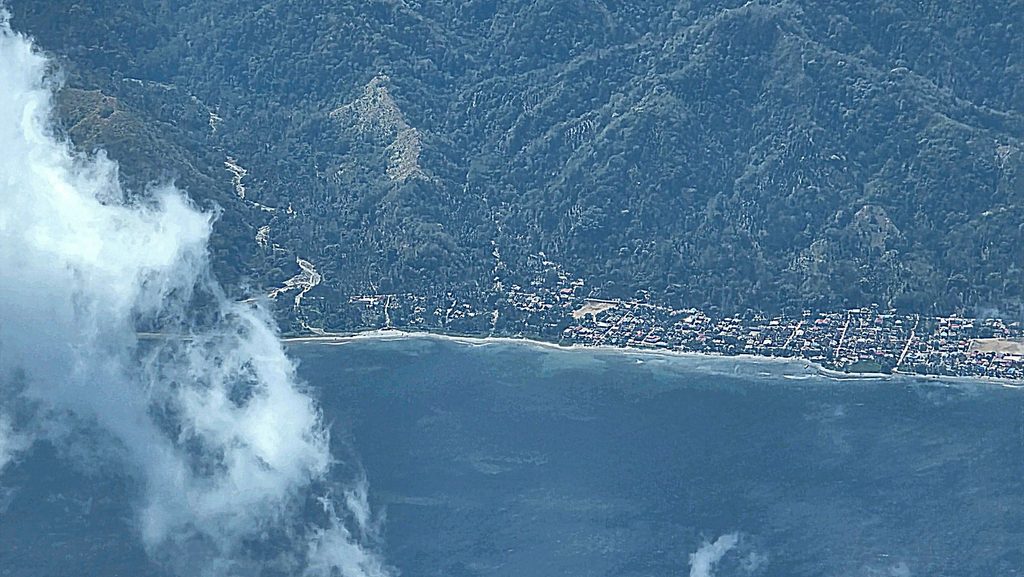
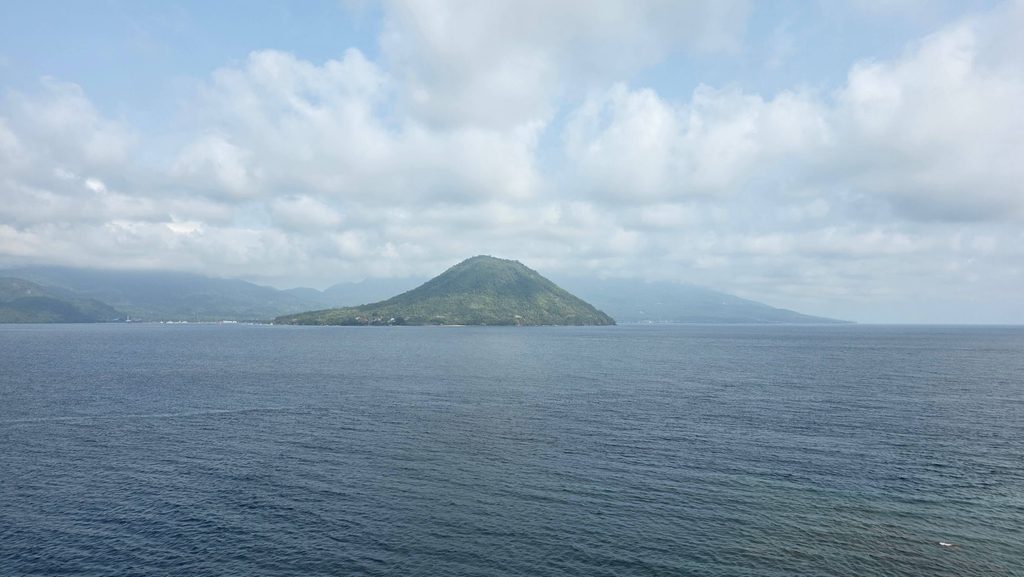
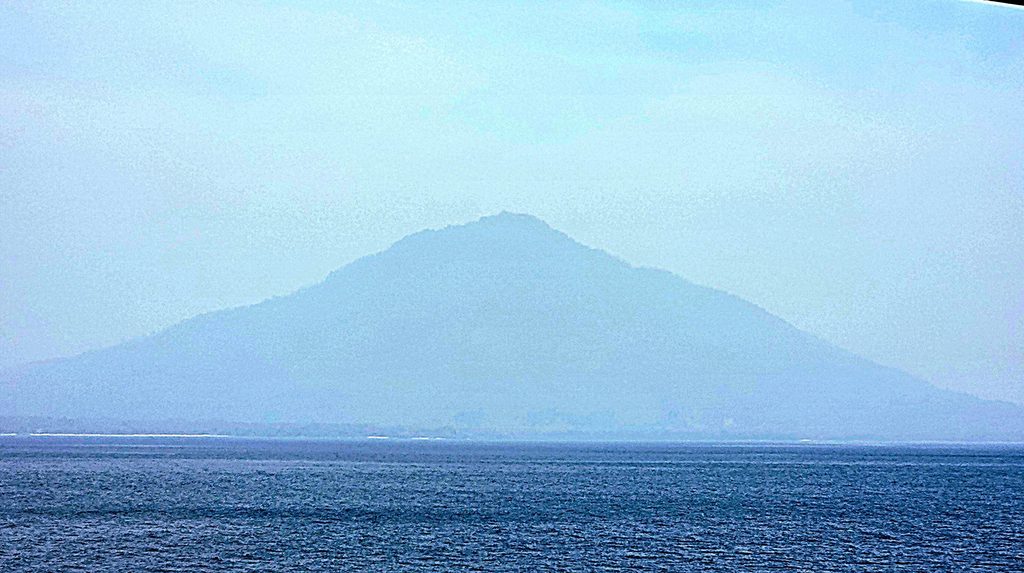
This morning by speedboat from the island of Ternate to the island of Halmahera, the island with the strange shape (see photo) The sea was not calm and that was clearly noticeable when the boat hit the waves again. It was not a quiet boat trip. Anyway we arrived well and once ashore there were already taxis ready to transport us to Tobelo. Just after asking the prices, 800k Rp = € 40 we thought was OK given the great distance and also didn’t feel like haggling. A long drive of 4 hours through a beautiful tropical nature.
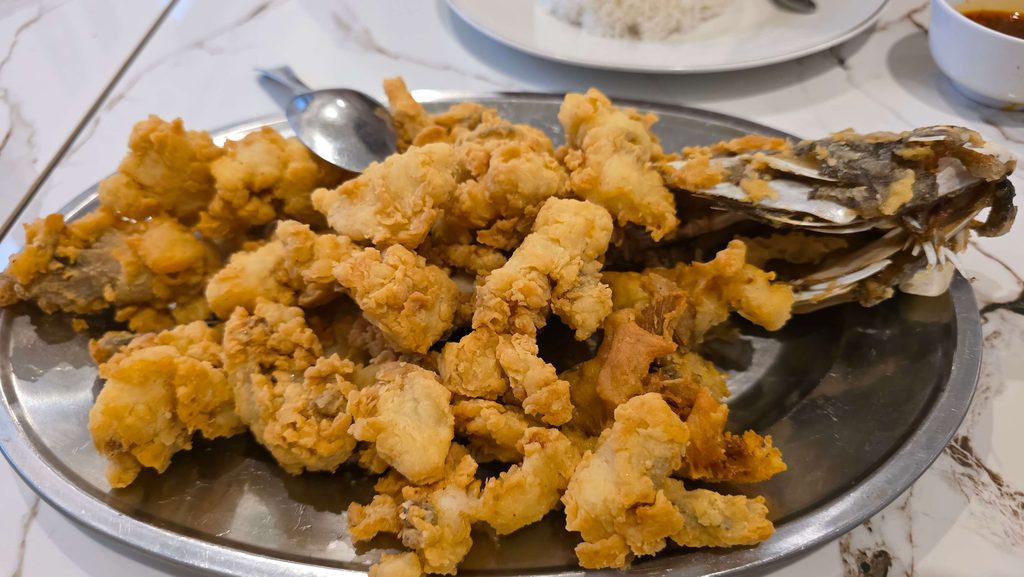
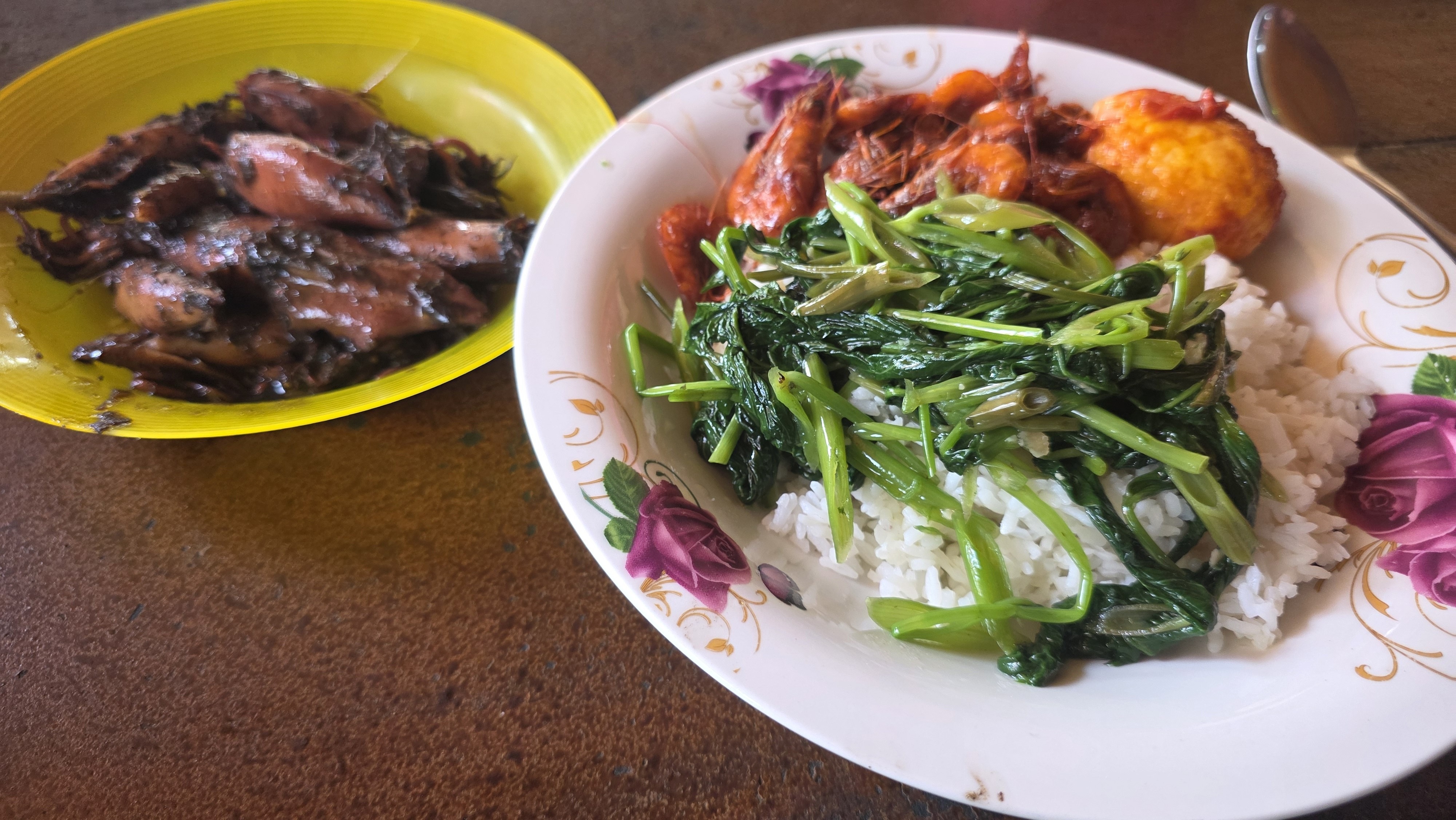
Halfway there is a stop for a delicious lunch. A buffet consisting of all kinds of fish and seafood in tasty sauces. Eric was completely happy again The bill regularly surprises us. This time again exceptional, € 2.50 for the two of us and the driver was allowed to eat for free from the buffet. We stay in a neat business hotel. In Tobelo there is little choice of hotels and eateries. We stayed there for two nights.TXT
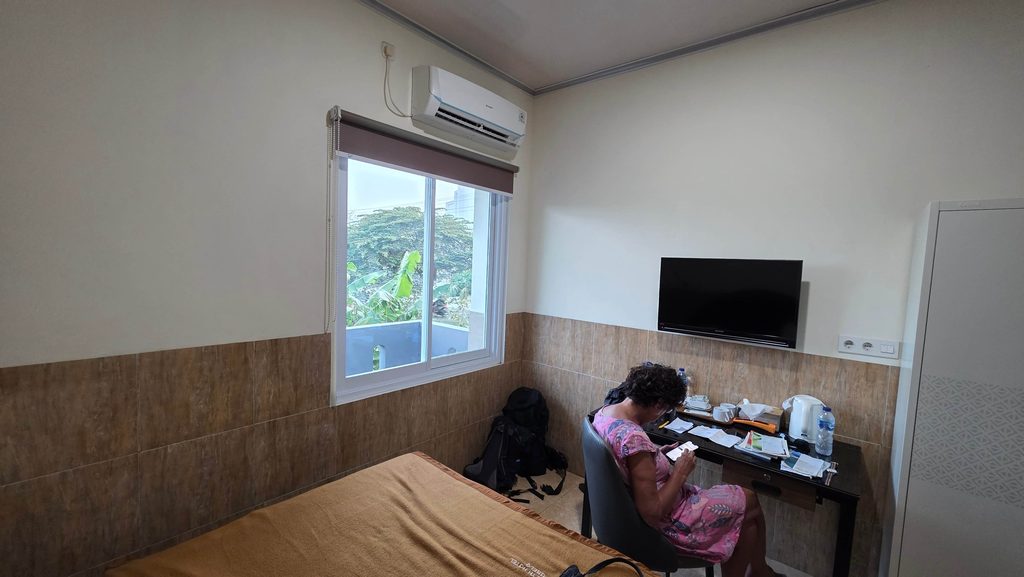
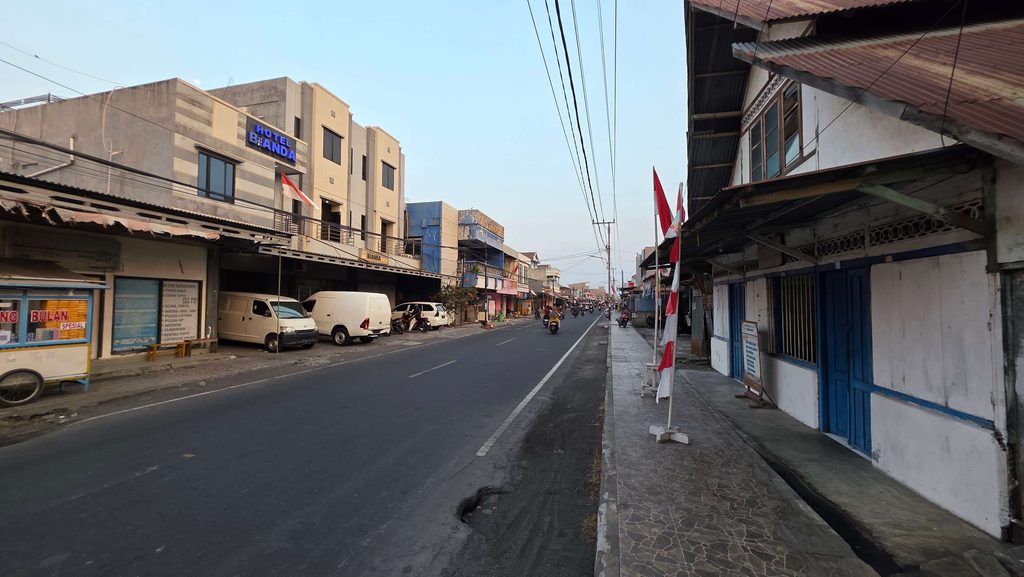
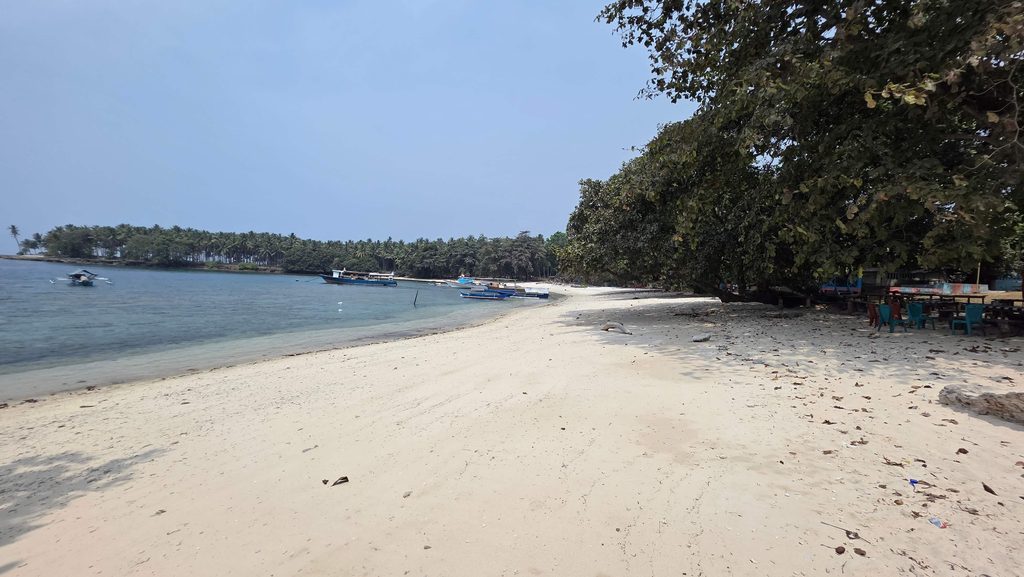
Sometimes it seems like everything goes smoothly and flawlessly here with us, but before that happens, we often have to get all our backpacker experience out of the closet, because it is quite a difficult backpacking destination. But we are always happy when something works out. Our itinerary has been adjusted a bit but more about that tomorrow Today we wanted to visit a lake and a beach 21 km outside the town But how if there is almost no public transport and no normal taxis; We move here within the town with bentors, which are motorized bicycle taxis, but they do not drive outside the city because of the large differences in height. There are taxis and collector taxis but you can’t see it from the cars. We managed to find a car that took us to the lake and for the way back we hitchhiked. The first (paid) lift to the beach we meant and at the second part of the way back we were in a car of which we didn’t know whether we had gotten a (paid) lift or whether we were in a collector’s taxi. When we got out it turned out to be a collector’s taxi. It remains difficult when you can’t understand each other. By the way, the lake was in a beautiful place, but we have seen nicer similar lakes. A nice place to have a picnic The beach, on the other hand, was more beautiful than expected. Furthermore, we had a lot of research on how to reach our next destination
TXT
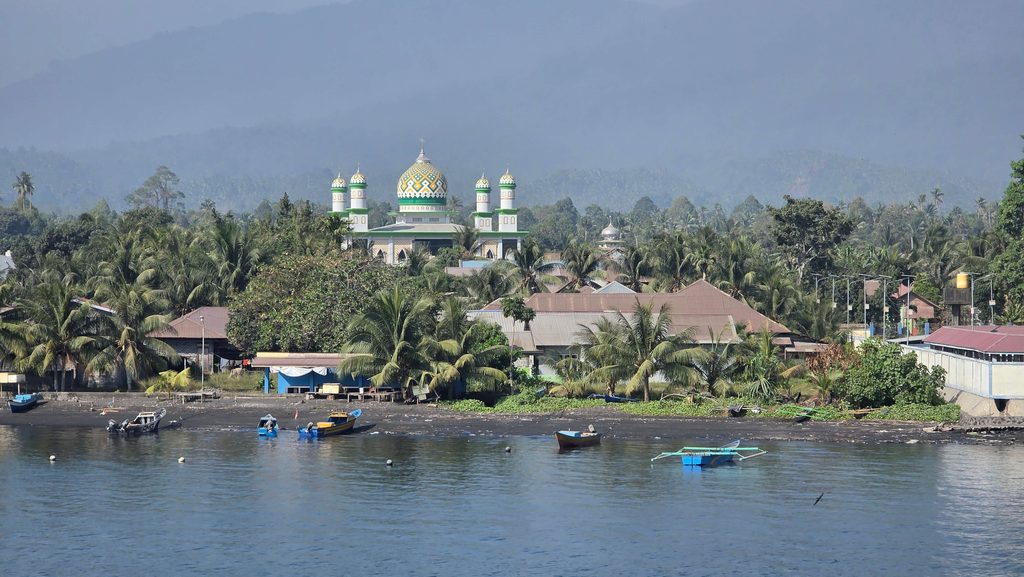
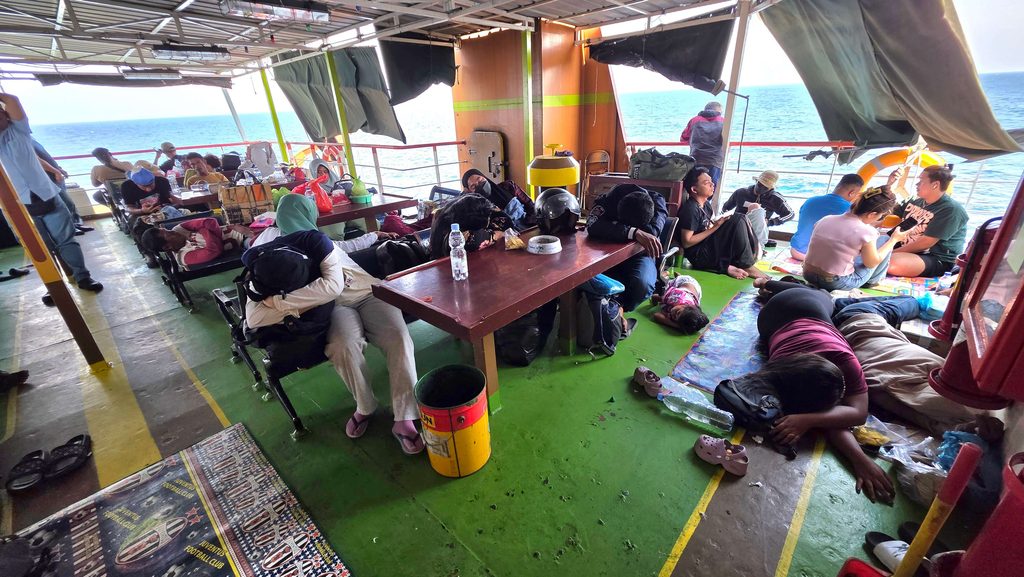
After our visit to Morotai (> see next article) we sailed back to Tobelo on Halmahera in three hours. It was quite a long hot trip because we had been on the ferry for 1.5 hours when it decided to leave anyway…
The North Moluccas are located in the absolute heart of the Coral Triangle, the global epicentre of marine biodiversity. This remote Indonesian archipelago, which includes islands such as Halmahera, Morotai, and the Sula Islands, is home to one of the richest and most pristine underwater ecosystems in the world. The coral reefs are perfectly healthy and undamaged.XT
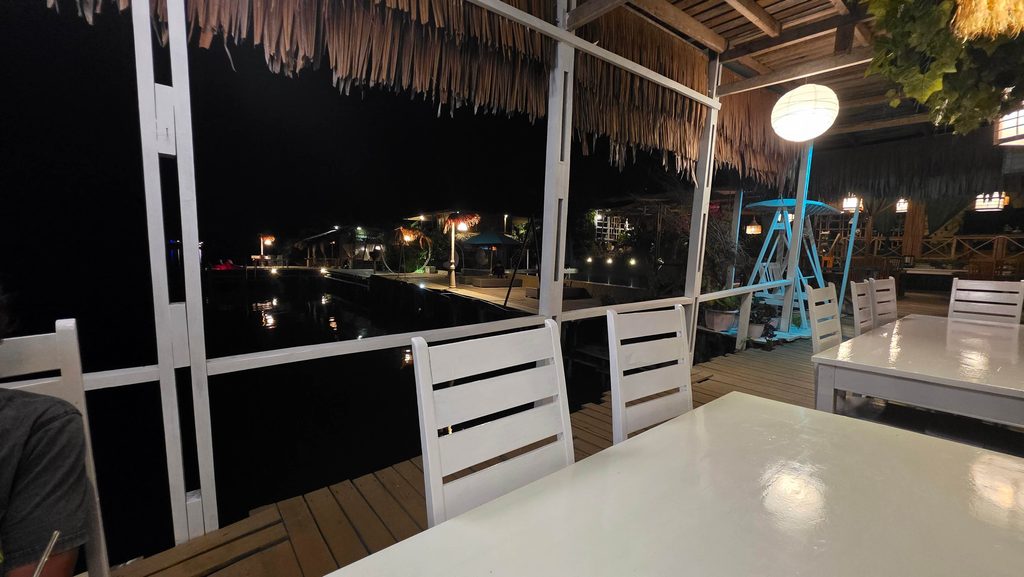
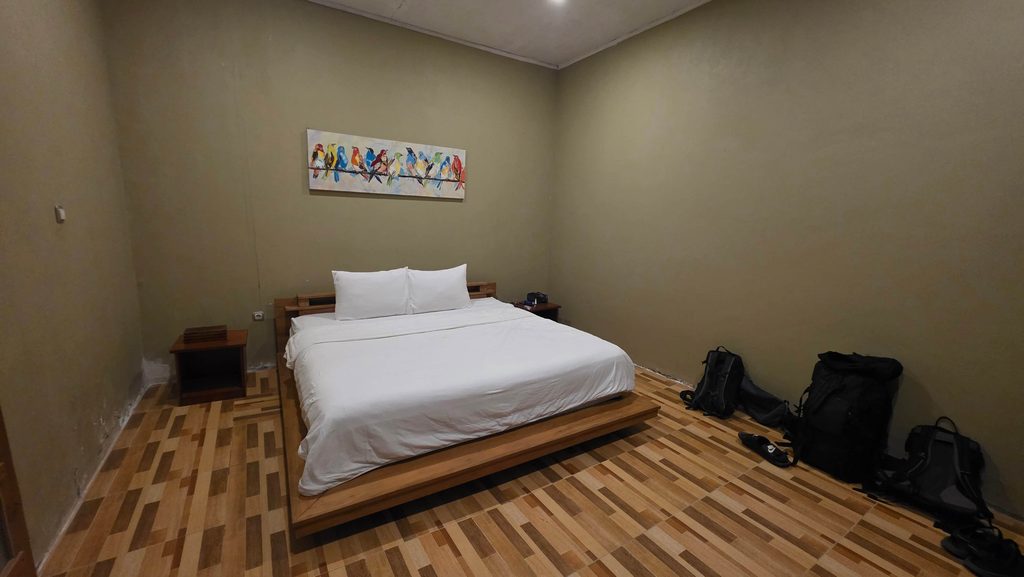
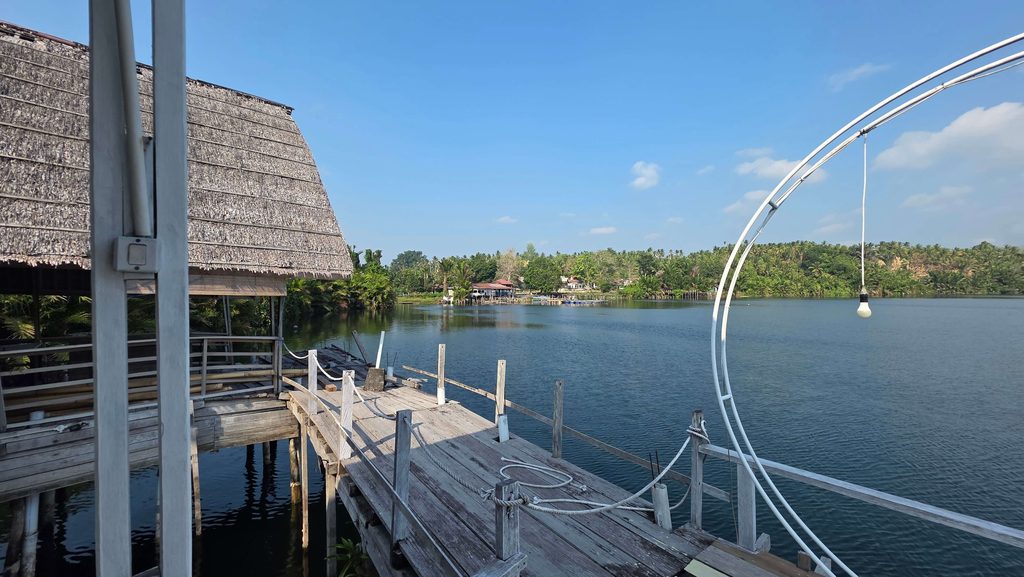
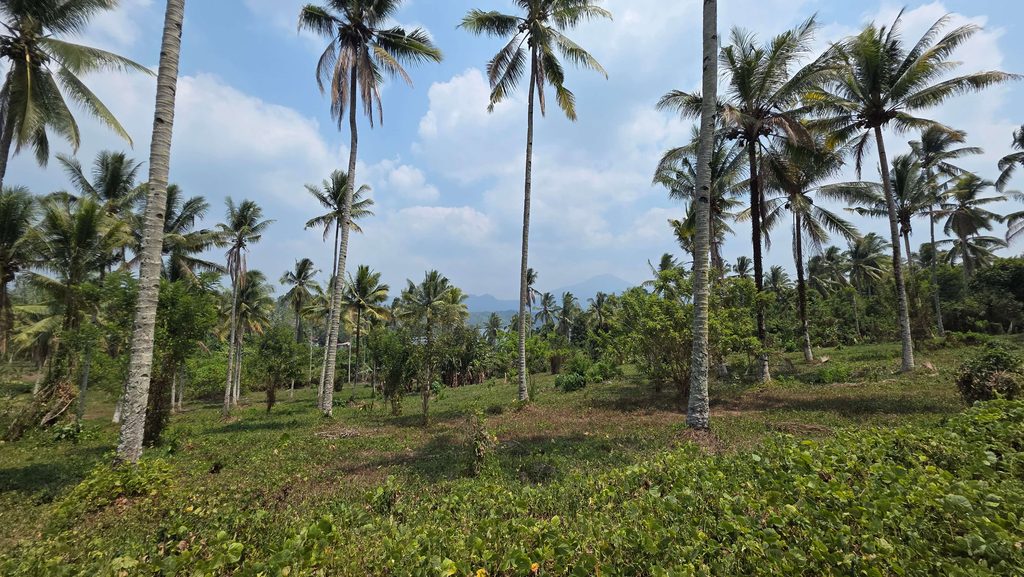
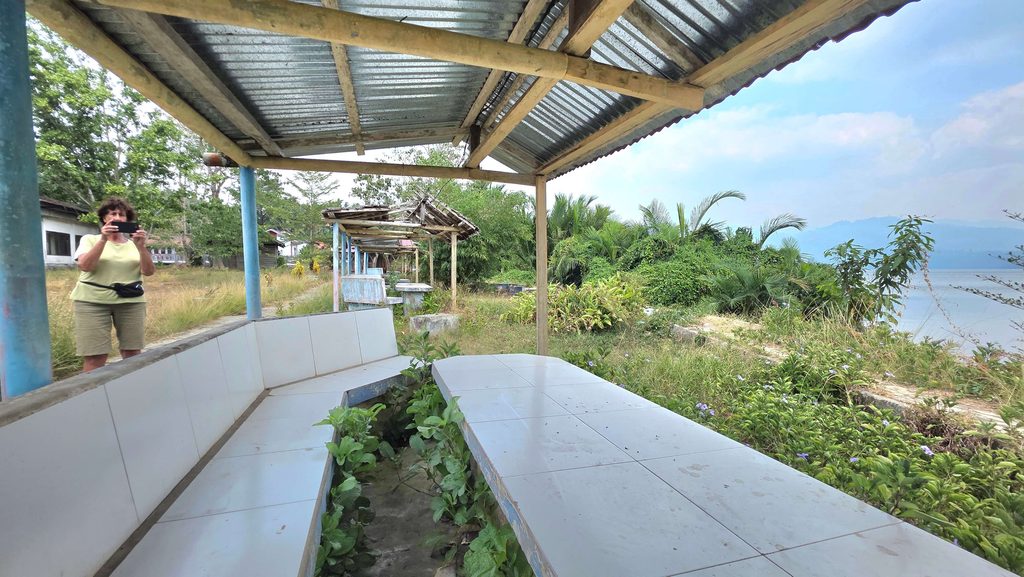
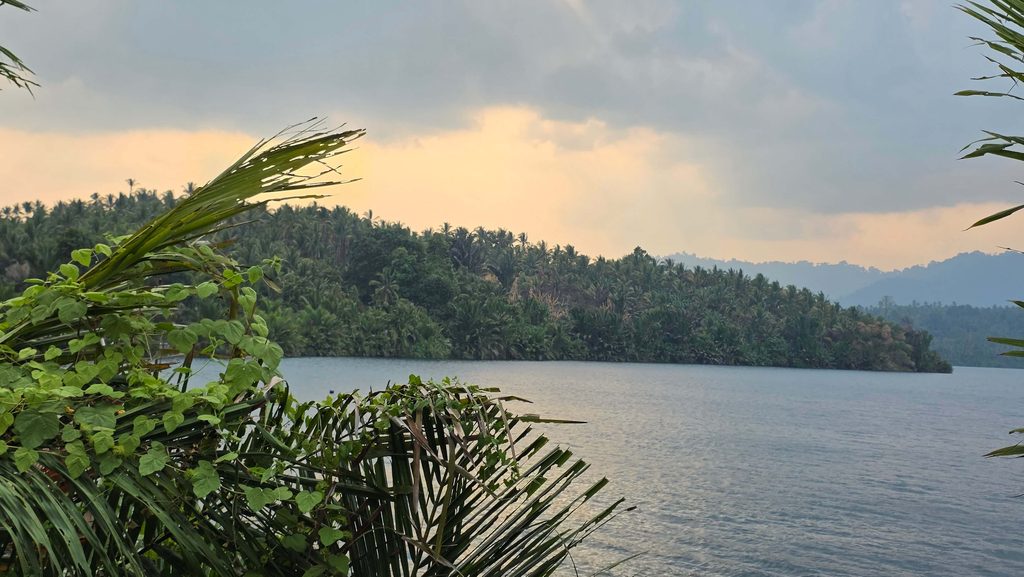
From the harbor just outside Tobelo we drove by taxi in an hour to a hotel on a lake. Because we arrived in the dark, we didn’t really see where we were, but what we saw surprised us and asked us to switch gears. It looked like a luxury hotel, partly built in the lake, with two swimming pools, a BAR!!, a nice restaurant, seats and sun loungers everywhere. Gee, all things that we are used to. Are we really waiting for this is still the question; It looks like there are few guests, but we are not the only ones as is often the case We had a good meal But it takes some getting used to
It is a nice place here on Lake Paca. It is a more luxurious hotel but not too luxurious and is beautifully situated in the middle of nature on the lake Outside of us there is now 1 room occupied A bit further on the site is a conference room where a seminar or something is taking place, but we only see something of it during lunchtime.
We are being watched closely again. This morning the pool water was already refreshed, and when we dived in, the taps were opened again within ten seconds. Also, at every hotel they always ask where we are going, we are used to that by now.
This morning a walk to the settlement nearby. What strikes us again and again is that in many places on the Moluccas there were once plans and investments to promote tourism, but that due to the lack of tourists everything has slowly bled to death again, there has been a lot of overdue maintenance on these projects and therefore the vast majority of these plans die a quiet death, such as this morning the small boulevard on the edge of the lake in the settlement completely is overgrown and 1 letter of the large nameplate at the beginning is still standing. Our hotel here also has to rely on the conference room and the weddings (which are very important throughout Indonesia
The owner of our hotel suggested to go to the island of Magaliho for a day . We thought that would be a nice idea. It is an uninhabited island but they do have their second hotel there. We thought the island was in Lake Paca, but it is in the sea. Later it turned out that the water of the Paca Lake is left alone.
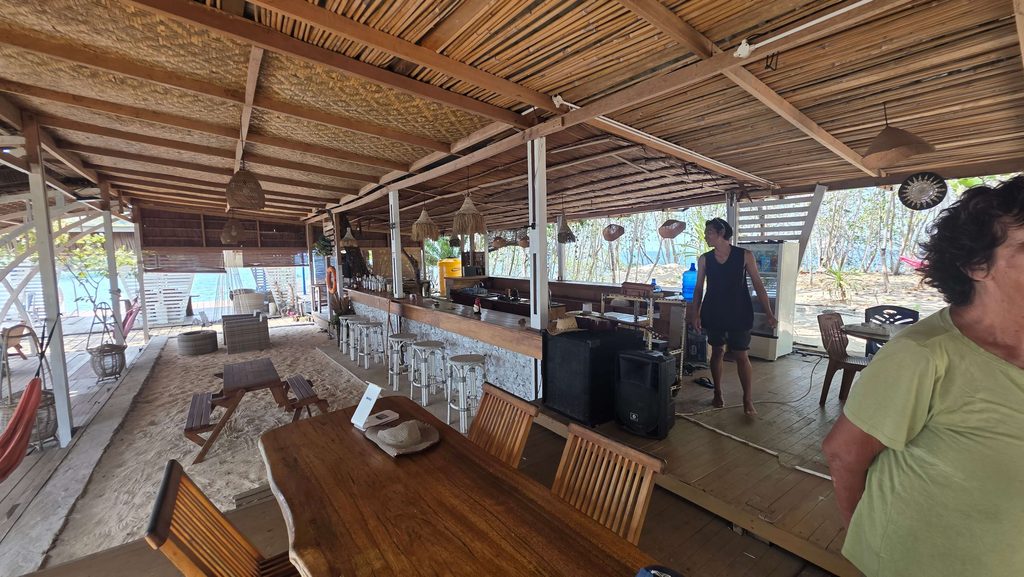
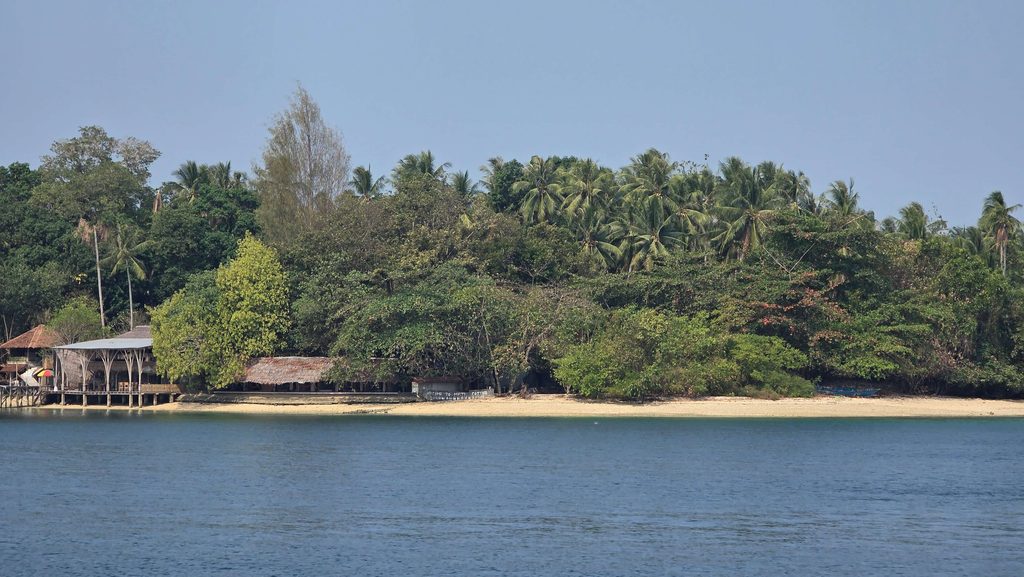
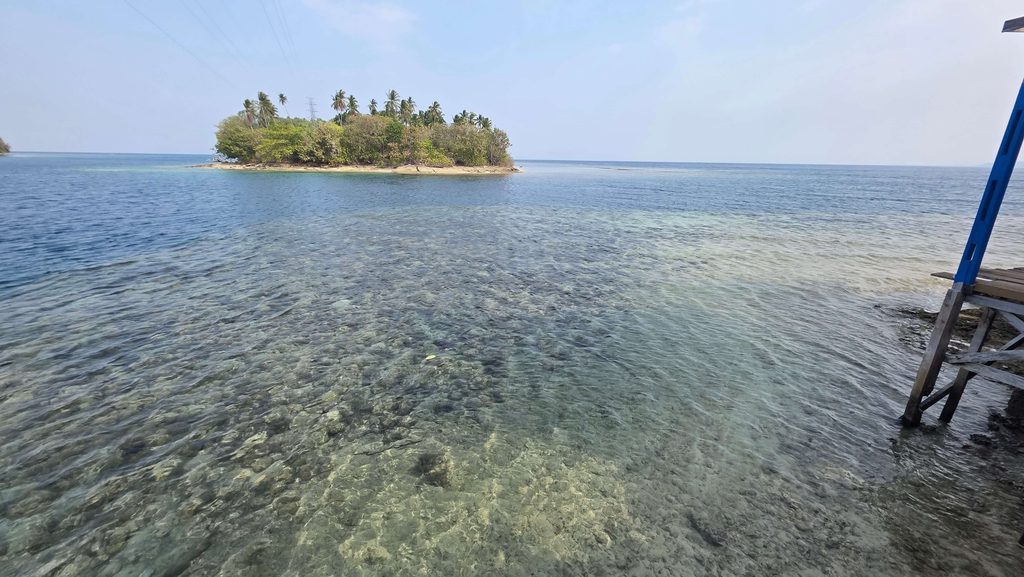
In Lake Paca there is no swimming and no sailing, because of a mystical legend about a swallowed village and two loved ones who were sacrificed to prevent a greater disaster. That’s why we visited an island in the sea. It has no real beaches, but is beautiful and wonderful to swim in, and we did that extensively. The hotel fits well into nature, with cozy seating areas everywhere and a few nice houses to spend the night. The son of the hotel boss went with us, so we were not alone, and a lady cooked a delicious lunch. The last few days we have been eating new dishes all the time. Too bad for the owner that we were the only guests here, although two more guests were expected at the end of the day. We are now back at the lake.
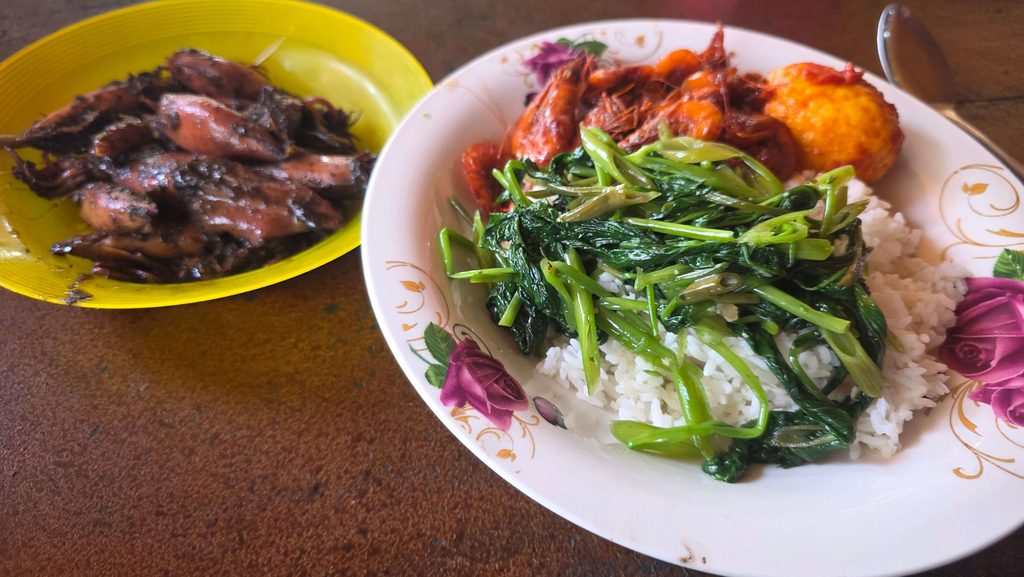
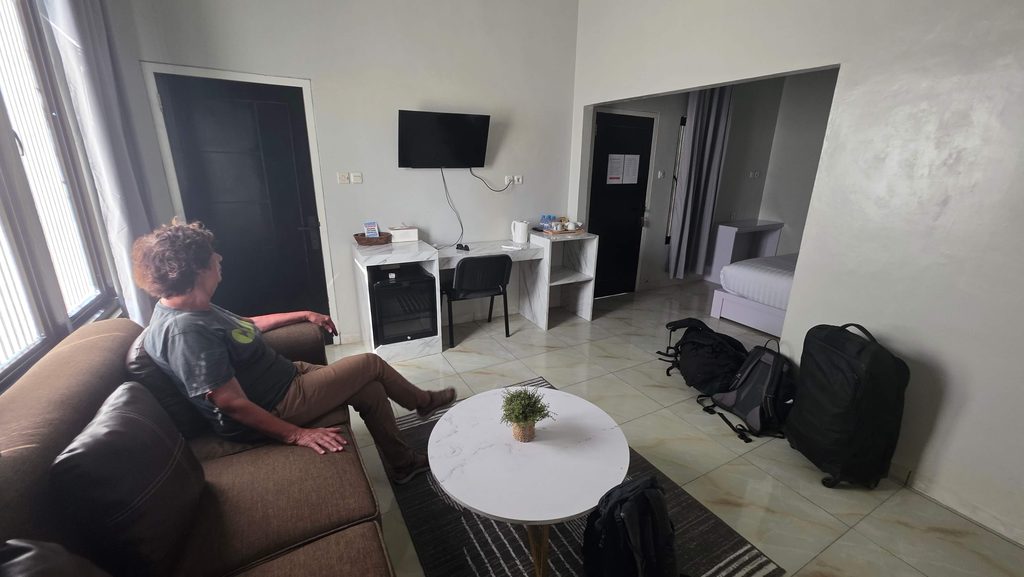
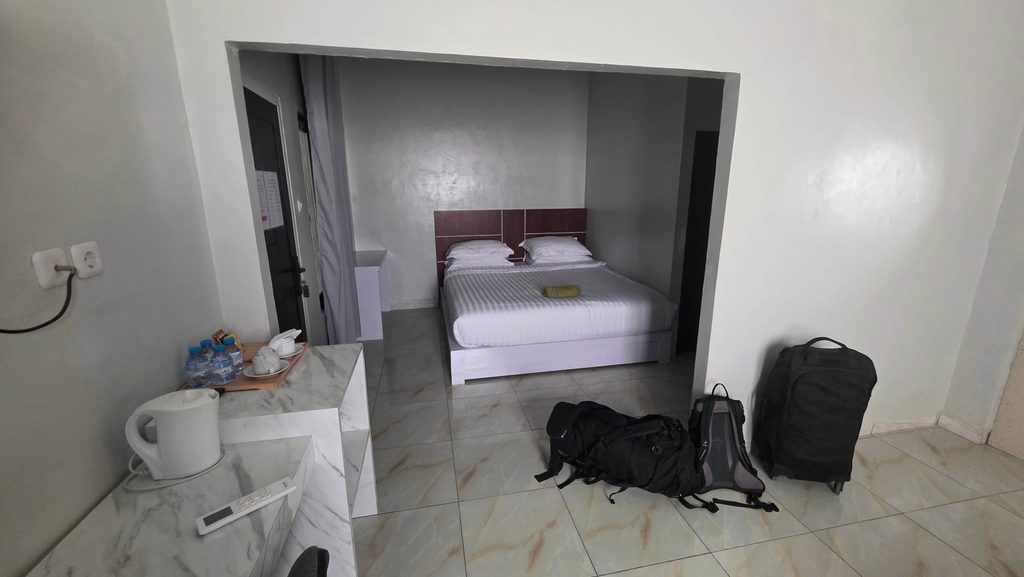
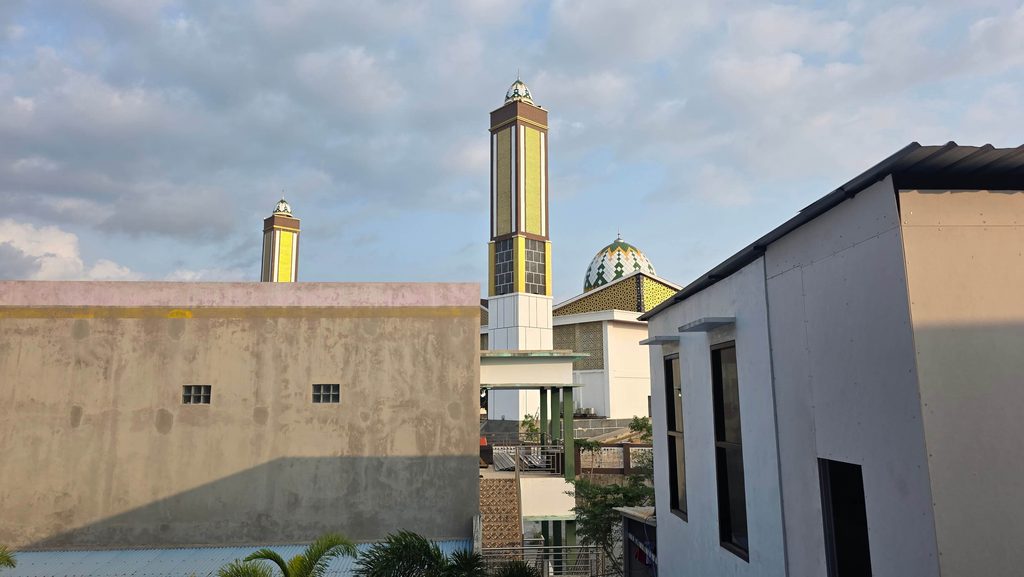
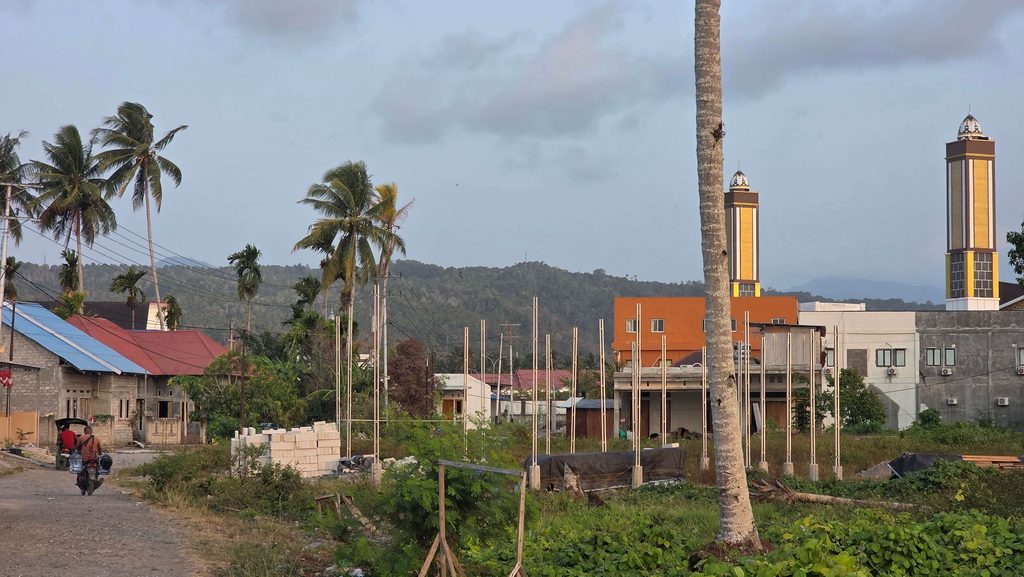
Around noon we said goodbye to our accommodation at the lake. They spoiled us so much there. What a nice people They all did their best with everything to make us feel at home At the very last moment when we were already in the car they came with two to go cups of juice for the road. We also got to know all kinds of new dishes. The way back to the south of the island took three hours, including the lunch stop, and then we arrived in Sofifi , the capital of the island of Halmahera. Well, capital, it’s really nothing; wide four-lane roads as you approach the city (There is practically no traffic on it) But that’s about it. There are no real restaurants, but there are rumah makans. There are a few hotels of which we have chosen the one that came out best, an atmospheric business hotel, they sometimes want to be quite luxurious in Asia, but that is not yet the case here; A dragon of a building, it stands between two mosques that have just begun to make themselves heard. Only the VIP rooms would have a window and Eric insisted on a window. It turned out that the window was also taped with plastic so that we could not look outside. There couldn’t be a bigger difference with our previous accommodations But oh well, it was only for 1 night
The next day we took two bentors to the harbour and then the speedboat from Halmahera back to Ternate.
HALMAHERA ; 700,000 inhabitants Capital: Sofia Area: Half of the Netherlands
CONNECTIONS
There are (currently) no flight connections to or from Halmahera
FERRY
Ternate – Sofifi; all-day speedboats nonstop 45 minutes; Large public ferry (ASDP) from Bastiong Port on Ternate to Sofifi
Jailolo – Sofifi. Large public boat
There is also a ferry from Tobelo to Subaim , >> so you can travel to Sofifi via East Halmahera
TRANSPORT op HALMAHERA
On the main route to Angkots, drive and collect taxis. It is easier to take private transport upon direct arrival at the ferry port
Sofifi – Tobelo; About 4 hours including lunch break; 186 km. We paid €40 (800k Rp) but I think you can negotiate this down a bit (100-150k).
Beautiful route ⭐⭐⭐⭐ through tropical landscape. Partly along the coast. As a result, we could see that the beaches are not the strongest point of this NE part of Halmahera. Along the way, you pass RM Laduni ⭐⭐⭐⭐⭐, a simple roadside restaurant with a fantastic buffet. Definitely try the octopus!
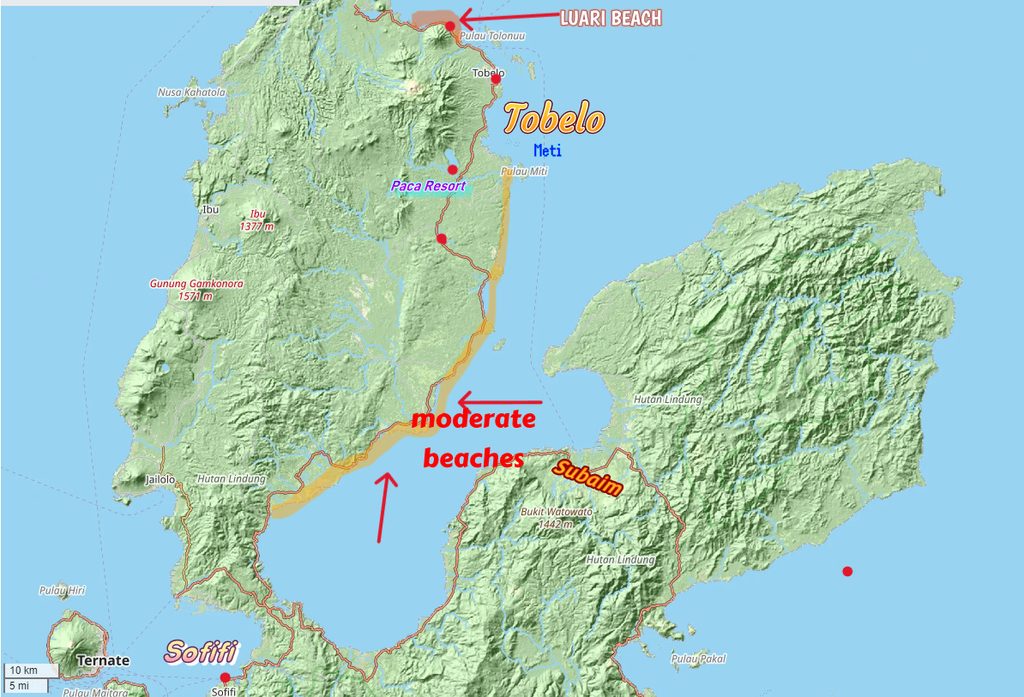
TOBELO KOTA TOWN⭐½ THE SURROUNDINGS ⭐⭐⭐⭐
Tobelo is the largest town with 40,000 inhabitants and the administrative center of North Halmahera
- The population mainly consists of the Tobelo ethnic group, which has its own language and culture.
- The region is known for its production of coconut, cloves, and nutmeg.
- The area has a strong Christian influence, making churches a prominent part of the streetscape.
It’s a typical Indonesian provincial town without any sights. You’ll find the well-known banks where you can withdraw money, several eateries, and some hotels. For transport, you use a Bentor. A bentor is a motorized rickshaw for two, maximum three people. We paid 10k (€0.50) per person for a short ride.
HOTEL
Hotel Elizabeth: €26 including breakfast. ⭐⭐⭐ . Simple business hotel with clean rooms. The cheapest rooms have little or no daylight. We took a slightly more expensive room with a window for the mentioned €26. At reception, a lady spoke a little English, which is quite a lot in this area. 🙂
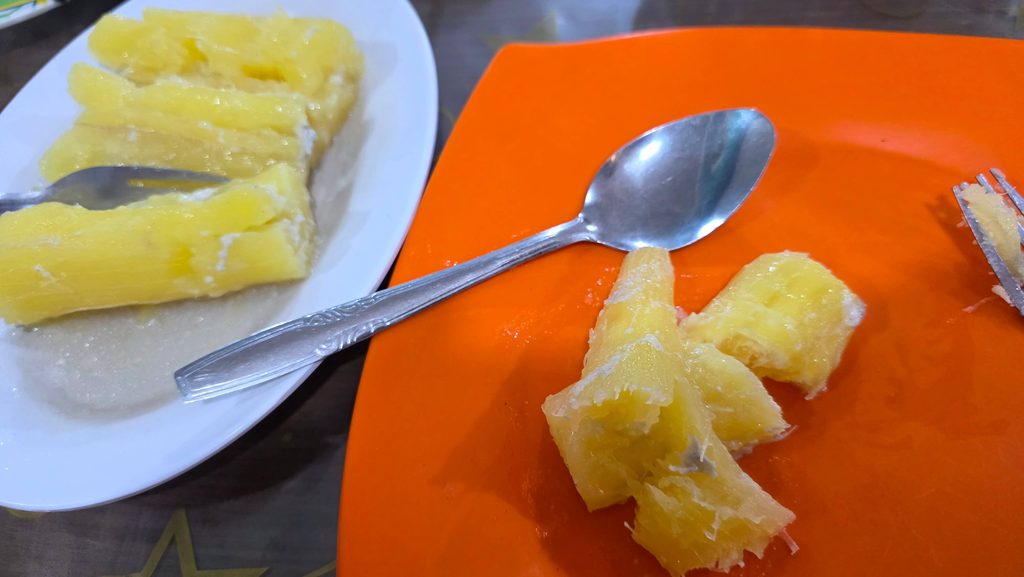
On the spot from our hotel—which no longer has a restaurant—we left the main road towards the “center.” We found many shutters, even at places where there was supposed to be a restaurant. Eventually, we found a simple Chinese eatery where we ate reasonably well. Especially the cooked cassava was excellent. (2x fish + the mentioned cassava €10)
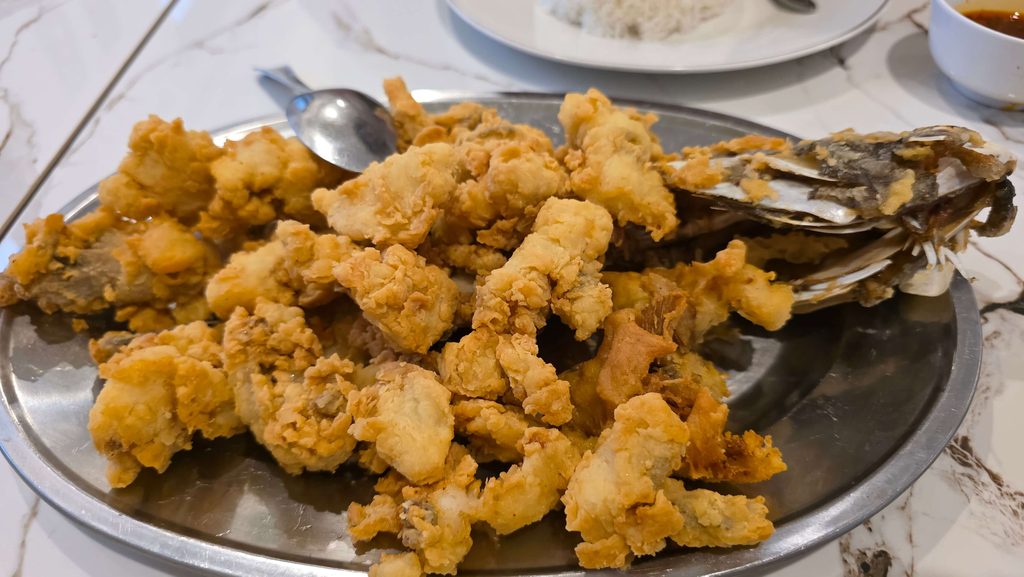
100k = € 5
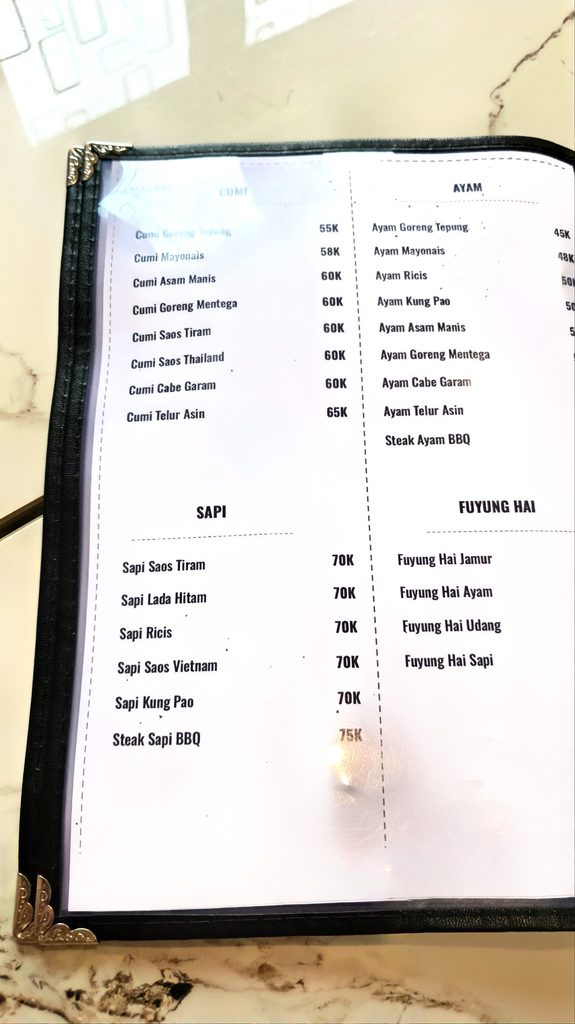
The next day we ate at Satu Hatu ⭐⭐½. A “chicer” restaurant. This restaurant is also more Chinese than Indonesian. We ate reasonably well there..
WHAT CAN YOU DO THERE?
Limited possibilities in the immediate vicinity.
TELAGA BIRU⭐⭐
A small lake in a wooded environment with a seating area. Not worth visiting (see our travel report above)
LUARI BEACH ⭐⭐⭐
Pretty nice beach. Deserted during the week. The stalls open on weekends. A coconut costs €0.75
HOW DO YOU GET THERE?
Bentors only drive up to a short distance outside Tobelo. You have to rely on a (collectible) taxi.
Ask the hotel reception for a taxi or just stand on the main road with your thumbs up and wait for the first car to stop; it’s a form of paid hitchhiking. ☺️. From Luari Beach to Tobelo we paid 50k (€2.50).
Private car from Tobelo to Telagu Biru 200k – €10 😗 – (that’s too much); From Luari to Tobelo we paid 50k (€2.50).
FERRY
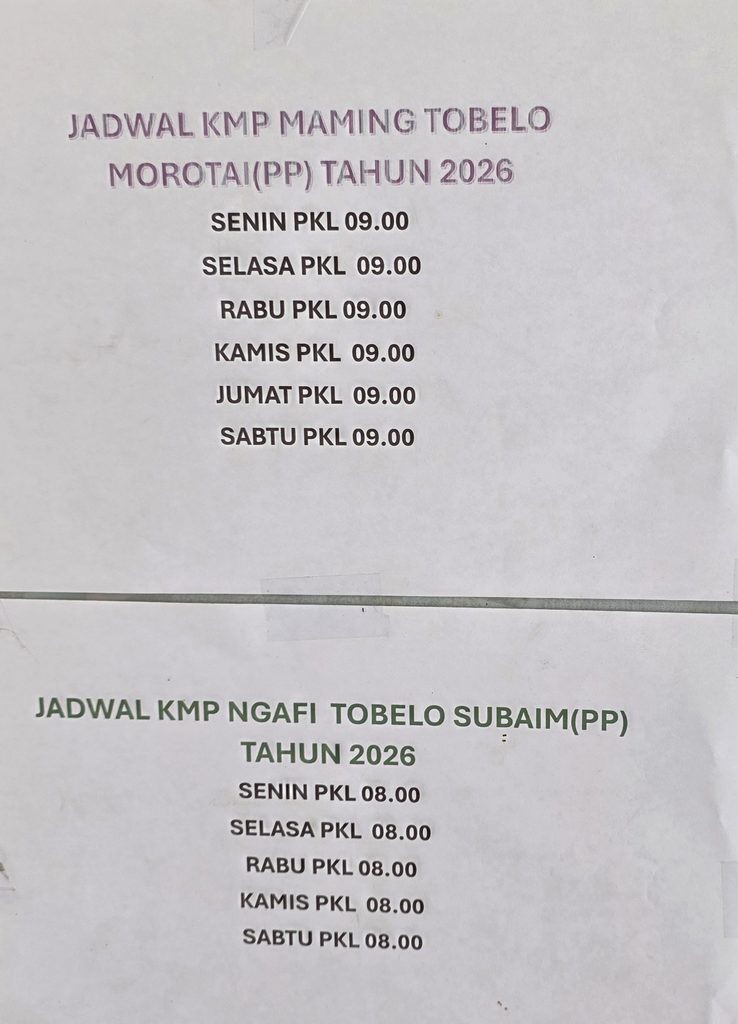
To Morotai departs from the port of GORUA. Departures daily at 09:00. The crossing costs only 50k / €2.50 per person. Take a bentor from your hotel to the ferry port.
A ferry also departs to Subaim , East Halmahera, so you can return to Sofifi via a different route.
From the port in Tobelo center, since summer 2026 there is supposed to be a new faster connection to Morotai: the Dodola Express . Unfortunately, we were unable to verify this due to the language barrier!
OUTSIDE TOBELO
We stayed at two more places outside Tobelo at Halmahera. One night on the return trip in Tobelo and three nights at a resort by Lake Paca. We considered three options and chose Taga Paga Resort.
They offer various cottages ranging from simple to fairly luxurious. Prices include breakfast and dinner. Prices are negotiable! Not bookable on websites. Contact via WhatsApp
We paid €60 per night for a room by the pool. It’s quite a complex by an abandoned lake. There are no boats and there’s no possibility to swim in the lake. There is a swimming pool, though. The resort has an annex on the Maghalilo island. There, we were also offered a room with a big discount for €40.
They offer a day trip to that little island, which costs €25 total including meals. A great deal ⭐⭐⭐⭐
Taga Paca resort ⭐⭐⭐⭐
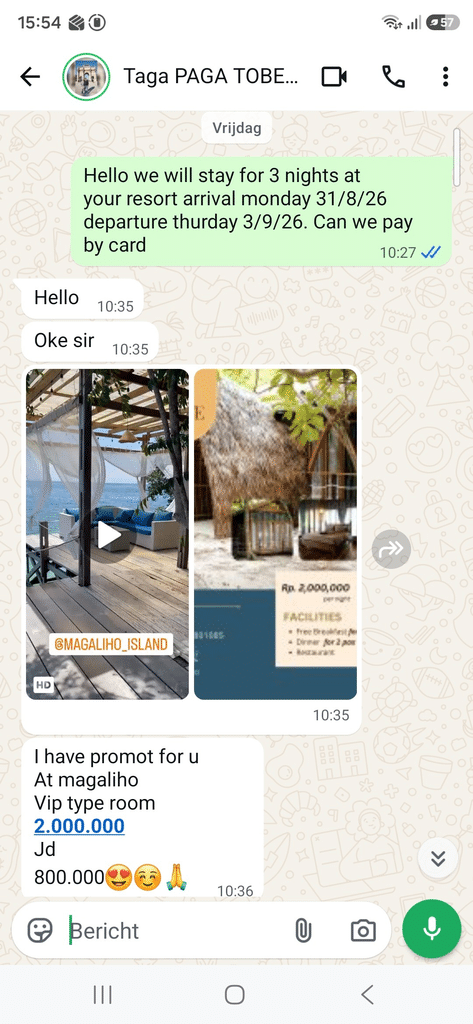
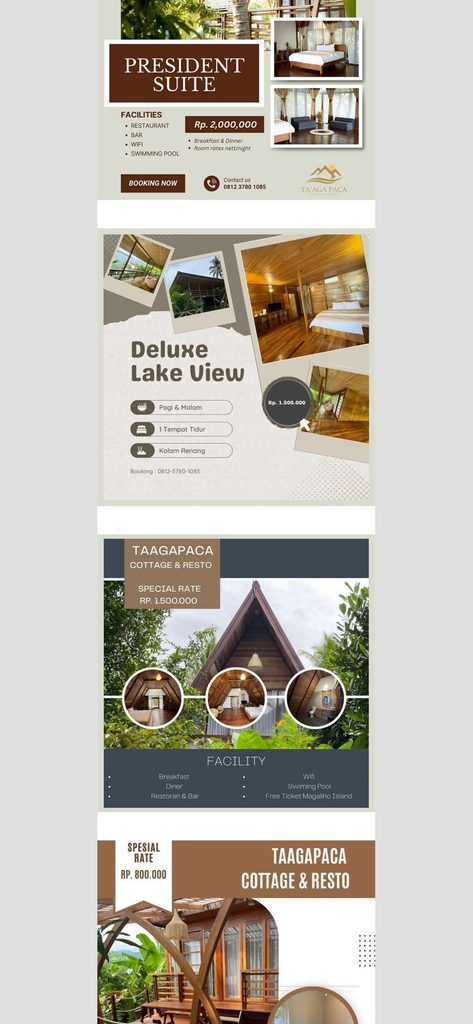
Room ⭐⭐⭐ Complex ⭐⭐⭐⭐ Food ⭐⭐⭐WIFI Starlink🤔 Staff ⭐⭐⭐⭐
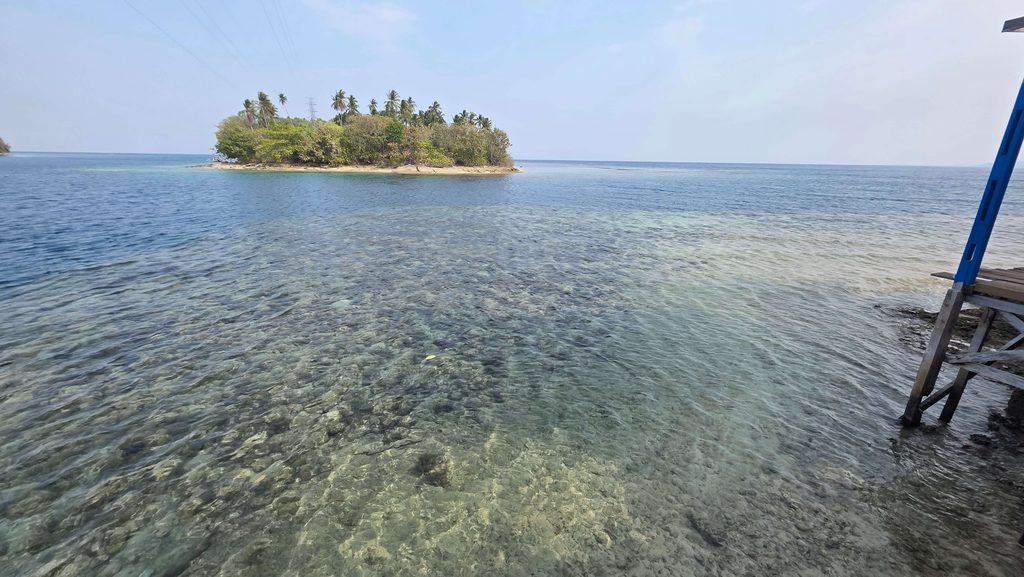
Maghalilo Resort ⭐ ⭐⭐½
Surroundings ⭐⭐⭐⭐
Food ⭐⭐⭐⭐
Bounty Feeling ⭐⭐ (There is no beach)
There is no swimming pool; You can swim in the sea;
Swimming: ⭐⭐⭐⭐
Water temperature ⭐⭐⭐⭐
Light flow, beautifully clear ⭐⭐⭐⭐
Bottom: coral remains ⭐⭐⭐
Without scuba shoes, swimming is possible
OTHER OPTIONS;
Meti Cottages
You regularly come across this accommodation in the few blogs about Halmahera, and some Dutch travel agencies also use it. From a distance, it looked deserted. There is a small beach. We found this option way too expensive! €125 per night all inn (see below) The price was non-negotiable. For the offered price, a maximum price of €75 would be much more realistic
A Fullboard package – RP 2,5 millions for 2x Per Night, included:1. Pick up a local boat from Mawea harbour to Meti Cottage.. Welcome Drink 3. 3x Meals 4. 2x Snacks (Afternoon Snacks+Dessert after Dinner)5. Mineral Water (Tank)+Coffee+Tea 24h
If you stay more than 5 Nights, free for :1x Sand Bank for Sunset or Sunrise.2x Snorkeling Trip with a local boat around Meti islands.1x Snorkeling Trip to Tanjung Bongo, Hot Spring, Local Market ( bron; Whats App bericht ; augustus 2026)
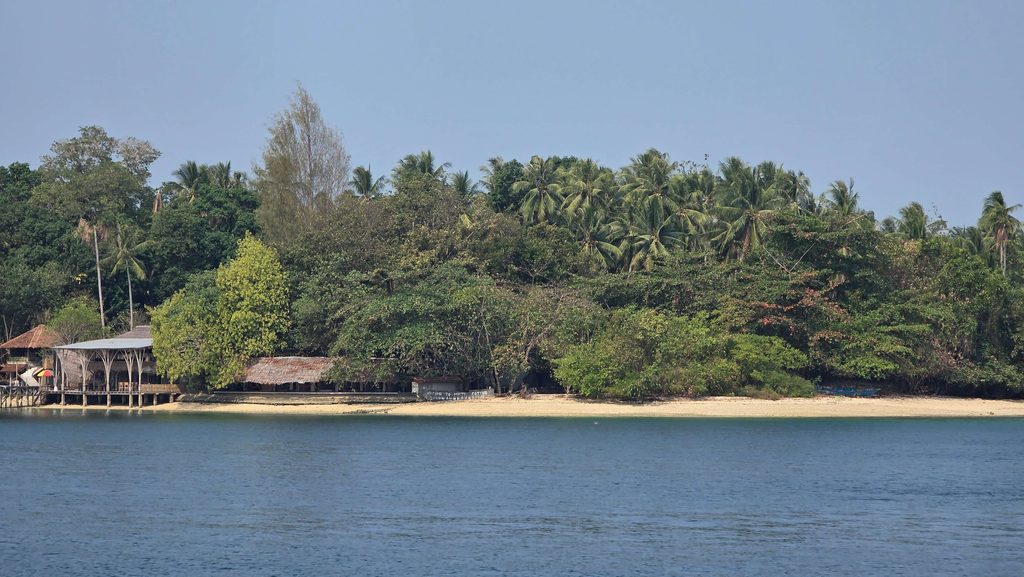
Kupa Lodge
A budget choice; Unfortunately, this resort has been adjacent to an oil terminal for several years now.
Bungalow rp800.000. (€40) Beach cottages rp600.000. (€30)al the prices are breakfast and dinner/ person.
SOFÍFI⭐
On the return trip to Ternate, we stopped in Sofifi, unnecessarily in hindsight: we would have been better off traveling directly to the ferry at the end of the afternoon. Sofifi is the artificial capital of Halmahera, clearly planned for the future, with wide four-lane roads. A large mosque dominates the cityscape, as far as you can call it a city: it is more like a large village, sometimes even with a dirt path instead of a street.
We stayed at Hotel Royal Mix ⭐for €42 in a so-called VIP room. This hotel cannot be booked in advance on any booking site; you pay way too much through such a site. We couldn’t find a decent eatery, so we bought food from Indomaret, which you find on every corner in Indonesia.
PRICE LEVEL
We spent €84 per day in 6 days